


Evolutionary Analysis of Dengue Serotype 2 Viruses Using Phylogenetic and Bayesian Methods from New Delhi, India
- PMID: 26977703
- PMCID: PMC4792444
- DOI: 10.1371/journal.pntd.0004511
Evolutionary Analysis of Dengue Serotype 2 Viruses Using Phylogenetic and Bayesian Methods from New Delhi, India
Abstract
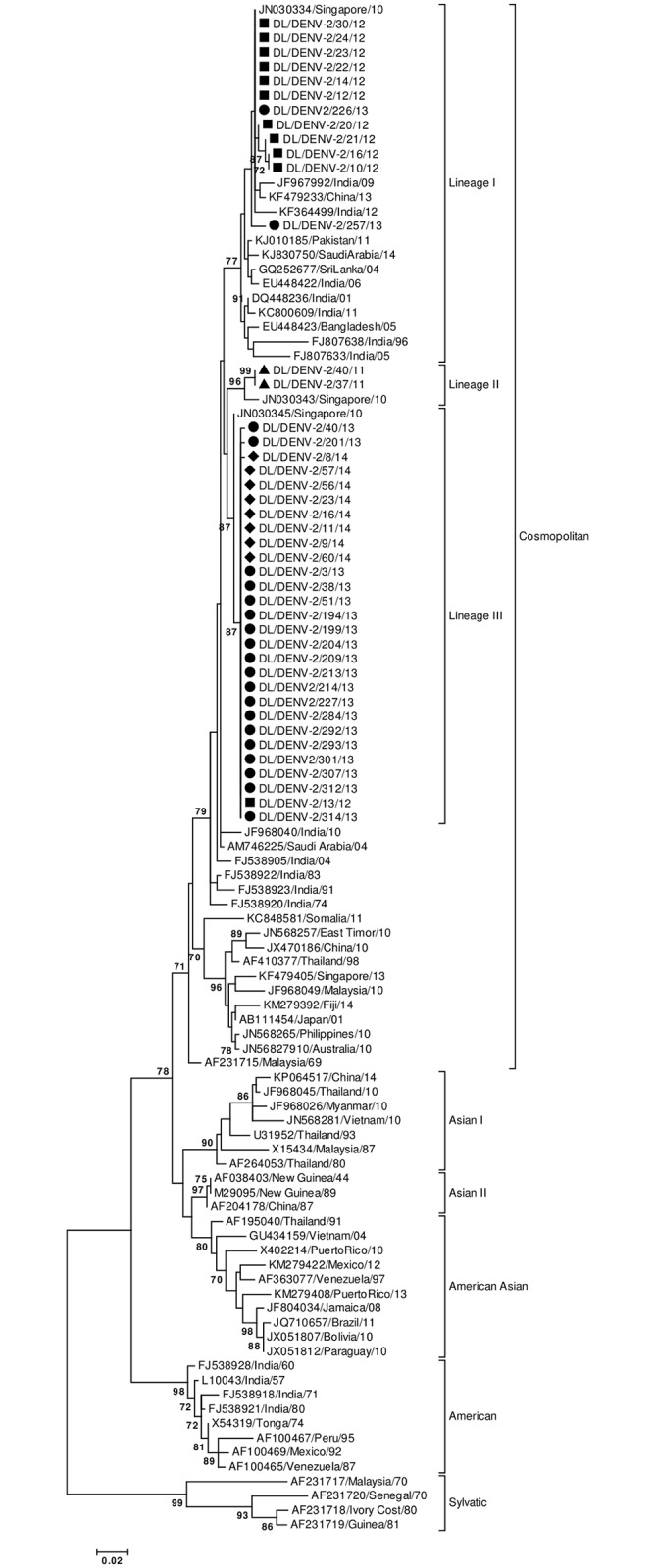
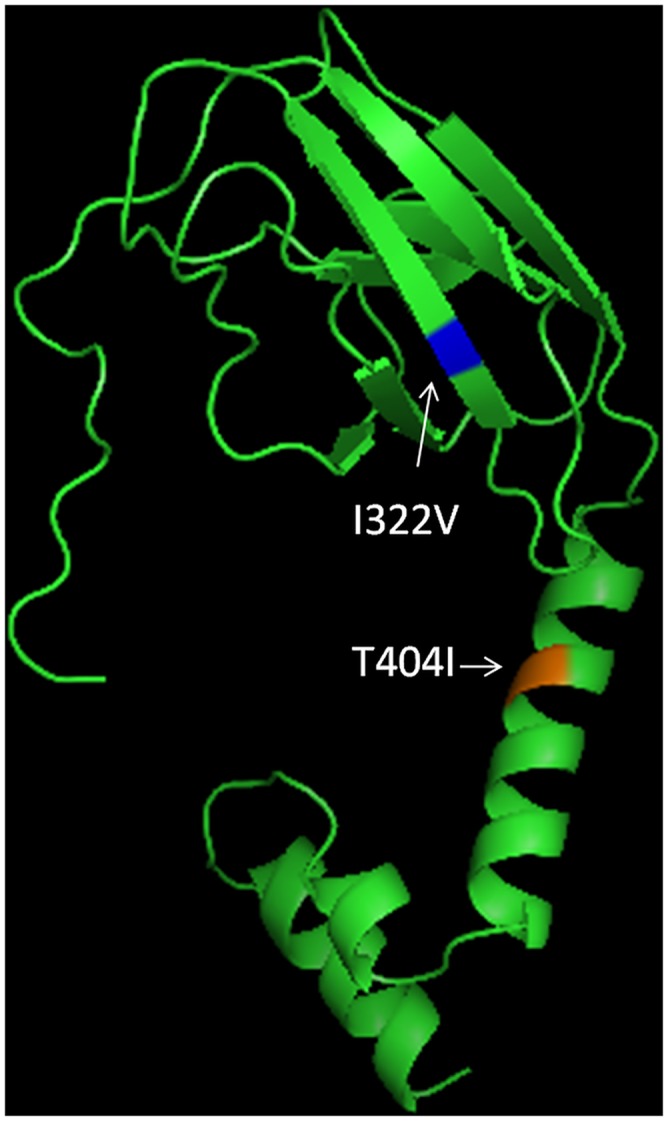
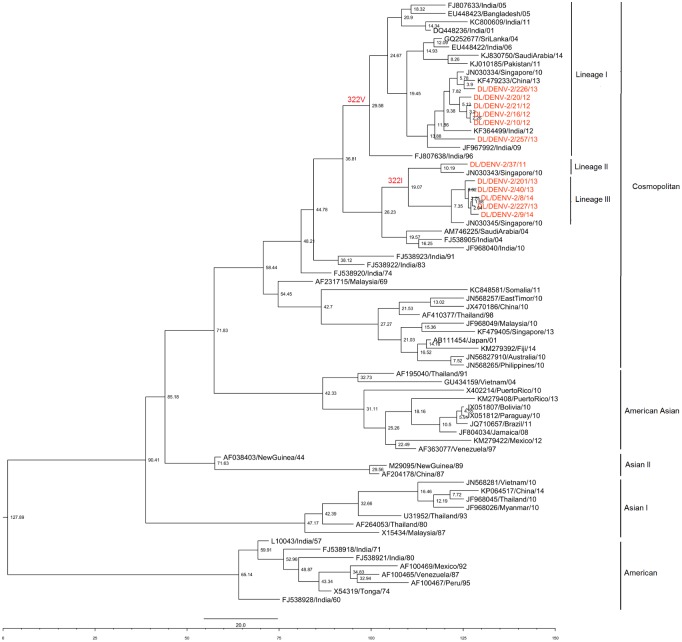
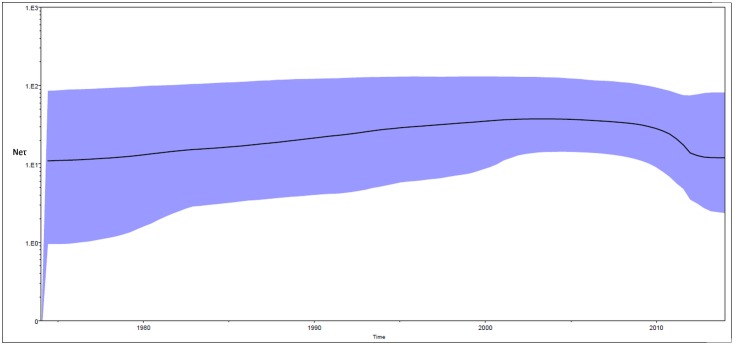
Dengue fever is the most important arboviral disease in the tropical and sub-tropical countries of the world. Delhi, the metropolitan capital state of India, has reported many dengue outbreaks, with the last outbreak occurring in 2013. We have recently reported predominance of dengue virus serotype 2 during 2011-2014 in Delhi. In the present study, we report molecular characterization and evolutionary analysis of dengue serotype 2 viruses which were detected in 2011-2014 in Delhi. Envelope genes of 42 DENV-2 strains were sequenced in the study. All DENV-2 strains grouped within the Cosmopolitan genotype and further clustered into three lineages; Lineage I, II and III. Lineage III replaced lineage I during dengue fever outbreak of 2013. Further, a novel mutation Thr404Ile was detected in the stem region of the envelope protein of a single DENV-2 strain in 2014. Nucleotide substitution rate and time to the most recent common ancestor were determined by molecular clock analysis using Bayesian methods. A change in effective population size of Indian DENV-2 viruses was investigated through Bayesian skyline plot. The study will be a vital road map for investigation of epidemiology and evolutionary pattern of dengue viruses in India.
Conflict of interest statement
The authors have declared that no competing interests exist.
Figures
References
-
- WHO. Comprehensive Guidelines for Prevention and Control of Dengue and Dengue Haemorrhagic Fever. 2011.
-
- WHO. Dengue: guidelines for diagnosis, treatment, prevention, and control. Special Programme for Research and Training in Tropical Diseases. 2009.
-
- Singh NP, Jhamb R, Agarwal SK, Gaiha M, Dewan R, Daga MK, et al. The 2003 outbreak of dengue fever in Delhi, India. Southeast Asian J Trop Med Public Health. 2005;36(5):1174–8. - PubMed
Publication types
MeSH terms
Substances
LinkOut - more resources
Full Text Sources
Other Literature Sources
Medical
