


Adherence of Primary Care Physicians to Evidence-Based Recommendations to Reduce Ovarian Cancer Mortality
- PMID: 26978124
- PMCID: PMC5289707
- DOI: 10.1089/jwh.2015.5735
Adherence of Primary Care Physicians to Evidence-Based Recommendations to Reduce Ovarian Cancer Mortality
Abstract
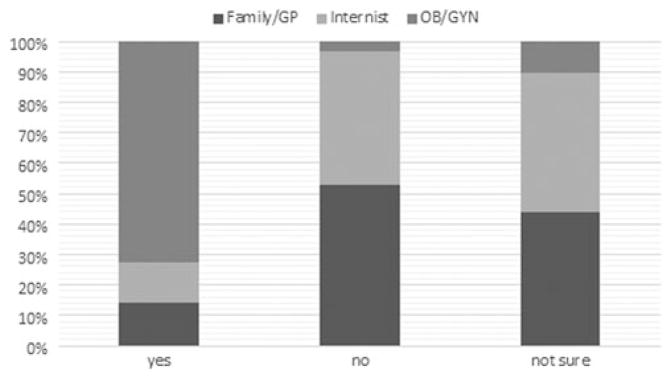
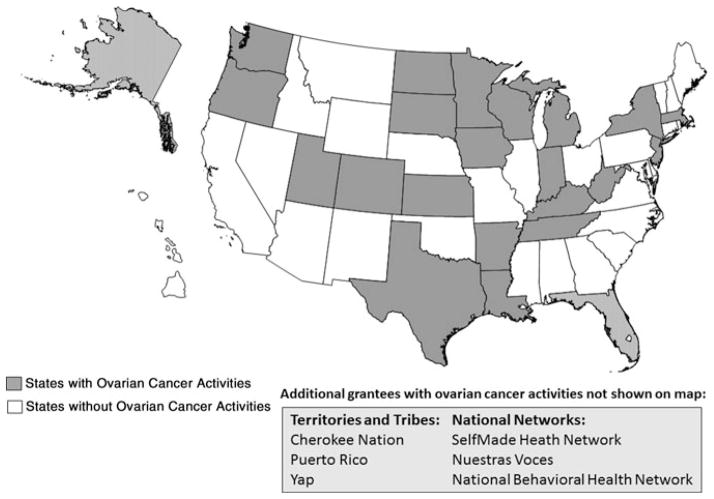
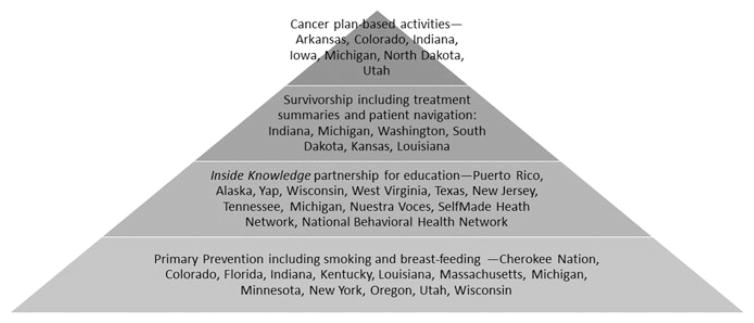
Ovarian cancer is the deadliest gynecologic cancer. Receipt of treatment from a gynecologic oncologist is an evidence-based recommendation to reduce mortality from the disease. We examined knowledge and application of this evidence-based recommendation in primary care physicians as part of CDC gynecologic cancer awareness campaign efforts and discussed results in the context of CDC National Comprehensive Cancer Control Program (NCCCP). We analyzed primary care physician responses to questions about how often they refer patients diagnosed with ovarian cancer to gynecologic oncologists, and reasons for lack of referral. We also analyzed these physicians' knowledge of tests to help determine whether a gynecologic oncologist is needed for a planned surgery. The survey response rate was 52.2%. A total of 84% of primary care physicians (87% of family/general practitioners, 81% of internists and obstetrician/gynecologists) said they always referred patients to gynecologic oncologists for treatment. Common reasons for not always referring were patient preference or lack of gynecologic oncologists in the practice area. A total of 23% of primary care physicians had heard of the OVA1 test, which helps to determine whether gynecologic oncologist referral is needed. Although referral rates reported here are high, it is not clear whether ovarian cancer patients are actually seeing gynecologic oncologists for care. The NCCCP is undertaking several efforts to assist with this, including education of the recommendation among women and providers and assistance with treatment summaries and patient navigation toward appropriate treatment. Expansion of these efforts to all populations may help improve adherence to recommendations and reduce ovarian cancer mortality.
Conflict of interest statement
Author Disclosure Statements No competing financial interests exist.
Figures

References
-
- U.S. Cancer Statistics Working Group. United States Cancer Statistics: 1999–2012 Incidence and Mortality Web-based Report. Atlanta: U.S. Department of Health and Human Services, Centers for Disease Control and Prevention and National Cancer Institute; 2015. [accessed on December 1, 2015]. Available at: www.cdc.gov/uscs.
-
- Stewart SL, Rim SH, Richards TB. Gynecologic oncologists and ovarian cancer treatment: Avenues for improved survival. J Womens Health (Larchmt) 2011;20:1257–1260. - PubMed
-
- Cress RD, Bauer K, O’Malley CD, et al. Surgical staging of early stage epithelial ovarian cancer: Results from the CDC-NPCR ovarian patterns of care study. Gynecol Oncol. 2011;121:94–99. - PubMed
-
- Chan JK, Sherman AE, Kapp DS, et al. Influence of gynecologic oncologists on the survival of patients with endometrial cancer. J Clin Oncol. 2011;29:832–838. - PubMed
MeSH terms
Grants and funding
LinkOut - more resources
Full Text Sources
Other Literature Sources
Medical
