


Health workers' compliance to rapid diagnostic tests (RDTs) to guide malaria treatment: a systematic review and meta-analysis
- PMID: 26979286
- PMCID: PMC4791859
- DOI: 10.1186/s12936-016-1218-5
Health workers' compliance to rapid diagnostic tests (RDTs) to guide malaria treatment: a systematic review and meta-analysis
Abstract
Background: The World Health Organization recommends malaria to be confirmed by either microscopy or a rapid diagnostic test (RDT) before treatment. The correct use of RDTs in resource-limited settings facilitates basing treatment onto a confirmed diagnosis; contributes to speeding up considering a correct alternative diagnosis, and prevents overprescription of anti-malarial drugs, reduces costs and avoids unnecessary exposure to adverse drug effects. This review aims to evaluate health workers' compliance to RDT results and factors contributing to compliance.
Methods: A PROSPERO-registered systematic review was conducted to evaluate health workers' compliance to RDTs in sub-Saharan Africa, following Preferred Reporting Items for Systematic Reviews and Meta-Analyses (PRISMA) guidelines. Studies published up to November 2015 were searched without language restrictions in Medline/Ovid, Embase, Cochrane Central Register of Controlled Trials, Web of Science, LILACS, Biosis Previews and the African Index Medicus. The primary outcome was health workers treating patients according to the RDT results obtained.
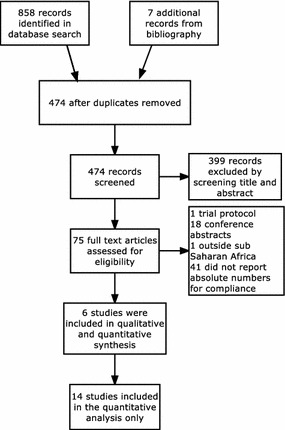
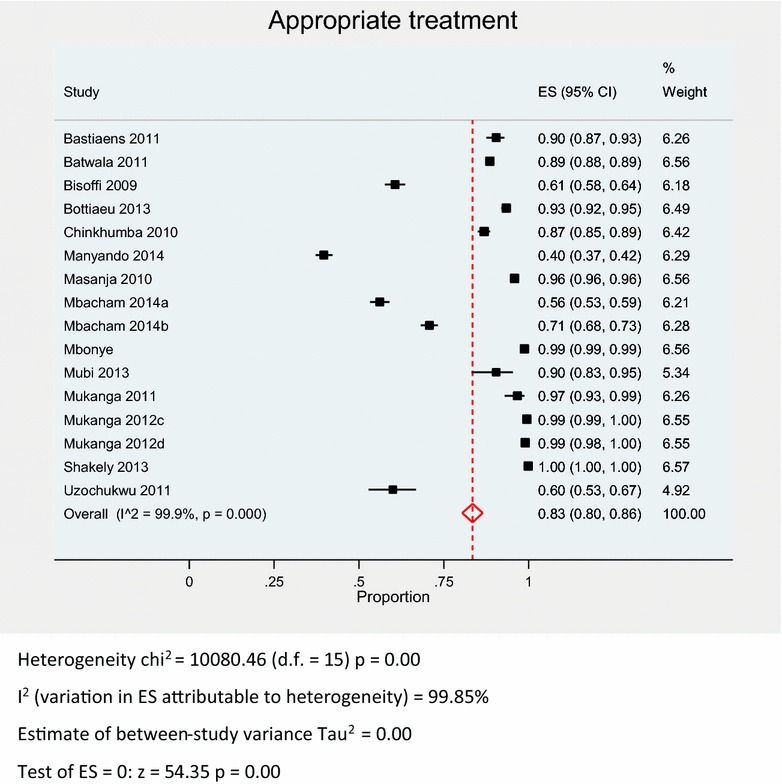
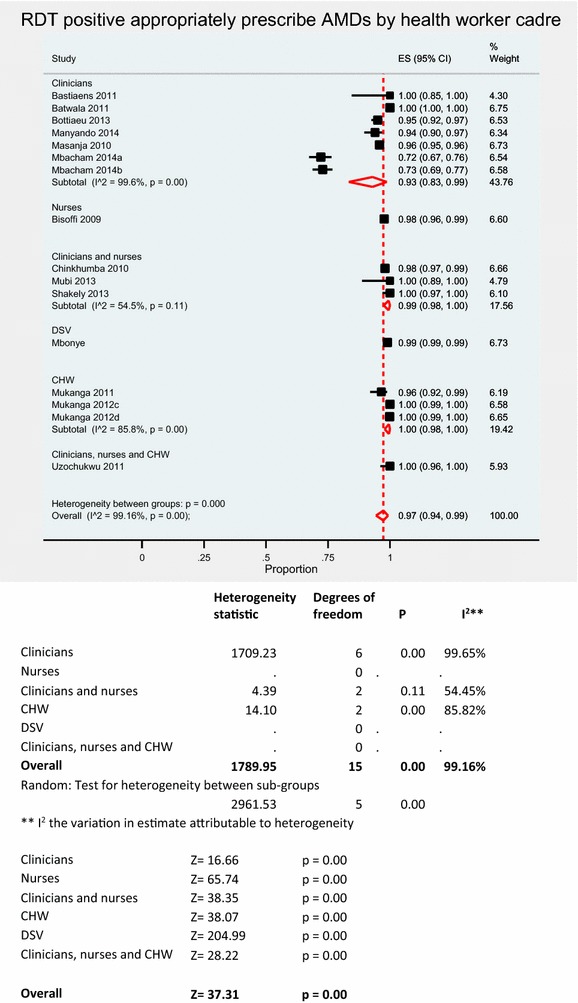
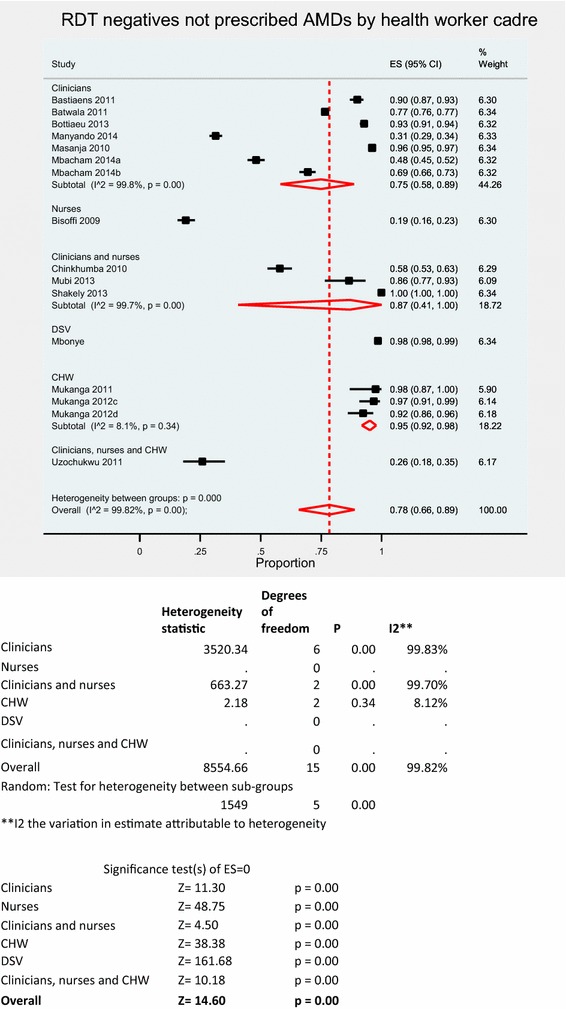
Results: The literature search identified 474 reports; 14 studies were eligible and included in the quantitative analysis. From the meta-analysis, health workers' overall compliance in terms of initiating treatment or not in accordance with the respective RDT results was 83% (95% CI 80-86%). Compliance to positive and negative results was 97% (95% CI 94-99%) and 78% (95% CI 66-89%), respectively. Community health workers had higher compliance rates to negative test results than clinicians. Patient expectations, work experience, scepticism of results, health workers' cadres and perceived effectiveness of the test, influenced compliance.
Conclusions: With regard to published data, compliance to RDT appears to be generally fair in sub-Saharan Africa; compliance to negative results will need to improve to prevent mismanagement of patients and overprescribing of anti-malarial drugs. Improving diagnostic capacity for other febrile illnesses and developing local evidence-based guidelines may help improve compliance and management of negative RDT results.
Trial registration: CRD42015016151 (PROSPERO).
Keywords: Adherence; Clinical decision making; Compliance; Health workers; Malaria; Plasmodium falciparum; Rapid diagnostic test (RDT); Sub-Saharan Africa.
Figures
References
Publication types
MeSH terms
Substances
LinkOut - more resources
Full Text Sources
Other Literature Sources
Medical
