


Early Child Development and Nutrition: A Review of the Benefits and Challenges of Implementing Integrated Interventions
- PMID: 26980819
- PMCID: PMC4785470
- DOI: 10.3945/an.115.010363
Early Child Development and Nutrition: A Review of the Benefits and Challenges of Implementing Integrated Interventions
Abstract
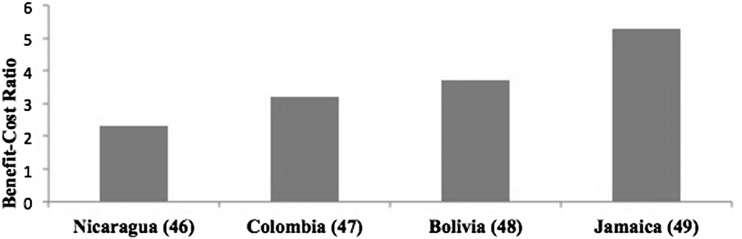
Poor nutrition (substandard diet quantity and/or quality resulting in under- or overnutrition) and the lack of early learning opportunities contribute to the loss of developmental potential and life-long health and economic disparities among millions of children aged <5 y. Single-sector interventions representing either early child development (ECD) or nutrition have been linked to positive child development and/or nutritional status, and recommendations currently advocate for the development and testing of integrated interventions. We reviewed the theoretical and practical benefits and challenges of implementing integrated nutrition and ECD interventions along with the evidence for best practice and benefit-cost and concluded that the strong theoretical rationale for integration is more nuanced than the questions that the published empirical evidence have addressed. For example, further research is needed to 1) answer questions related to how integrated messaging influences caregiver characteristics such as well-being, knowledge, and behavior and how these influence early child nutrition and development outcomes; 2) understand population and nutritional contexts in which integrated interventions are beneficial; and 3) explore how varying implementation processes influence the efficacy, uptake, and cost-benefit of integrated nutrition and ECD interventions.
Keywords: behavior change; care; child nutrition; early child development; integrated interventions.
© 2016 American Society for Nutrition.
Conflict of interest statement
Author disclosures: KM Hurley, AK Yousafzai, and F Lopez-Boo, no conflicts of interest.
Figures
References
-
- Black RE, Victora CG, Walker SP, Bhutta ZA, Christian P, de Onis M, Ezzati M, Grantham-McGregor S, Katz J, Martorell R, et al. Maternal and child undernutrition and overweight in low-income and middle-income countries. Lancet 2013;382:427–51. - PubMed
-
- Black MM, Dewey KG. Promoting equity through integrated early child development and nutrition interventions. Ann N Y Acad Sci 2014;1308:1–10. - PubMed
-
- Yousafzai AK, Bhutta ZA. Integrating early child development interventions in child health services: opportunities and challenges in developing countries In: Kamat D, editor. American Academy of Pediatrics textbook of global child health. 1st edition Washington (DC): American Academy of Pediatrics; 2012.
-
- Engle PL, Black MM, Behrman JR, Cabral de Mello M, Gertler PJ, Kapiriri L, Martorell R, Young ME. Strategies to avoid the loss of developmental potential in more than 200 million children in the developing world. Lancet 2007;369:229–42. - PubMed
Publication types
MeSH terms
LinkOut - more resources
Full Text Sources
Other Literature Sources
Medical
