. 2016 Mar 9:3:16006.
doi: 10.1038/hortres.2016.6. eCollection 2016.

An apple rootstock overexpressing a peach CBF gene alters growth and flowering in the scion but does not impact cold hardiness or dormancy

Affiliations

An apple rootstock overexpressing a peach CBF gene alters growth and flowering in the scion but does not impact cold hardiness or dormancy

Timothy S Artlip et al. Hortic Res. .

Abstract

The C-repeat binding factor (CBF) transcription factor is involved in responses to low temperature and water deficit in many plant species. Overexpression of CBF genes leads to enhanced freezing tolerance and growth inhibition in many species. The overexpression of a peach CBF (PpCBF1) gene in a transgenic line of own-rooted apple (Malus×domestica) M.26 rootstock (T166) trees was previously reported to have additional effects on the onset of dormancy and time of spring budbreak. In the current study, the commercial apple cultivar 'Royal Gala' (RG) was grafted onto either non-transgenic M.26 rootstocks (RG/M.26) or transgenic M.26 (T166) rootstocks (RG/T166) and field grown for 3 years. No PpCBF1 transcript was detected in the phloem or cambium of RG scions grafted on T166 rootstocks indicating that no graft transmission of transgene mRNA had occurred. In contrast to own-rooted T166 trees, no impact of PpCBF1 overexpression in T166 rootstocks was observed on the onset of dormancy, budbreak or non-acclimated leaf-cold hardiness in RG/T166 trees. Growth, however, as measured by stem caliper, current-year shoot extension and overall height, was reduced in RG/T166 trees compared with RG/M.26 trees. Although flowering was evident in both RG/T166 and RG/M.26 trees in the second season, the number of trees in flower, the number of shoots bearing flowers, and the number of flower clusters per shoot was significantly higher in RG/M.26 trees than RG/T166 trees in both the second and third year after planting. Elevated levels of RGL (DELLA) gene expression were observed in RG/T166 trees and T166 trees, which may play a role in the reduced growth observed in these tree types. A model is presented indicating how CBF overexpression in a rootstock might influence juvenility and flower abundance in a grafted scion.


Figures
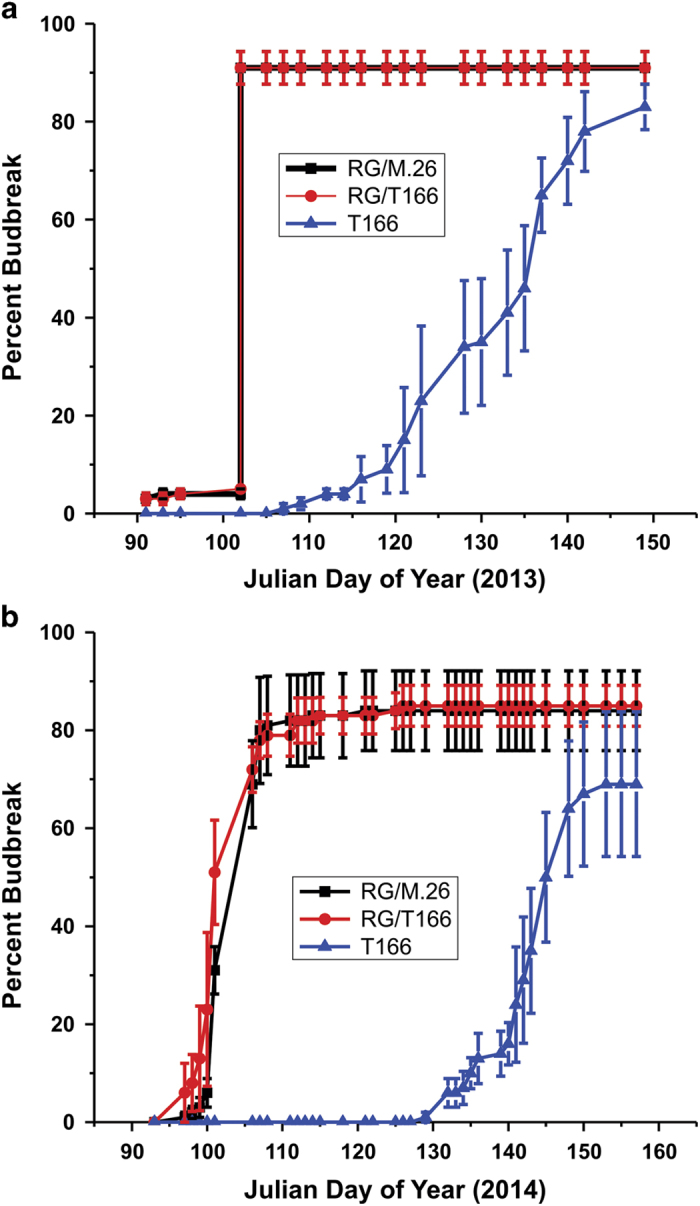
Figure 1
Figure 1
Budbreak of RG/M.26, RG/T166 and T166 trees over two seasons. (a) 2013 data. (b) 2014 data. Twenty buds basipetal to the terminal bud of the central axis were monitored for budbreak (green tip) and percent budbreak calculated. Symbols represent the mean±s.e. (n=360). Black squares, RG/M.26; red circles, RG/T166; blue triangles, own-rooted T166.
Figure 2
Figure 2
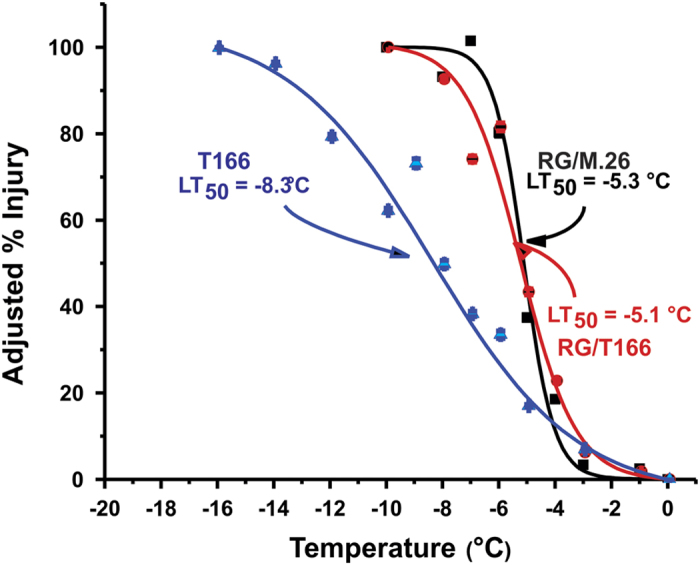
Freezing tolerance of non-acclimated (June) leaves collected from RG/M.26, RG/T166 and T166 own-rooted trees. No difference in freezing tolerance was observed between RG/M.26 and RG/T166 leaves, while T166 exhibited enhanced freezing tolerance. Black squares, RG/M.26; red circles, RG/T166; blue triangles, own-rooted T166. Symbols represent mean±s.e. (n=3). Each biological replicate (tree) consisted of three technical replicates.
Figure 3
Figure 3
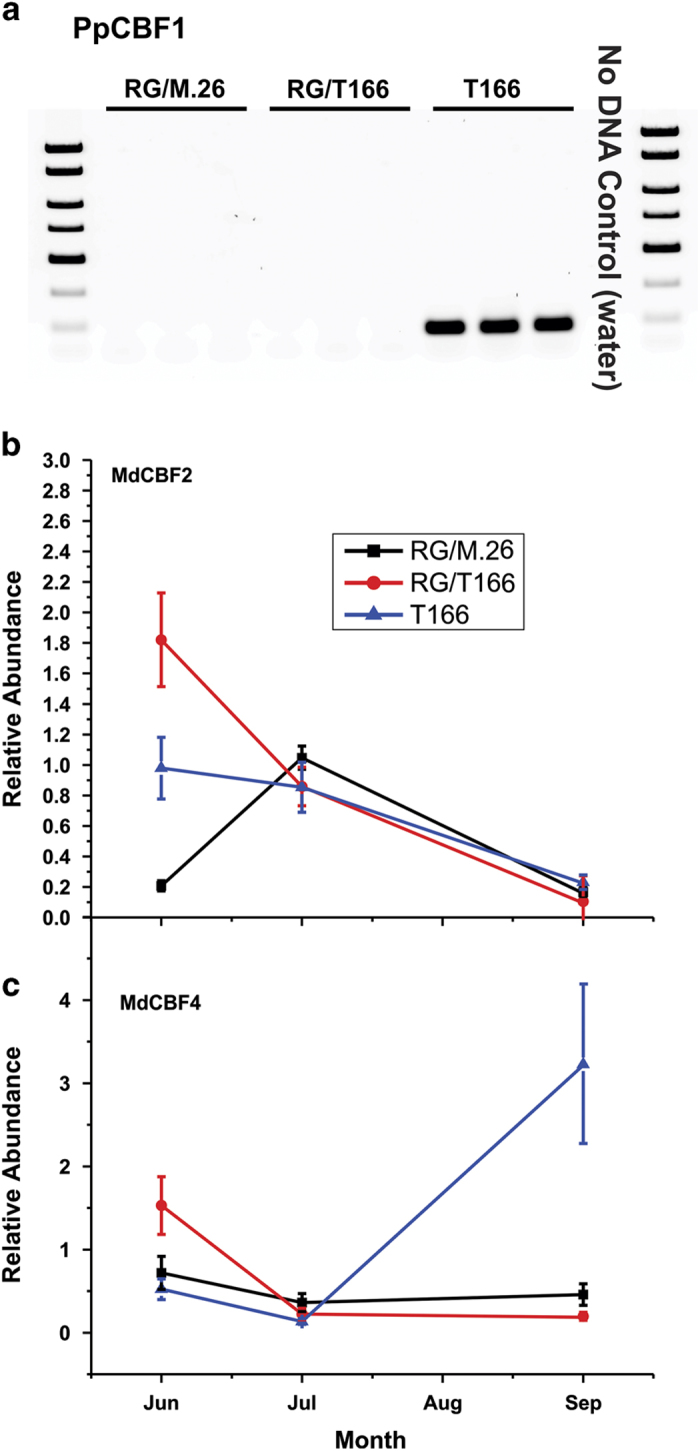
Expression of PpCBF1 and native MdCBF genes in scion bark tissues of RG/M.26, RG/ T166 and T166 own-rooted trees during the summer growing season. (a) PpCBF1 expression as determined by PCR. The PCR products were separated on a 2% agarose gel. (b) RT-qPCR of MdCBF2. (c) RT-qPCR of MdCBF4. Black squares, RG/M.26; red circles, RG/T166; blue triangles, own-rooted T166. Data represent the mean±s.e. (n=3). Each biological replicate (tree) was composed of three technical replicates.
Figure 4
Figure 4
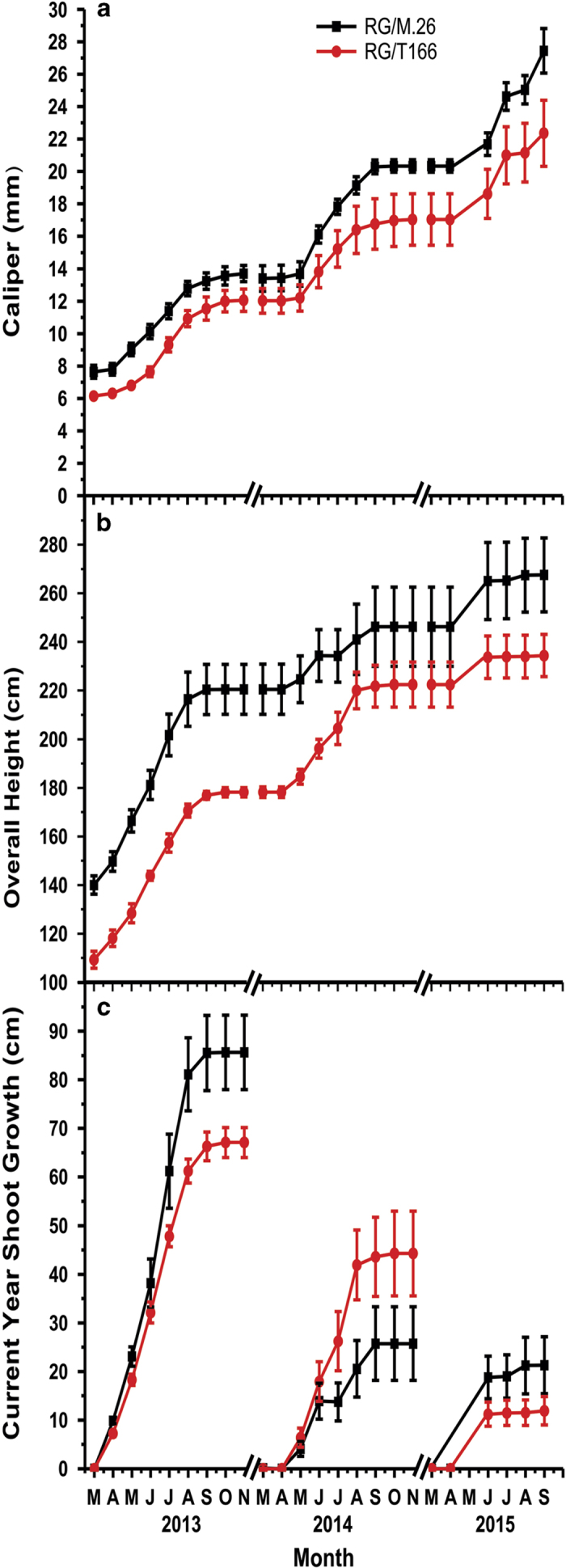
Growth of RG/M.26 and RG/T166 trees over three growing seasons. (a) Caliper (stem diameter) 20 cm above the graft union. (b) Current-year shoot growth taken from previous season’s bud scar to the shoot terminus. (c) Overall height. Black squares, RG/ M.26; red circles, RG/ T166. Symbols represent mean±s.e. (n=5).
Figure 5
Figure 5
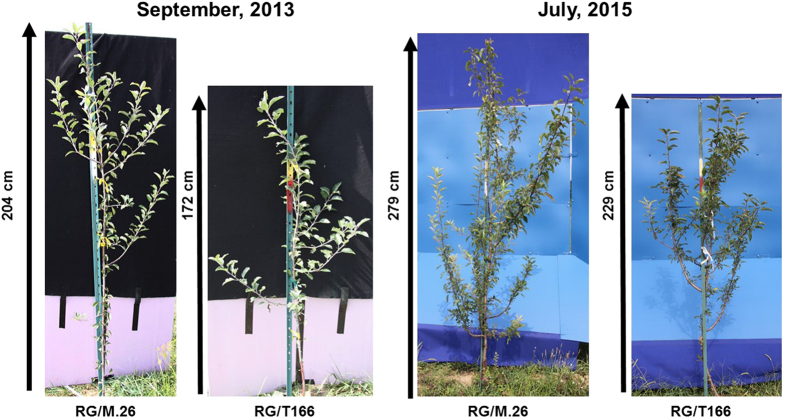
Photo of representative RG/M.26 and RG/T166 trees illustrating difference in growth in September 2013 and July 2015. Overall growth and the number of lateral branches were greater in RG/M.26 than RG/T166 trees.
Figure 6
Figure 6
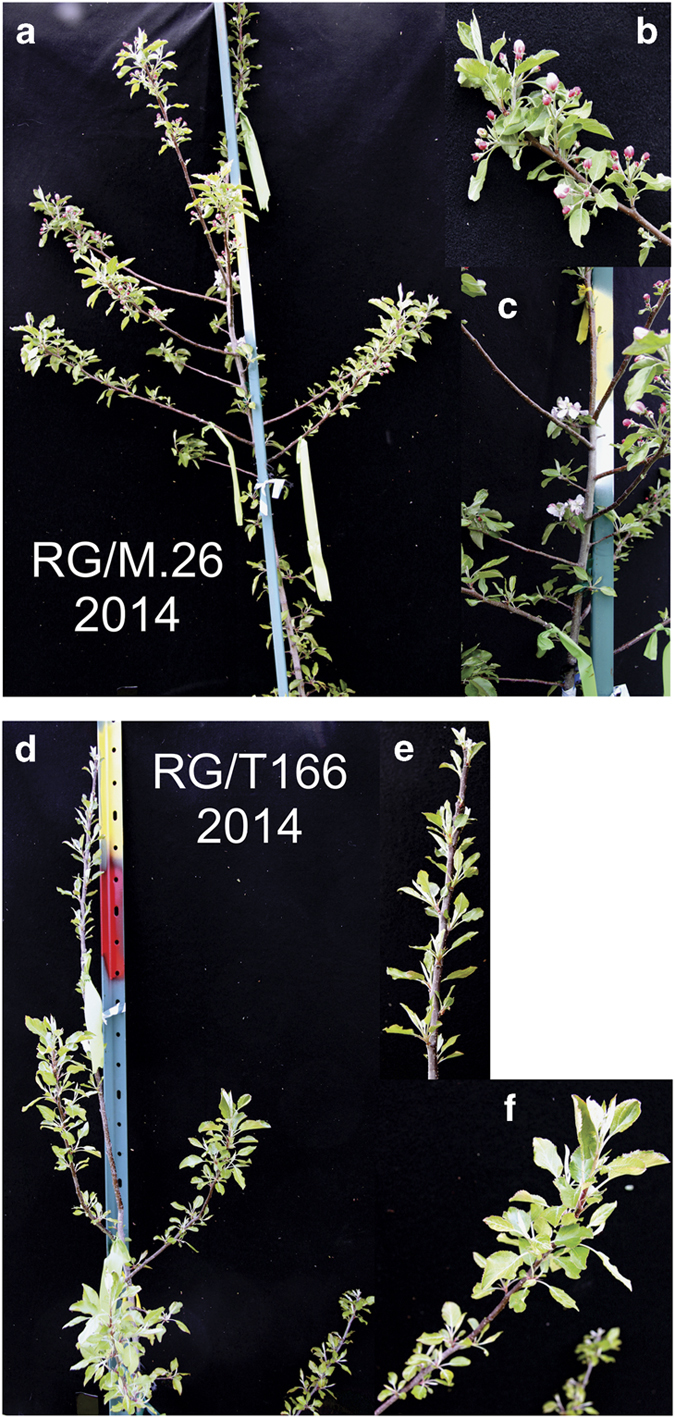
Photo of representative of RG/M.26 and RG/T166 trees in the spring of 2014 illustrating differences in the level of flowering in the two tree types. A greater number of RG/M.26 trees had floral bud clusters than RG/T166 trees. (a) Representative RG/M.26 tree. (b and c) Close up photos of a RG/M.26 tree showing numerous floral bud clusters. (d) Representative RG/T166 tree. (e and f) Close up photos of a RG/T166 tree showing no floral bud clusters.
Figure 7
Figure 7
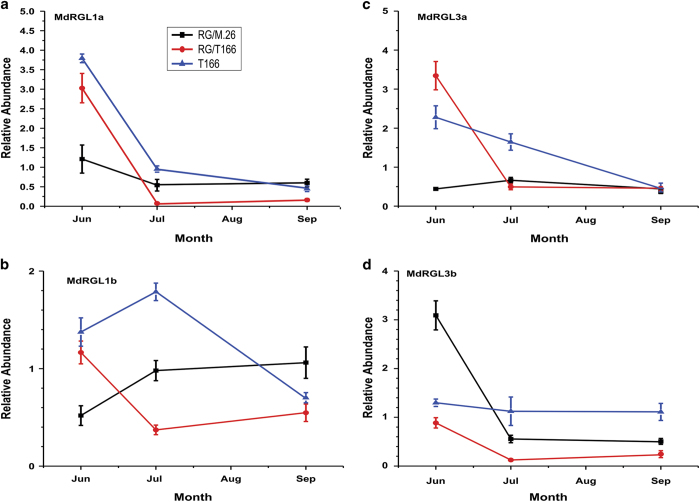
RT-qPCR analysis of MdRGL gene expression in bark tissues of scions from RG/M.26, RG/T166 and T166 own-rooted trees during the summer growing season. (a) MdRGL1a. (b) MdRGL1b. (c) MdRGL3a. (d) MdRGL3b. Black squares, ‘RG’/M.26; red circles, ‘RG’/T166; blue triangles, own-rooted T166. Symbols represent mean±s.e. (n=3). Each biological replicate (tree) was composed of three technical replicates.
Figure 8
Figure 8
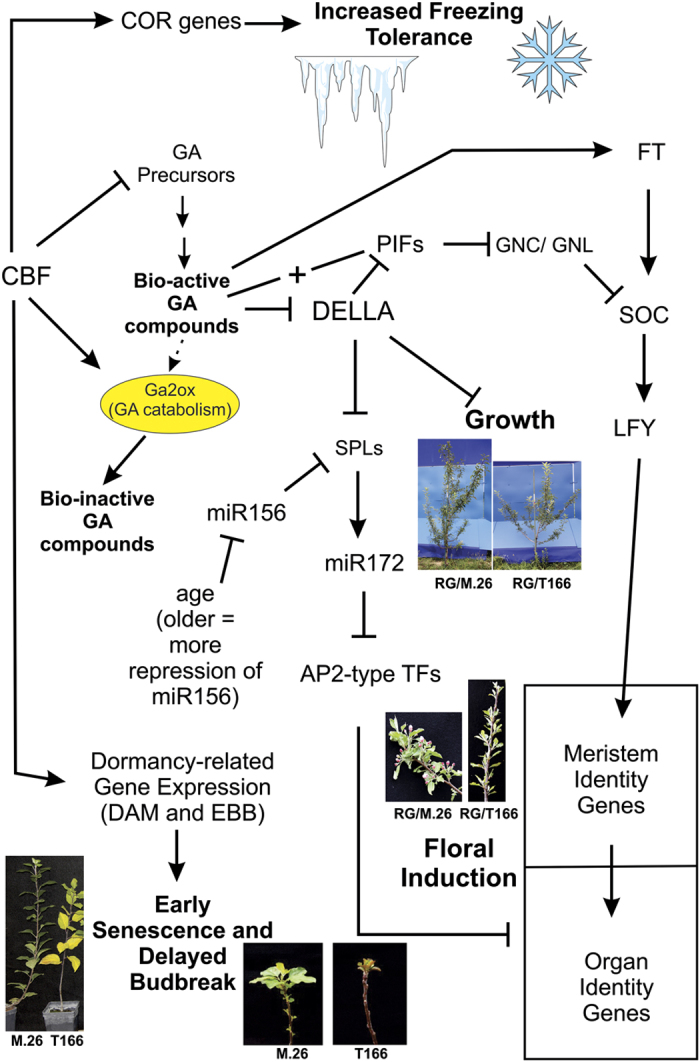
Schematic diagram of the potential influence of CBF gene expression on the regulation of freezing tolerance, dormancy, growth and juvenility (time to flowering). In the model, CBF gene expression regulates RGL (DELLA) gene expression which then impacts expression of growth and flowering-related pathways. CBF gene overexpression directly affects freezing tolerance and dormancy. Solid lines with arrowheads indicate positive regulation; solid lines ending as a ‘T’ indicate negative regulation; dotted line with arrowhead indicates GA inactivation pathway; ‘+’ indicates interaction of GA with PIF. AP-2, APETALA-2; COR, cold regulated; EBB, early budbreak; GNC/GNL, GNC: GATA, nitrate-inducible, carbon-metabolism involved; GNL, GNC-like; GAMYB, GA-regulated MYB transcription factor; miR156 and miR172, micro RNAs; TFs, transcription factors. Figure based on models presented in various reports.,,,,,

References

    1. Thomashow MF . Molecular basis of plant cold acclimation: insights gained from studying the CBF cold response pathway. Plant Physiol 2010; 154: 571–577. - PMC - PubMed
    1. Medina J , Catalá R , Salinas J . The CBFs: three arabidopsis transcription factors to cold acclimate. Plant Sci 2011; 180: 3–11. - PubMed
    1. Qin F , Shinozaki K , Yamaguchi-Shinozaki K . Achievements and challenges in understanding plant abiotic stress responses and tolerance. Plant Cell Physiol 2011; 52: 1569–1582. - PubMed
    1. Mizoi J , Shinozaki K , Yamaguchi-Shinozaki K . AP2/ERF transcription factors in plant abiotic stress responses. Biochim Biophys Acta 2012; 1819: 86–96. - PubMed
    1. Welling A , Palva ET . Involvement of CBF transcription factors in winter hardiness in birch. Plant Physiol 2008; 147: 1199–1211. - PMC - PubMed