


Beyond Attributable Burden: Estimating the Avoidable Burden of Disease Associated with Household Air Pollution
- PMID: 26982804
- PMCID: PMC4794200
- DOI: 10.1371/journal.pone.0149669
Beyond Attributable Burden: Estimating the Avoidable Burden of Disease Associated with Household Air Pollution
Abstract
Background: The Global Burden of Disease (GBD) studies have transformed global understanding of health risks by producing comprehensive estimates of attributable disease burden, or the current disease that would be eliminated if a risk factor did not exist. Yet many have noted the greater policy significance of avoidable burden, or the future disease that could actually be eliminated if a risk factor were eliminated today. Avoidable risk may be considerably lower than attributable risk if baseline levels of exposure or disease are declining, or if a risk factor carries lagged effects on disease. As global efforts to deliver clean cookstoves accelerate, a temporal estimation of avoidable risk due to household air pollution (HAP) becomes increasingly important, particularly in light of the rapid uptake of modern stoves and ongoing epidemiologic transitions in regions like South and Southeast Asia.
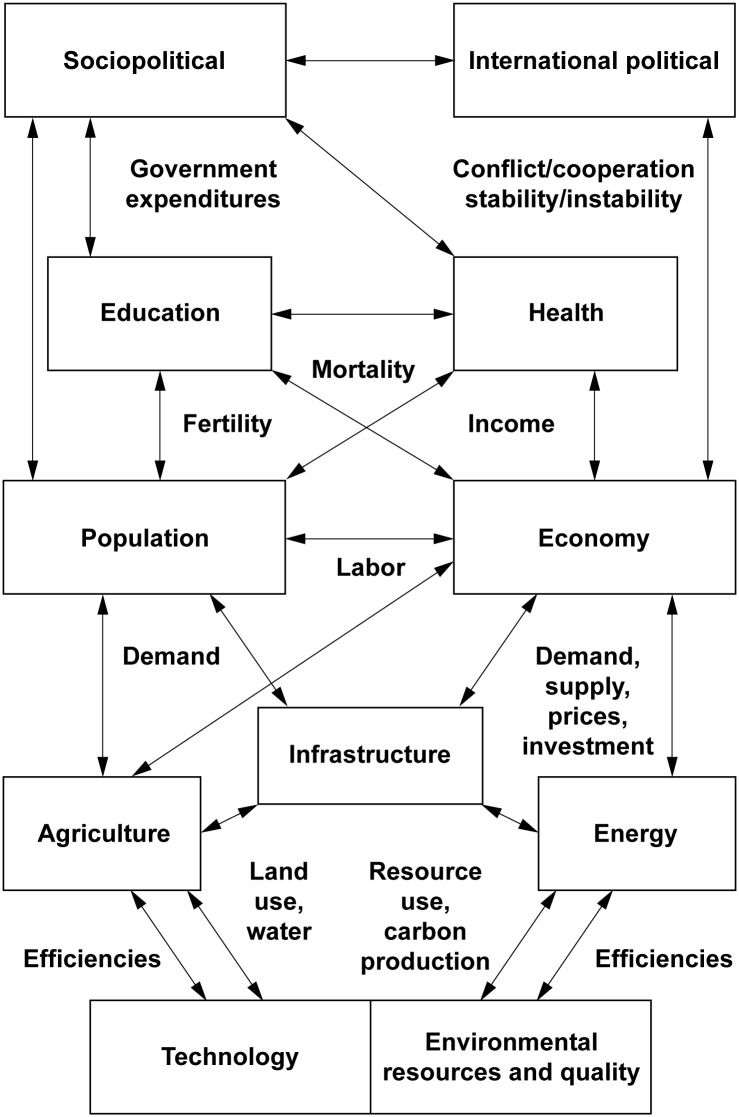
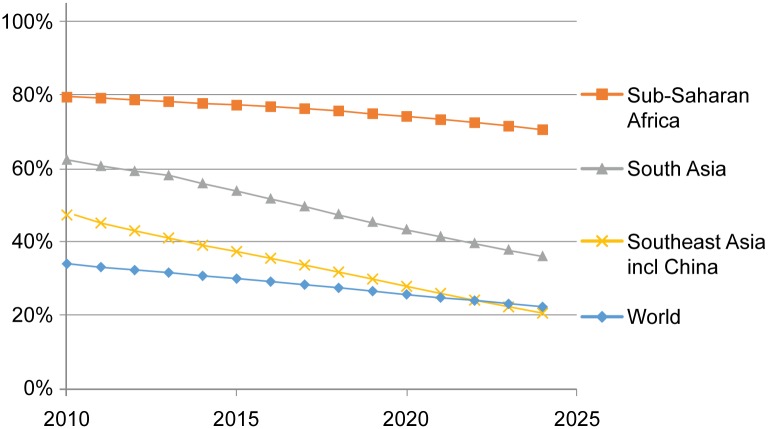
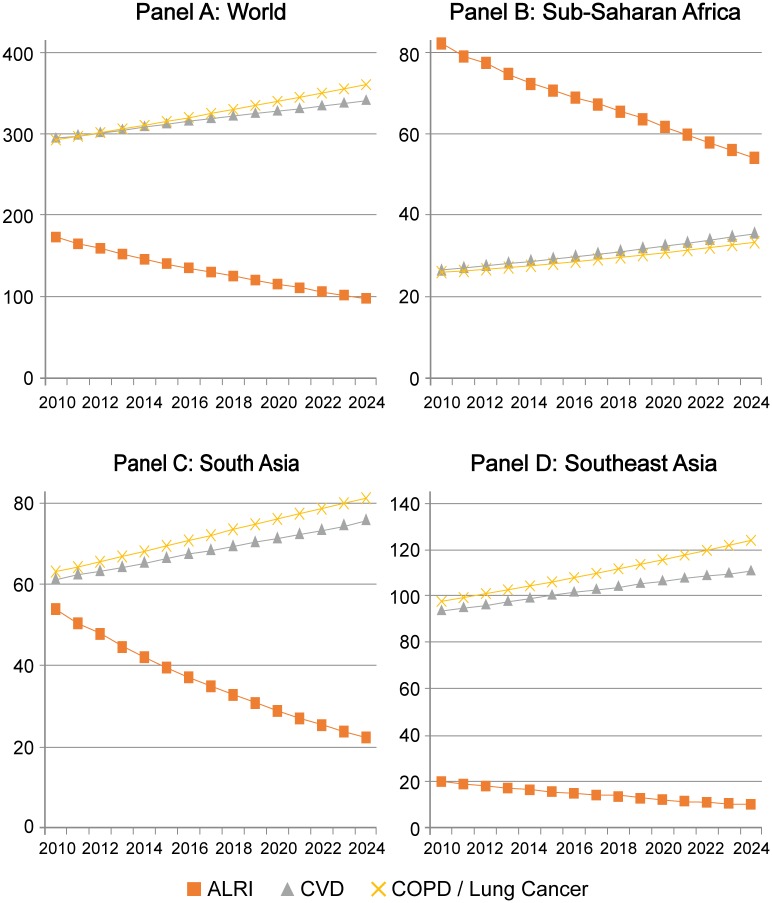
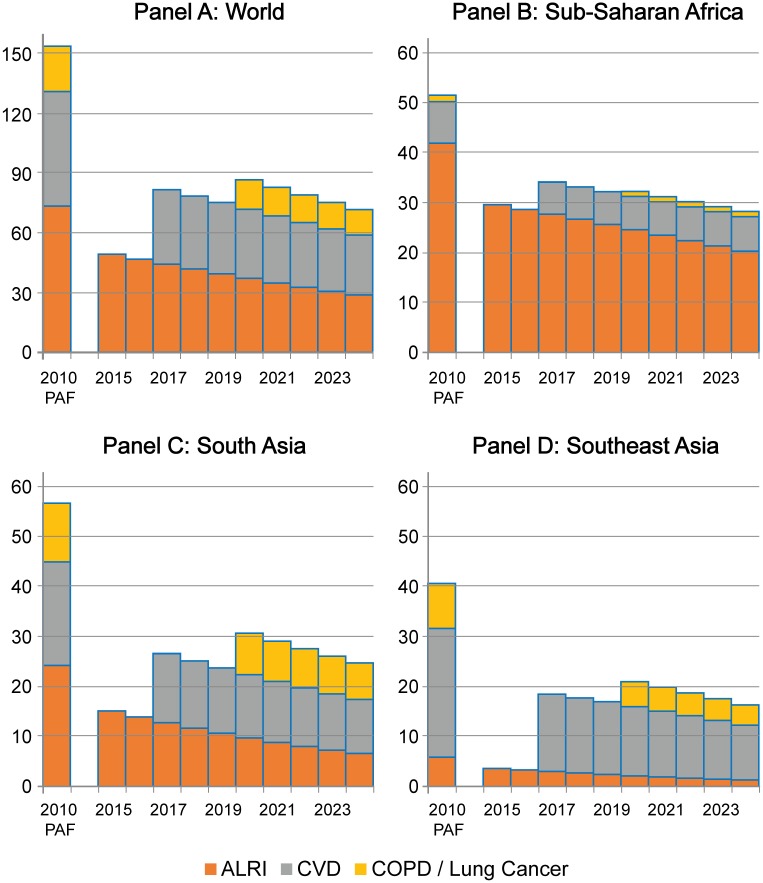
Methods and findings: We estimate the avoidable burden associated with HAP using International Futures (IFs), an integrated forecasting system that has been used to model future global disease burdens and risk factors. Building on GBD and other estimates, we integrated a detailed HAP exposure estimation and exposure-response model into IFs. We then conducted a counterfactual experiment in which HAP exposure is reduced to theoretical minimum levels in 2015. We evaluated avoidable mortality and DALY reductions for the years 2015 to 2024 relative to a Base Case scenario in which only endogenous changes occurred. We present results by cause and region, looking at impacts on acute lower respiratory infection (ALRI) and four noncommunicable diseases (NCDs). We found that just 2.6% of global DALYs would be averted between 2015 and 2024, compared to 4.5% of global DALYs attributed to HAP in the 2010 GBD study, due in large part to the endogenous tendency towards declining traditional stove usage in the IFs base case forecast. The extent of diminished impact was comparable for ALRI and affected NCDs, though for different reasons. ALRI impacts diminish due to the declining burden of ALRI in the base case forecast, particularly apparent in South Asia and Southeast Asia. Although NCD burdens are rising in regions affected by HAP, the avoidable risk of NCD nonetheless diminishes due to lagged effects. Because the stove transition and the decline of ALRI are proceeding more slowly in Sub-Saharan Africa, avoidable impacts would also be more persistent (3.9% of total DALY due to HAP) compared to South Asia (3.6%) or Southeast Asia (2.5%).
Conclusions: Our results illustrate how a temporal dynamic calculation of avoidable risk may yield different estimates, compared to a static attributable risk estimate, of the global and regional burden of disease. Our results suggest a window of rising and falling opportunity for HAP interventions that may have already closed in Southeast Asia and may be closing quickly in South Asia, but may remain open longer in Sub-Saharan Africa. A proper accounting of global health priorities should apply an avoidable risk framework that considers the role of ongoing social, economic and health transitions in constantly altering the disease and risk factor landscape.
Conflict of interest statement
Figures
References
-
- Lim SS, Vos T, Flaxman AD, Danaei G, Shibuya K, Adair-Rohani H, et al. A comparative risk assessment of burden of disease and injury attributable to 67 risk factors and risk factor clusters in 21 regions, 1990–2010: a systematic analysis for the Global Burden of Disease Study 2010. Lancet. 2012;380: 2224–60. 10.1016/S0140-6736(12)61766-8 - DOI - PMC - PubMed
-
- Smith KR, Bruce N, Balakrishnan K, Adair-Rohani H, Balmes J, Chafe Z, et al. Millions dead: How do we know and what does it mean? Methods used in the comparative risk assessment of household air pollution. Annu Rev Public Health. 2014;35: 185–205. 10.1146/annurev-publhealth-032013-182356 - DOI - PubMed
Publication types
MeSH terms
LinkOut - more resources
Full Text Sources
Other Literature Sources
Medical
Research Materials
