


Treatment of complex elbow fracture-dislocations
- PMID: 26984334
- PMCID: PMC4896880
- DOI: 10.1007/s12178-016-9337-8
Treatment of complex elbow fracture-dislocations
Abstract
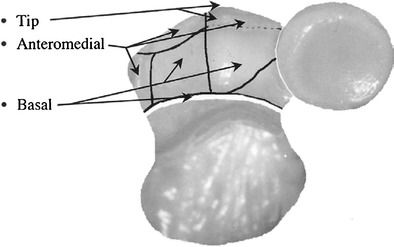
Successful management of complex elbow fracture-dislocations requires, in part, recognition of the overall injury pattern, which can aid in the identification of concomitant bony and soft tissue injuries. Trans-olecranon fracture-dislocations are best treated surgically with stable anatomic restoration of the trochlear notch. Terrible triad elbow injuries are believed to be caused by a valgus posterolateral force. Although select terrible triad injuries can be managed non-operatively, the majority of injuries are treated with stable surgical repair to allow early elbow motion. Unlike terrible triads, varus posteromedial forces are theorized to cause anteromedial coronoid fractures. These are usually associated with LCL disruptions, but do not have concomitant MCL or radial head injuries. A subset of anteromedial coronoid fractures can also be managed non-operatively. Internal fixation is recommended for injuries associated with large fracture fragments or elbow instability preventing early motion.
Keywords: Anteromedial coronoid; Elbow instability; Fracture-dislocation; Terrible triad; Trans-olecranon.
Figures
References
-
- Lee GA, Katz SD, Lazarus MD. Elbow valgus stress radiography in an uninjured population. Am J Sports Med. 1998;26(3):425–7. - PubMed
Publication types
LinkOut - more resources
Full Text Sources
Other Literature Sources
