


Hepatitis B in Ghana: a systematic review & meta-analysis of prevalence studies (1995-2015)
- PMID: 26987556
- PMCID: PMC4797341
- DOI: 10.1186/s12879-016-1467-5
Hepatitis B in Ghana: a systematic review & meta-analysis of prevalence studies (1995-2015)
Abstract
Background: Although, chronic hepatitis B (HBV) is considered to be of significant public health importance in Ghana, not many reviews detailing the burden (prevalence) of the disease have been conducted. This study was aimed at summarizing the available information and to make an accurate estimate of HBV infection prevalence in Ghana over the last two decades (1995-2015).
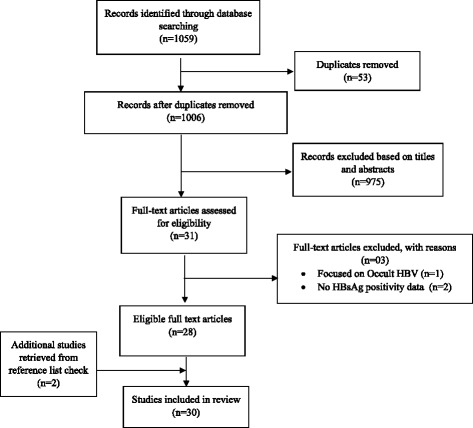
Methods: A systematic search was conducted in PubMed, ScienceDirect, Google Scholar and Africa Journals Online (AJOL) databases to retrieve primary studies published between 1st January 1995 and 4th October 2015, assessing the prevalence of HBV among populations in Ghana. This was supplemented by a manual search of retrieved references.
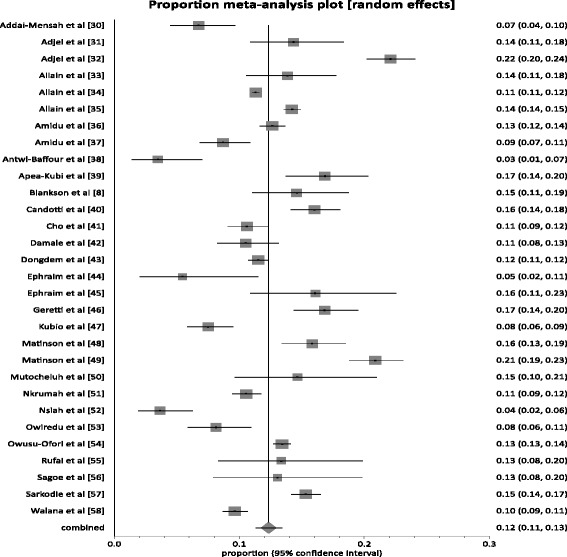
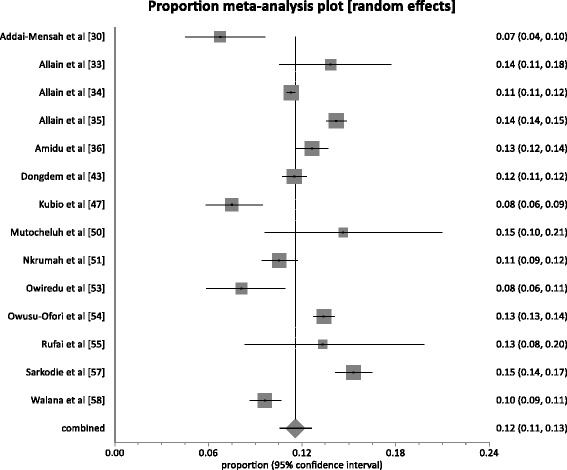
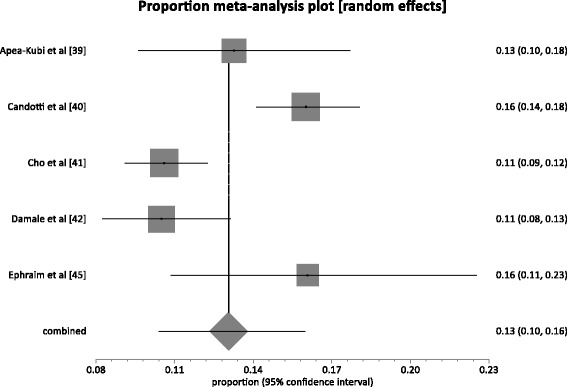
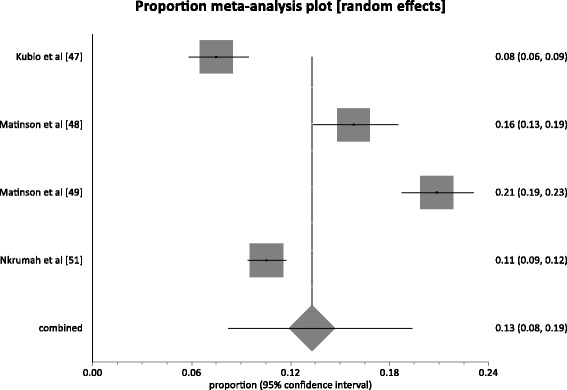
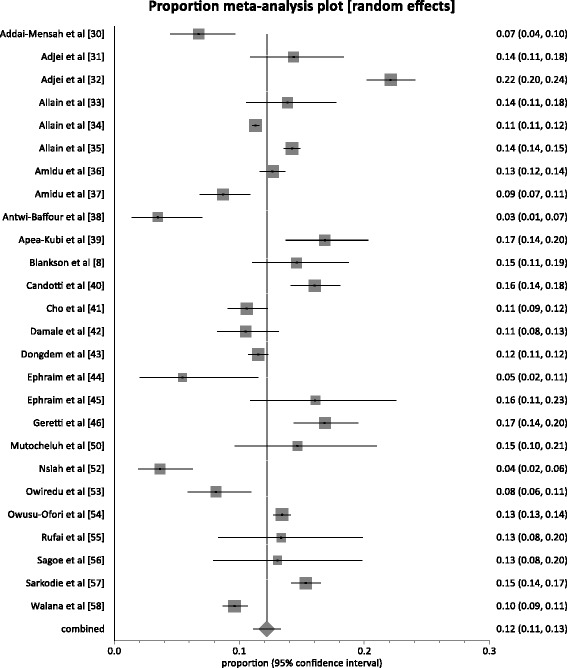
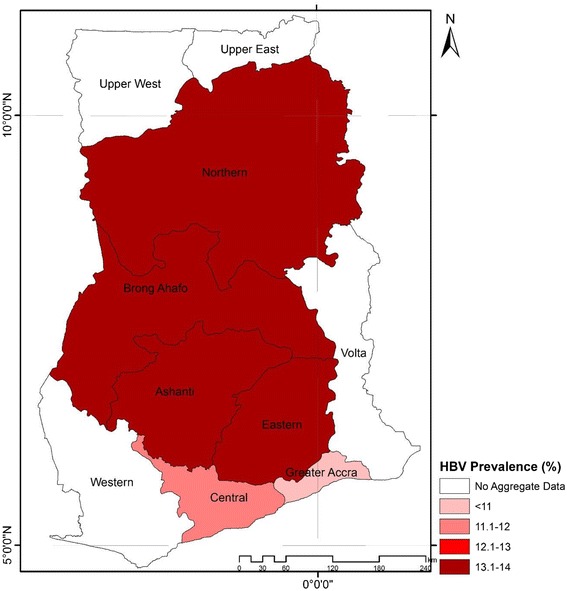
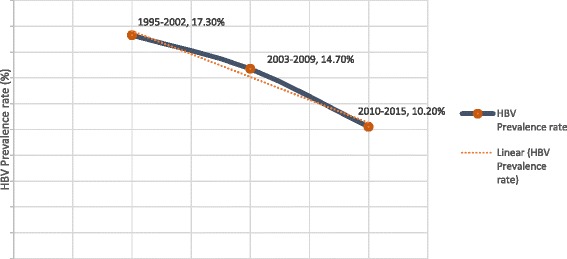
Results: Thirty (30) studies across all the ten (10) regions of Ghana and involving an overall population size of 105,435 were analyzed. The national prevalence of HBV as determined by HBsAg seropositivity was 12.3%. HBV prevalence among voluntary blood donors (VBDs), replacement blood donors (RBDs) and pregnant women were 10.8, 12.7 and 13.1% respectively. HBV infection prevalence was highest among studies published within the period 1995-2002 (17.3%), followed by those published within 2003-2009 (14.7%) and the lowest prevalence rate being recorded across studies published in the period 2010-2015 (10.2%). Regional prevalence were determined for Ashanti, Greater Accra, Eastern, Northern, central and Brong-Ahafo regions as 13.1, 10.6, 13.6, 13.1, 11.5 and 13.7% respectively. No aggregate data were derived for Volta, Western, Upper East and Upper West regions. Higher prevalence of HBV infection was attained for rural (13.3%) compared to urban settings (12.2%). Across the country, highest HBV infection prevalence rates were recorded in persons within the age group 16-39 years.
Conclusion: Hepatitis B infection is clearly an important public health problem in Ghana. The burden of the disease as dictated by a high prevalence rate calls for urgent public health interventions and strategic policy directions to controlling the disease to avert any potential future explosion.
Keywords: Endemicity; Ghana; Hepatitis B; Meta-analysis; Viral infections.
Figures
References
-
- World Health Organization. Hepatitis B. http://www.who.int/mediacentre/factsheets/fs204/en/(2015). Accessed 01 Oct 2015.
Publication types
MeSH terms
Substances
LinkOut - more resources
Full Text Sources
Other Literature Sources
