


Polymerase chain reaction-restriction fragment length polymorphism (PCR-RFLP) for rapid diagnosis of neonatal sepsis
- PMID: 26997017
- PMCID: PMC4822372
- DOI: 10.4103/0971-5916.178613
Polymerase chain reaction-restriction fragment length polymorphism (PCR-RFLP) for rapid diagnosis of neonatal sepsis
Abstract
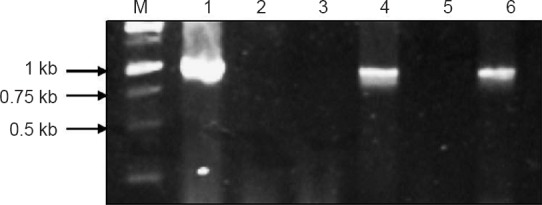
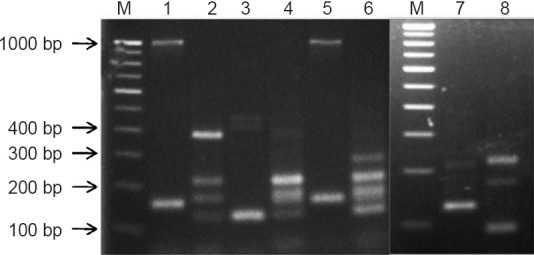
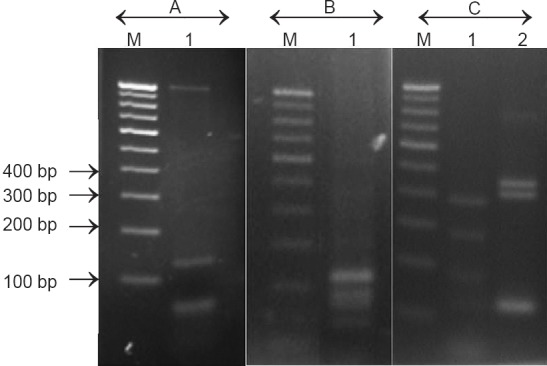
Background & objectives: The difficulties in diagnosis of neonatal sepsis are due to varied clinical presentation, low sensitivity of blood culture which is considered the gold standard and empirical antibiotic usage affecting the outcome of results. Though polymerase chain reaction (PCR) based detection of bacterial 16S rRNA gene has been reported earlier, this does not provide identification of the causative agent. In this study, we used restriction fragment length polymorphism (RFLP) of amplified 16S rRNA gene to identify the organisms involved in neonatal sepsis and compared the findings with blood culture.
Methods: Blood samples from 97 neonates were evaluated for diagnosis of neonatal sepsis using BacT/Alert (automated blood culture) and PCR-RFLP.
Results: Bacterial DNA was detected by 16S rRNA gene PCR in 55 cases, while BacT/Alert culture was positive in 34 cases. Staphylococcus aureus was the most common organism detected with both methods. Klebsiella spp. was isolated from four samples by culture but was detected by PCR-RFLP in five cases while Acinetobacter spp. was isolated from one case but detected in eight cases by PCR-RFLP. The sensitivity of PCR was found to be 82.3 per cent with a negative predictive value of 85.7 per cent. Eighty of the 97 neonates had prior exposure to antibiotics.
Interpretation & conclusions: The results of our study demonstrate that PCR-RFLP having a rapid turnaround time may be useful for the early diagnosis of culture negative neonatal sepsis.
Conflict of interest statement
Figures
References
-
- Durrene T, Zaidi AKM. Burdern of neonatal infections in developing countries: A review of evidence from community based studies. Padiatr Infect Dis J. 2009;28:S3–9. - PubMed
-
- MacDonald MG, Seshia MMK, Mullett MD, editors. Avery's neonatology: pathophysiology & management of the newborn. 6th ed. Philadelphia, PA: Lippincott Williams & Wilkins; 2005.
-
- Yadav AK, Wilson CG, Prasad PL, Menon PK. Polymerase chain reaction in rapid diagnosis of neonatal sepsis. Indian Pediatr. 2005;42:681–5. - PubMed
-
- Dunham EC. Septicemia in newborn. Am J Dis Child. 1933;45:229–53.
-
- Mahapatra A, Ghosh SK, Mishra S, Pattnaik D, Pattnaik K, Mohanty SK. Enterobacter cloacae: a predominant pathogen in neonatal septicaemia. Indian J Med Microbiol. 2002;20:110–2. - PubMed
MeSH terms
Substances
LinkOut - more resources
Full Text Sources
Other Literature Sources
Molecular Biology Databases
Miscellaneous