. 2016 Mar 21;11(3):e0152138.
doi: 10.1371/journal.pone.0152138. eCollection 2016.

Characterisation of Signalling by the Endogenous GPER1 (GPR30) Receptor in an Embryonic Mouse Hippocampal Cell Line (mHippoE-18)

Affiliations

Characterisation of Signalling by the Endogenous GPER1 (GPR30) Receptor in an Embryonic Mouse Hippocampal Cell Line (mHippoE-18)

Nicholas J Evans et al. PLoS One. .

Abstract

Estrogen can modulate neuronal development and signalling by both genomic and non-genomic pathways. Many of its rapid, non-genomic effects on nervous tissue have been suggested to be mediated via the activation of the estrogen sensitive G-protein coupled receptor (GPER1 or GPR30). There has been much controversy over the cellular location, signalling properties and endogenous activators of GPER1. Here we describe the pharmacology and signalling properties of GPER1 in an immortalized embryonic hippocampal cell line, mHippoE-18. This cell line does not suffer from the inherent problems associated with the study of this receptor in native tissue or the problems associated with heterologously expression in clonal cell lines. In mHippoE-18 cells, 17β-Estradiol can mediate a dose-dependent rapid potentiation of forskolin-stimulated cyclic AMP levels but does not appear to activate the ERK1/2 pathway. The effect of 17β-Estradiol can be mimicked by the GPER1 agonist, G1, and also by tamoxifen and ICI 182,780 which activate GPER1 in a variety of other preparations. The response is not mimicked by the application of the classical estrogen receptor agonists, PPT, (an ERα agonist) or DPN, (an ERβ agonist), further suggesting that this effect of 17β-Estradiol is mediated through the activation of GPER1. However, after exposure of the cells to the GPER1 specific antagonists, G15 and G36, the stimulatory effects of the above agonists are replaced by dose-dependent inhibitions of forskolin-stimulated cyclic AMP levels. This inhibitory effect is mimicked by aldosterone in a dose-dependent way even in the absence of the GPER1 antagonists. The results are discussed in terms of possible "Biased Antagonism" whereby the antagonists change the conformation of the receptor resulting in changes in the agonist induced coupling of the receptor to different second messenger pathways.


Conflict of interest statement

Competing Interests: The authors have declared that no competing interests exist.

Figures

Fig 1
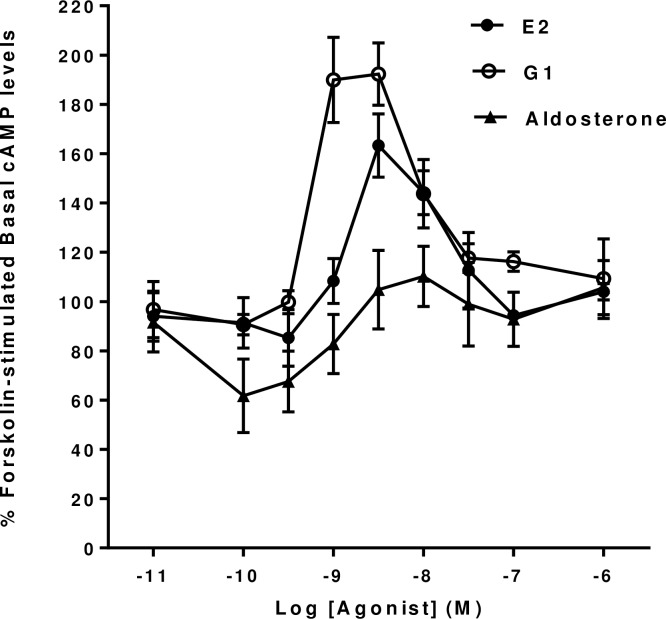
Fig 1. Effect of 17β-Estradiol, Aldosterone and G1 on basal forskolin-stimulated cAMP levels in mHippoE-18 cells.
Cells were pre-incubated with 100 μM IBMX for 20 min, followed by incubation with 10 μM forskolin and 100 μM IBMX in the presence of increasing concentrations of the various agonists for a further 20 min. The basal level in the absence of agonist is shown as 100%. Values are significantly different from basal as follows: 17β-Estradiol, 3 nM p <0.001, 10 nM p <0.01; G1, 1 nM p <0.005, 3 nM p <0.001, 10 nM p <0.05; Aldosterone, 0.1 nM and 0.3 nM p < 0.01, 1 nM p <0.05. Data are expressed as the mean ± SEM. n ≥ 3.
Fig 2
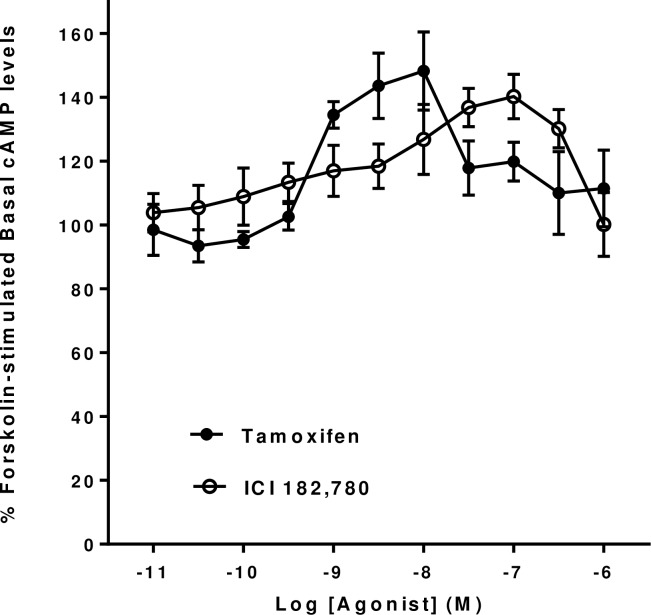
Fig 2. Effect of Tamoxifen and ICI 182,780 on basal forskolin-stimulated cAMP levels in mHippoE-18 cells.
Cells were pre-incubated with 100 μM IBMX for 20 min, followed by incubation with 10 μM forskolin and 100 μM IBMX in the presence of increasing concentrations of the various agonists for a further 20 min. The basal level in the absence of agonist is shown as 100%. Values are significantly different from basal as follows: Tamoxifen, 1 nM p <0.01, 3 nM p <0.005, 10 nM p <0.005; ICI 182,780, 3 nM p <0.05, 10 nM p <0.05, 30 nM p <0.01, 100 nM p <0.005, 300 nM p <0.05. Data are expressed as the mean ± SEM. n ≥ 3.
Fig 3
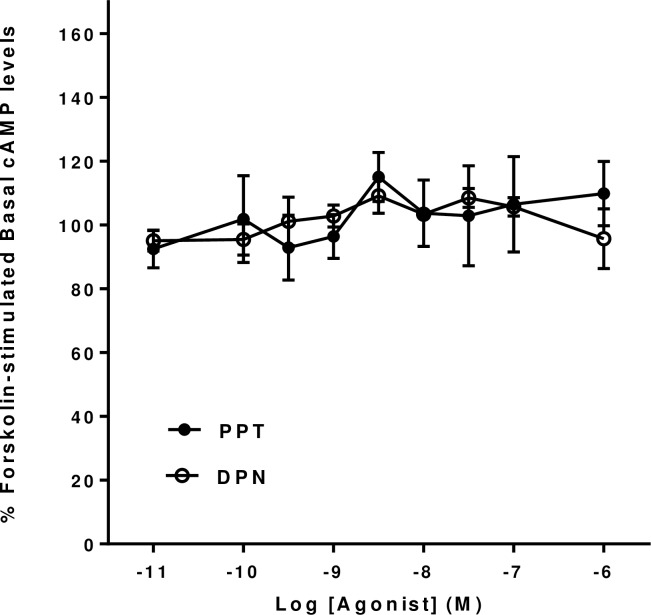
Fig 3. Effect of PPT and DPN on basal forskolin-stimulated cAMP levels in mHippoE-18 cells.
Cells were pre-incubated with 100 μM IBMX for 20 min, followed by incubation with 10 μM forskolin and 100 μM IBMX in the presence of increasing concentrations of the various agonists for a further 20 min. The basal level in the absence of agonist is shown as 100%. Data are expressed as the mean ± SEM. n ≥ 3.
Fig 4
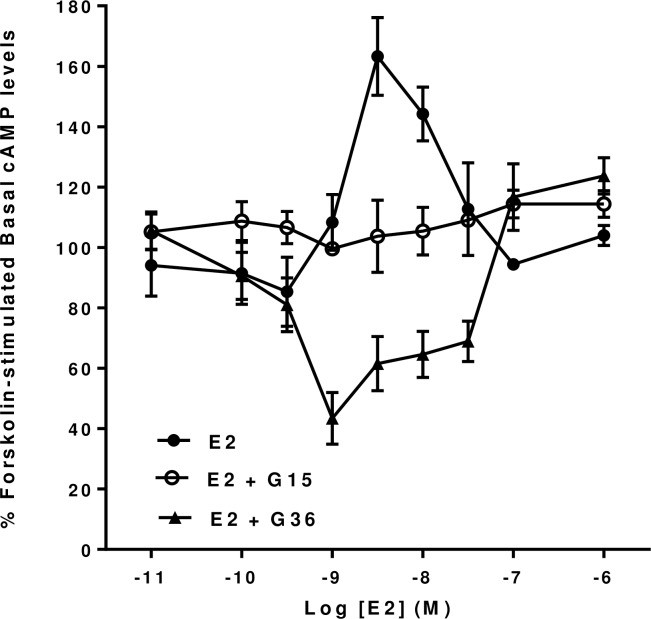
Fig 4. Effect of the GPER antagonists G15 and G16 on 17β-Estradiol (E2) forskolin-stimulated cAMP levels in mHippoE-18 cells.
mHippoE-18 cells were pre-incubated with 100 μM IBMX and 1 μM of either of the antagonists for 20 min, followed by incubation with varying concentrations of 17β-Estradiol, 1 μM antagonist, 10 μM forskolin and 100 μM IBMX for a further 20 min. The basal value in the absence of agonist and antagonists is shown as 100%. The 17β-Estradiol-only response in the absence of antagonist is shown for comparison. Values are significantly different from basal as follows: E2, see Fig 1; E2 +G36, 1 nM p <0.001, 3 nM, 10 nM and 30 nM p <0.01. Data are expressed as the mean ± SEM. n ≥ 3.
Fig 5
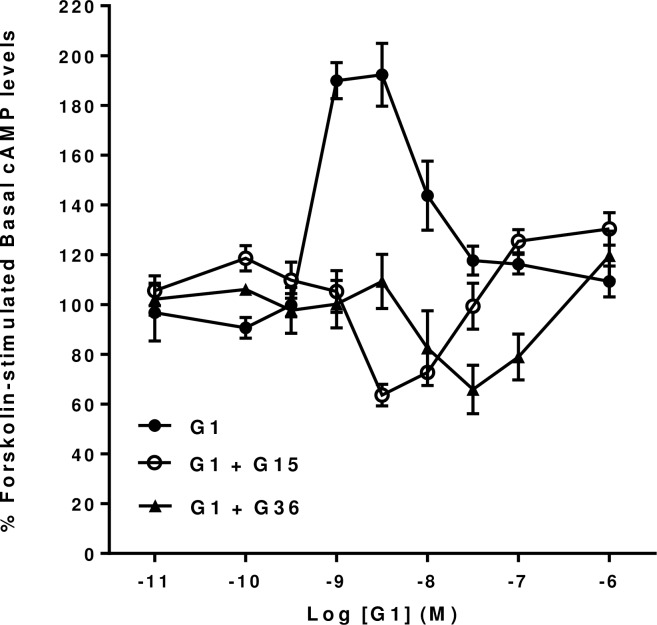
Fig 5. Effect of the GPER antagonists G15 and G16 on G1 forskolin-stimulated cAMP levels in mHippoE-18 cells.
mHippoE-18 cells were pre-incubated with 100 μM IBMX and 1 μM of either of the antagonists for 20 min, followed by incubation with varying concentrations of G1, 1 μM antagonist, 10 μM forskolin and 100 μM IBMX for a further 20 min. The basal value in the absence of agonist and antagonists is shown as 100%. The G1-only response in the absence of antagonist is shown for comparison. Values are significantly different from basal as follows: G1, see Fig 1; G1 + G15, 3 nM p <0.01, 10 nM, p <0.05; G1 + G36, 10 nM and 100 nM, p <0.05, 30 nM p <0.01. Data are expressed as the mean ± SEM. n ≥ 3.
Fig 6
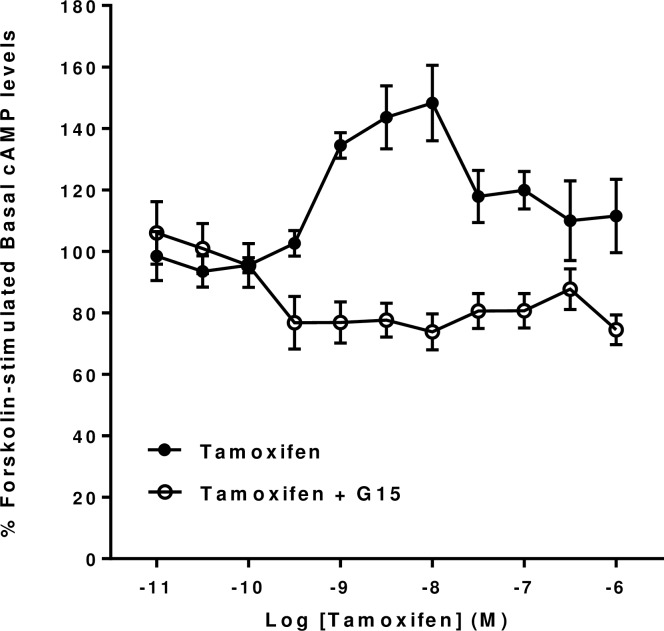
Fig 6. Effect of the GPER antagonist G15 on Tamoxifen forskolin-stimulated cAMP levels in mHippoE-18 cells.
mHippoE-18 cells were pre-incubated with 100 μM IBMX and 1 μM of G15 for 20 min, followed by incubation with varying concentrations of Tamoxifen, 1 μM antagonist, 10 μM forskolin and 100 μM IBMX for a further 20 min. The basal value in the absence of agonist and antagonist is shown as 100%. The Tamoxifen-only response in the absence of antagonist is shown for comparison. Values are significantly different from basal as follows: Tamoxifen see Fig 2; Tamoxifen + G15, 0.3 nM and above (except for 300 nM), p <0.05. Data are expressed as the mean ± SEM. n ≥ 3.
Fig 7
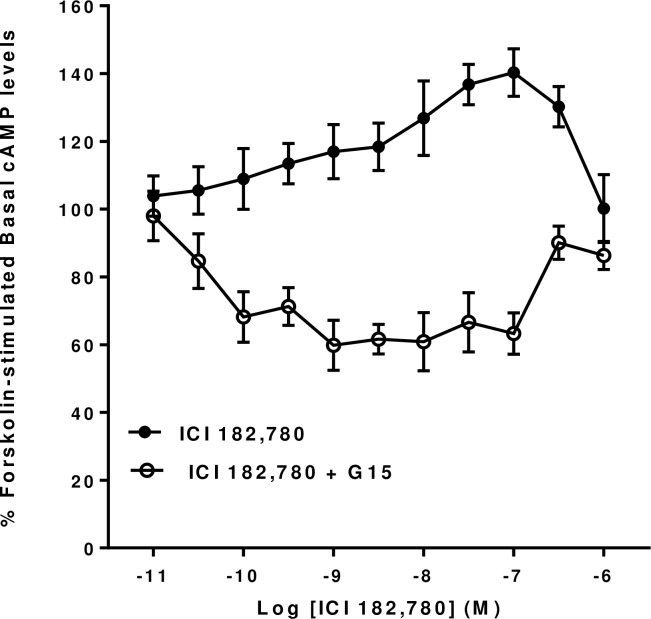
Fig 7. Effect of the GPER antagonist G15 on ICI 182,780 forskolin-stimulated cAMP levels in mHippoE-18 cells.
mHippoE-18 cells were pre-incubated with 100 μM IBMX and 1 μM of G15 for 20 min, followed by incubation with varying concentrations of ICI 182,780, 1 μM antagonist, 10 μM forskolin and 100 μM IBMX for a further 20 min. The basal value in the absence of agonist and antagonist is shown as 100%. The ICI 182,780-only response in the absence of antagonist is shown for comparison. Values are significantly different from basal as follows: ICI 182,780 see Fig 2; ICI 182,780, 0.1 nM to 100 nM p <0.01. Data are expressed as the mean ± SEM. n ≥ 3.

References

    1. Prossnitz ER, Arterburn JB. International Union of Basic and Clinical Pharmacology. XCVII. G protein-coupled estrogen receptor and its pharmacological modulators. Pharmacol Revs. 2015; 67:505–540. - PMC - PubMed
    1. Srivastava DP, Evans PD. GPER 1 –trials and tribulations of a membrane oestrogen receptor. J Neuroendocrinology. 2013; 25:1219–1230. - PubMed
    1. Barton M, Meyer MR. Nicolaus Copernicus and the rapid vascular responses to aldosterone. Trends Endocrinology and metabolism. 2015; 26:396–398. - PubMed
    1. Filardo EJ, Thomas P. GPR30: a seven-transmembrane-spanning estrogen receptor that triggers EGF release. Trends Endocrinol Metab. 2005; 16:362–367. - PubMed
    1. Filardo EJ, Thomas P. G-protein-coupled estrogen receptor-1 GPER-1: Its mechanism of action and role in female reproductive cancer, renal and vascular physiology. Endocrinology. 2012; 153:2952–2962. - PMC - PubMed

Publication types

MeSH terms