


Methods to induce labour: a systematic review, network meta-analysis and cost-effectiveness analysis
- PMID: 27001034
- PMCID: PMC5021158
- DOI: 10.1111/1471-0528.13981
Methods to induce labour: a systematic review, network meta-analysis and cost-effectiveness analysis
Abstract
Objectives: To compare the clinical effectiveness and cost-effectiveness of labour induction methods.
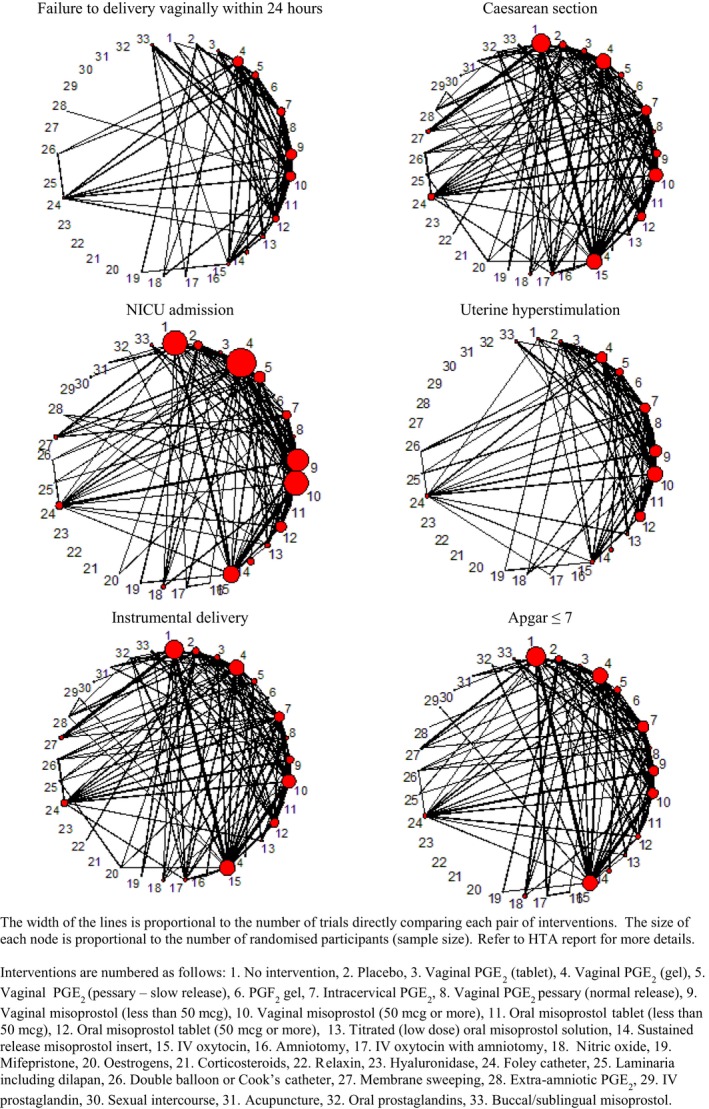
Methods: We conducted a systematic review of randomised trials comparing interventions for third-trimester labour induction (search date: March 2014). Network meta-analysis was possible for six of nine prespecified key outcomes: vaginal delivery within 24 hours (VD24), caesarean section, uterine hyperstimulation, neonatal intensive care unit (NICU) admissions, instrumental delivery and infant Apgar scores. We developed a decision-tree model from a UK NHS perspective and calculated incremental cost-effectiveness ratios, expected costs, utilities and net benefit, and cost-effectiveness acceptability curves.
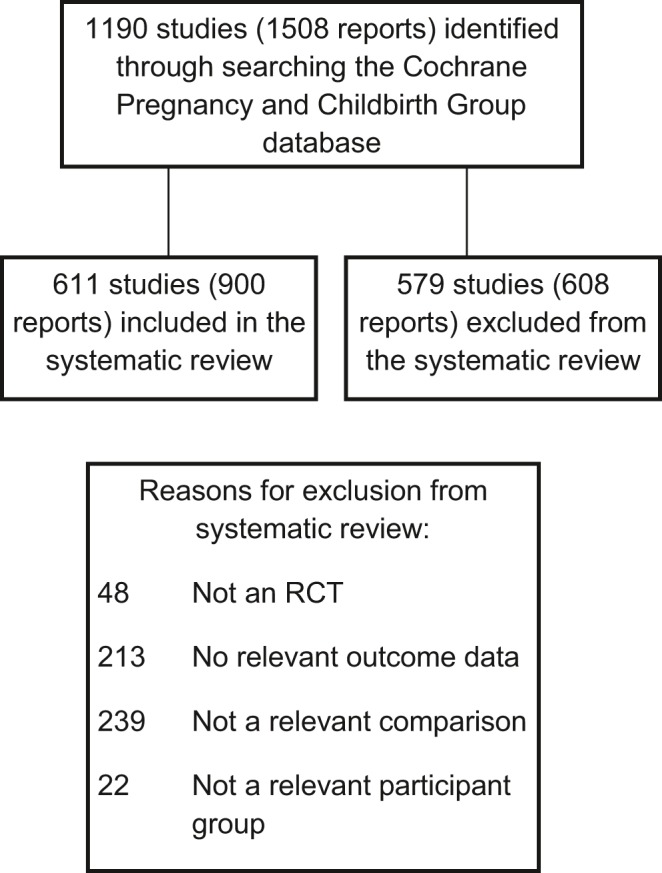
Main results: In all, 611 studies comparing 31 active interventions were included. Intravenous oxytocin with amniotomy and vaginal misoprostol (≥50 μg) were most likely to achieve VD24. Titrated low-dose oral misoprostol achieved the lowest odds of caesarean section, but there was considerable uncertainty in ranking estimates. Vaginal (≥50 μg) and buccal/sublingual misoprostol were most likely to increase uterine hyperstimulation with high uncertainty in ranking estimates. Compared with placebo, extra-amniotic prostaglandin E2 reduced NICU admissions. There were insufficient data to conduct analyses for maternal and neonatal mortality and serious morbidity or maternal satisfaction. Conclusions were robust after exclusion of studies at high risk of bias. Due to poor reporting of VD24, the cost-effectiveness analysis compared a subset of 20 interventions. There was considerable uncertainty in estimates, but buccal/sublingual and titrated (low-dose) misoprostol showed the highest probability of being most cost-effective.
Conclusions: Future trials should be designed and powered to detect a method that is more cost-effective than low-dose titrated oral misoprostol.
Tweetable abstract: New study ranks methods to induce labour in pregnant women on effectiveness and cost.
Keywords: Comparative effectiveness research; cost-effectiveness analysis; labour induction; network meta-analysis; systematic review.
© 2016 The Authors. BJOG An International Journal of Obstetrics and Gynaecology published by John Wiley & Sons Ltd on behalf of Royal College of Obstetricians and Gynaecologists.
Figures
Comment in
-
Uncertainty in evidence synthesis limits clinical applicability of a clinical and cost-effectiveness analysis of induction of labour methods.Evid Based Med. 2016 Dec;21(6):226. doi: 10.1136/ebmed-2016-110552. Epub 2016 Nov 3. Evid Based Med. 2016. PMID: 27811000 No abstract available.
References
-
- DoH . National Audit Office. Maternity Services in England In: Health Do , editor. Session 2013–14. London: HMSO, 2013.
-
- NHS . NHS Maternity Statistics, England 2010–11, December 1 2011, Maternity data reports, 2010–11. [www.ic.nhs.uk/pubs/maternity1011], 2011. Accessed 10 March 2015.
-
- NHS . Welsh Government. Maternity Statistics: Method of Delivery 2001–2011 [wales.gov.uk/docs/statistics/2012/120131sdr132012en.pdf], 2012. Accessed 10 March 2015.
-
- ONS . Office of National Statistics [www.ons.gov.uk/ons/rel/vsob1/birth-summary-tables-england-and-wales/2013...], 2013. Accessed 17 March 2015.
-
- Vogel JP, Gulmezoglu AMM, Hofmeyr GJ, Temmerman M. Global perspectives on elective induction of labor. Clin Obstet Gynecol 2014;57:331–42. - PubMed
Publication types
MeSH terms
Substances
Grants and funding
LinkOut - more resources
Full Text Sources
Other Literature Sources
Medical
