


Trends in long-term opioid prescribing in primary care patients with musculoskeletal conditions: an observational database study
- PMID: 27003191
- PMCID: PMC4912234
- DOI: 10.1097/j.pain.0000000000000557
Trends in long-term opioid prescribing in primary care patients with musculoskeletal conditions: an observational database study
Abstract
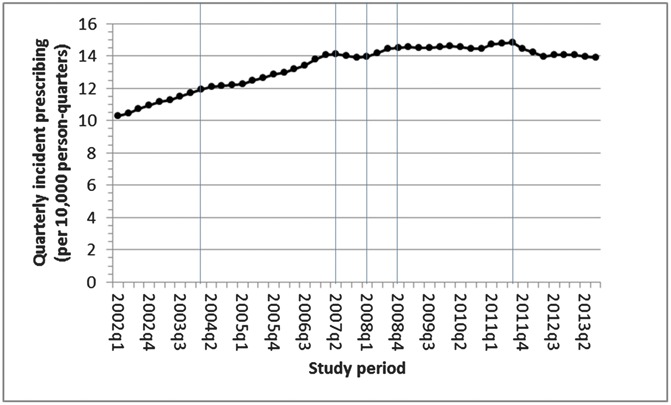
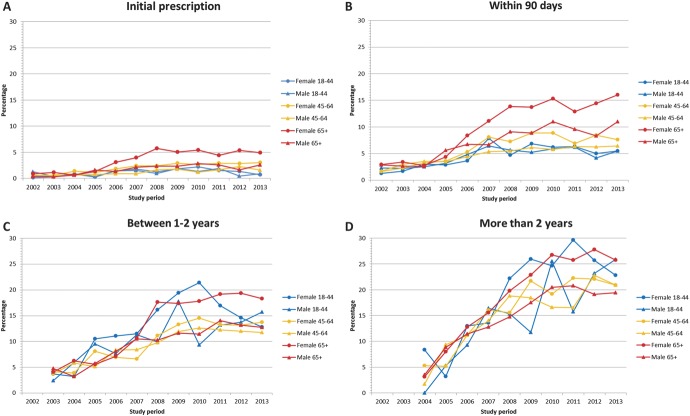
Long-term opioids may benefit patients with chronic pain but have also been linked to harmful outcomes. In the United Kingdom, the predominant source of opioids is primary care prescription. The objective was to examine changes in the incidence, length, and opioid potency of long-term prescribing episodes for musculoskeletal conditions in UK primary care (2002-2013). This was an observational database study (Clinical Practice Research Datalink, 190 practices). Participants (≥18 years) were prescribed an opioid for a musculoskeletal condition (no opioid prescribed in previous 6 months), and issued ≥2 opioid prescriptions within 90 days (long-term episode). Opioids were divided into short- and long-acting noncontrolled and controlled drugs. Annual incidence of long-term opioid episodes was determined, and for those still in a long-term episode, the percentage of patients prescribed each type 1 to 2 years, and >2 years after initiation. Annual denominator population varied from 1.25 to 1.38 m. A total of 76,416 patients started 1 long-term episode. Annual long-term episode incidence increased (2002-2009) by 38% (42.4-58.3 per 10,000 person-years), remaining stable to 2011, then decreasing slightly to 55.8/10,000 (2013). Patients prescribed long-acting controlled opioids within the first 90 days of long-term use increased from 2002 to 2013 (2.3%-9.9%). In those still in a long-term opioid episode (>2 years), long-acting controlled opioid prescribing increased from 3.5% to 22.6%. This study has uniquely shown an increase in prescribing long-term opioids to 2009, gradually decreasing from 2011 in the United Kingdom. The trend was towards increased prescribing of controlled long-acting opioids and earlier use. Further research into the risks and benefits of opioids is required.
Conflict of interest statement
Sponsorships or competing interests that may be relevant to content are disclosed at the end of this article.
Figures
References
-
- BNF. British national formulary. London: BMJ Group, 2014.
-
- Care Quality Commission. The safer management of controlled drugs, Annual report 2012. 2013. Available at: http://www.cqc.org.uk/sites/default/files/documents/cdar_2012.pdf. Accessed September 19, 2015.
-
- Chevalier P, Smulders M, Chavoshi S, Sostek M, LoCasale R. A description of clinical characteristics and treatment patterns observed within prescribed opioid users in Germany and the UK. Pain Manag 2014;4:267–76. - PubMed
Publication types
MeSH terms
Substances
Grants and funding
LinkOut - more resources
Full Text Sources
Other Literature Sources
Medical
