


Variation in sequences containing microsatellite motifs in the perennial biomass and forage grass, Phalaris arundinacea (Poaceae)
- PMID: 27005474
- PMCID: PMC4804619
- DOI: 10.1186/s13104-016-1994-6
Variation in sequences containing microsatellite motifs in the perennial biomass and forage grass, Phalaris arundinacea (Poaceae)
Abstract
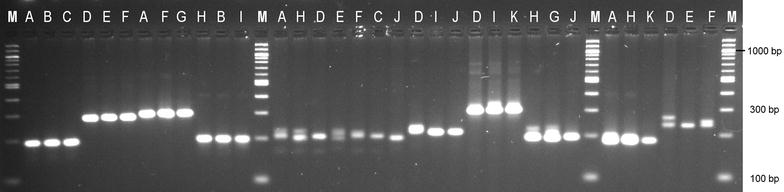
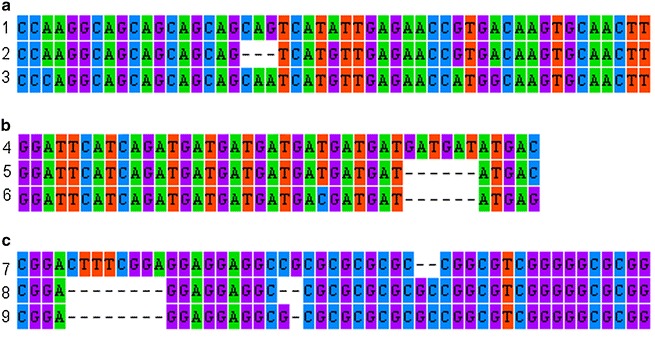
Forty three microsatellite markers were developed for further genetic characterisation of a forage and biomass grass crop, for which genomic resources are currently scarce. The microsatellite markers were developed from a normalized EST-SSR library. All of the 43 markers gave a clear banding pattern on 3% Metaphor agarose gels. Eight selected SSR markers were tested in detail for polymorphism across eleven DNA samples of large geographic distribution across Europe. The new set of 43 SSR markers will help future research to characterise the genetic structure and diversity of Phalaris arundinacea, with a potential to further understand its invasive character in North American wetlands, as well as aid in breeding work for desired biomass and forage traits. P. arundinacea is particularly valued in the northern latitude as a crop with high biomass potential, even more so on marginal lands.
Keywords: Microsatellite markers; Phalaris arundinacea; Poaceae; Reed canary grass; SSR.
Figures
References
-
- Chase M, Kesseli R, Bawa K. Microsatellite markers for conservation and population genetics of tropical tree species. AJB. 1996;83:51–57. doi: 10.2307/2445953. - DOI
-
- Forster JW, Hand ML, Cogan NOI, Hayes BJ, German C, Smith KF. Resources and strategies for implementation of genomic selection in breeding of forage species. Crop and Pasture. Science. 2014;65:1238–1247.
-
- Sheaffer CC, Marten GC. Reed canarygrass: An introduction to grassland agriculture. In: Barnes RF, Miller RF, Darrell A, Nelson CJ, editors. Forages. Iowa: IOWA State University Press; 1995. pp. 335–343.
Publication types
MeSH terms
LinkOut - more resources
Full Text Sources
Other Literature Sources
Research Materials
