


Characterization of a Polyethylene Glycol-Amphotericin B Conjugate Loaded with Free AMB for Improved Antifungal Efficacy
- PMID: 27008086
- PMCID: PMC4805162
- DOI: 10.1371/journal.pone.0152112
Characterization of a Polyethylene Glycol-Amphotericin B Conjugate Loaded with Free AMB for Improved Antifungal Efficacy
Erratum in
-
Correction: Characterization of a Polyethylene Glycol-Amphotericin B Conjugate Loaded with Free AMB for Improved Antifungal Efficacy.PLoS One. 2024 Jul 23;19(7):e0307862. doi: 10.1371/journal.pone.0307862. eCollection 2024. PLoS One. 2024. PMID: 39042654 Free PMC article.
Abstract
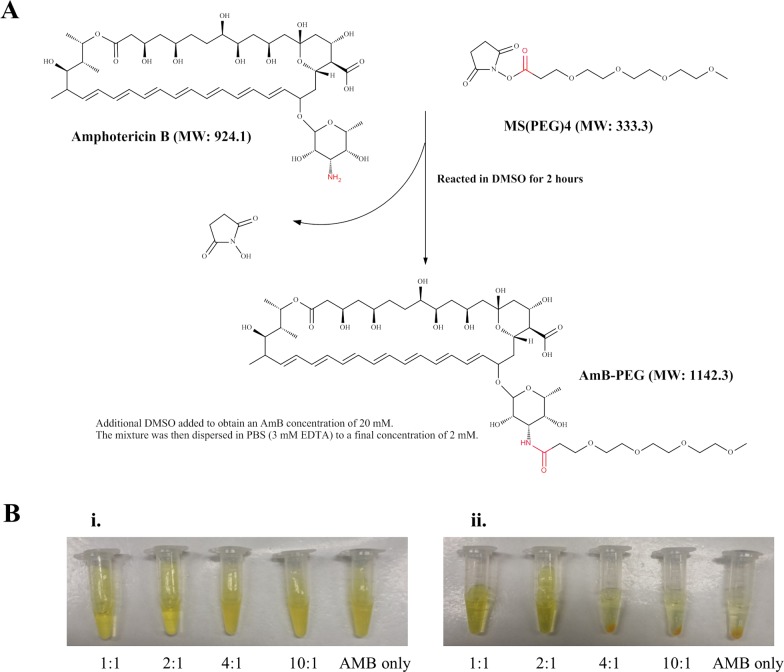
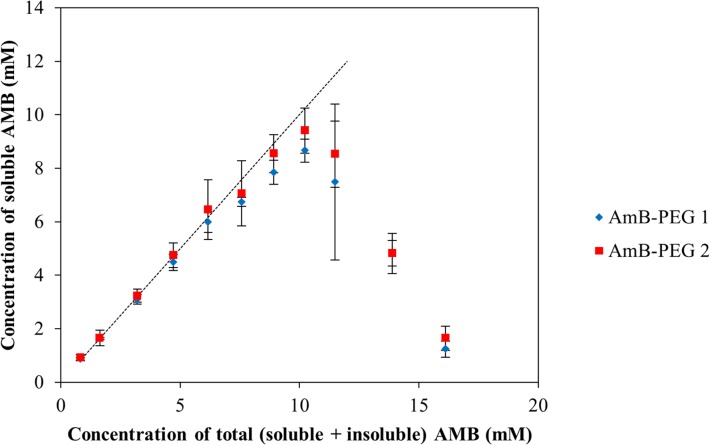
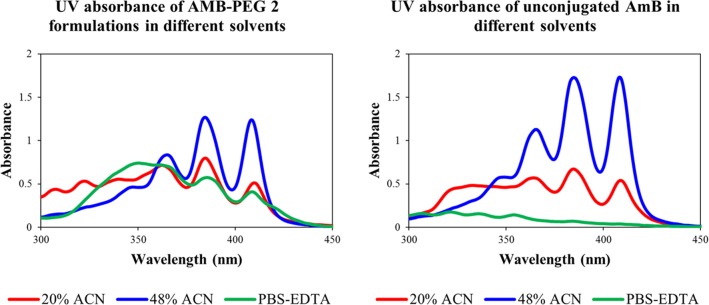
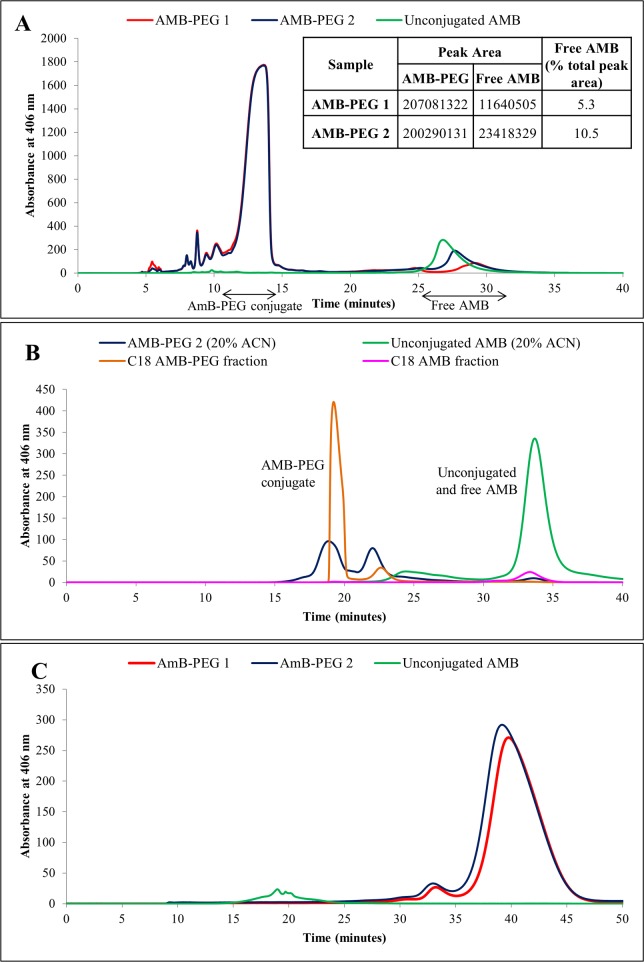
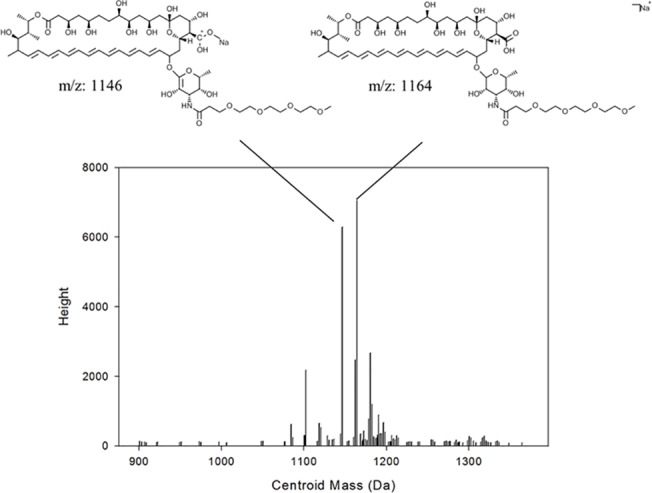
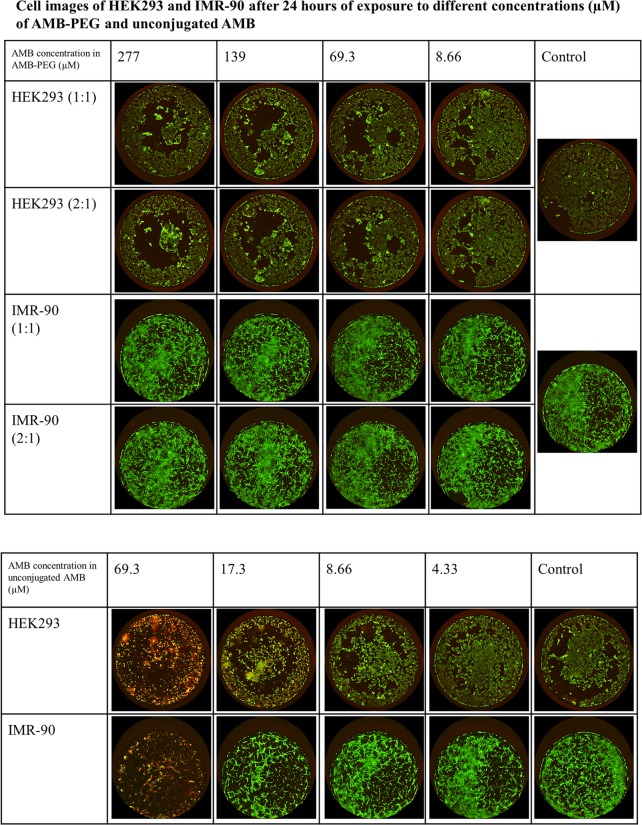
Amphotericin B (AMB) is a highly hydrophobic antifungal, whose use is limited by its toxicity and poor solubility. To improve its solubility, AMB was reacted with a functionalized polyethylene glycol (PEG), yielding soluble complex AmB-PEG formulations that theoretically comprise of chemically conjugated AMB-PEG and free AMB that is physically associated with the conjugate. Reverse-phase chromatography and size exclusion chromatography methods using HPLC were developed to separate conjugated AMB-PEG and free AmB, enabling the further characterization of these formulations. Using HPLC and dynamic light scattering analyses, it was observed that the AMB-PEG 2 formulation, having a higher molar ratio of 2 AMB: 1 PEG, possesses more free AMB and has relatively larger particle diameters compared to the AMB-PEG 1 formulation, that consists of 1 AMB: 1 PEG. The identity of the conjugate was also verified using mass spectrometry. AMB-PEG 2 demonstrates improved antifungal efficacy relative to AMB-PEG 1, without a concurrent increase in in vitro toxicity to mammalian cells, implying that the additional loading of free AMB in the AMB-PEG formulation can potentially increase its therapeutic index. Compared to unconjugated AMB, AMB-PEG formulations are less toxic to mammalian cells in vitro, even though their MIC50 values are comparatively higher in a variety of fungal strains tested. Our in vitro results suggest that AMB-PEG 2 formulations are two times less toxic than unconjugated AMB with antifungal efficacy on Candida albicans and Cryptococcus neoformans.
Conflict of interest statement
Figures
References
-
- Ellis D. Amphotericin B: spectrum and resistance. J Antimicrob Chemother. 2002;49 Suppl 1: 7–10. - PubMed
Publication types
MeSH terms
Substances
LinkOut - more resources
Full Text Sources
Other Literature Sources
