


Does Antihypertensive Drug Class Affect Day-to-Day Variability of Self-Measured Home Blood Pressure? The HOMED-BP Study
- PMID: 27009620
- PMCID: PMC4943272
- DOI: 10.1161/JAHA.115.002995
Does Antihypertensive Drug Class Affect Day-to-Day Variability of Self-Measured Home Blood Pressure? The HOMED-BP Study
Abstract
Background: Recent literature suggests that blood pressure variability (BPV) predicts outcome beyond blood pressure level (BPL) and that antihypertensive drug classes differentially influence BPV. We compared calcium channel blockers, angiotensin-converting enzyme inhibitors, and angiotensin receptor blockade for effects on changes in self-measured home BPL and BPV and for their prognostic significance in newly treated hypertensive patients.
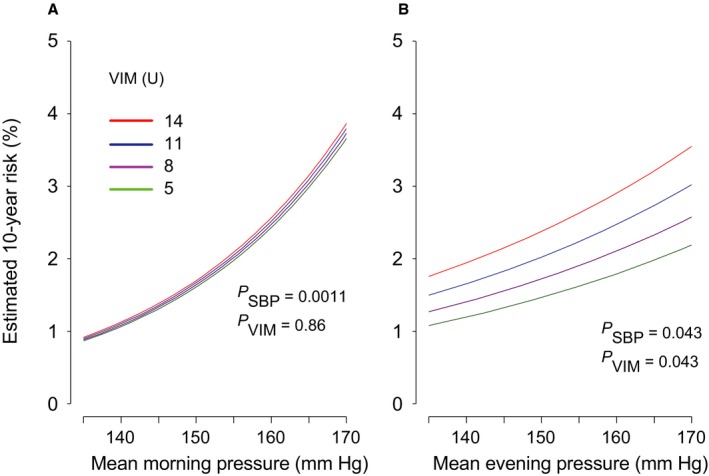
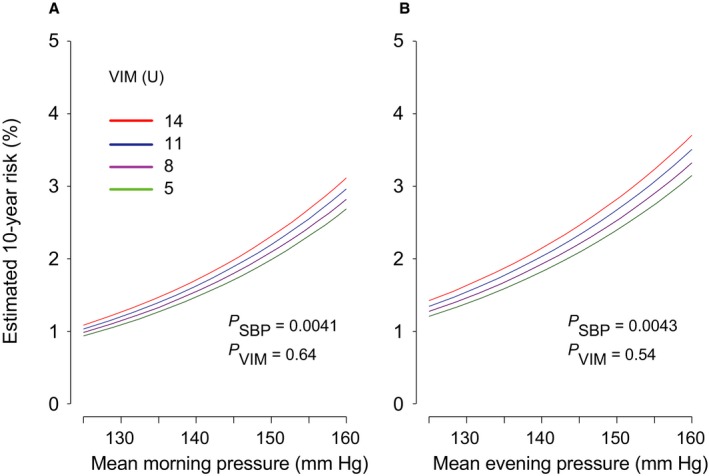
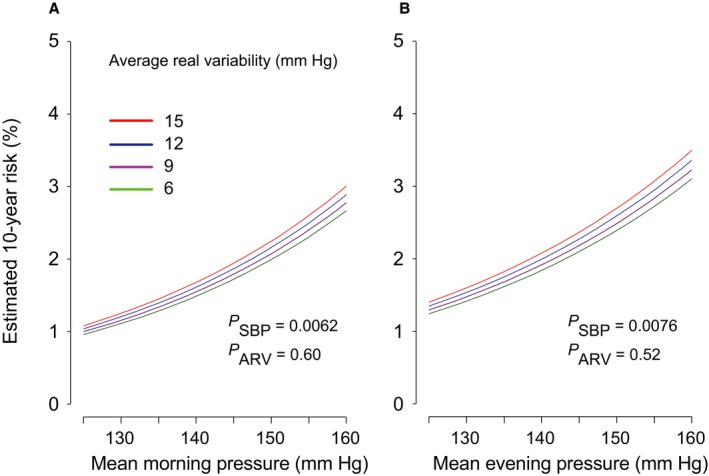
Methods and results: We enrolled 2484 patients randomly allocated to first-line treatment with a calcium channel blocker (n=833), an angiotensin-converting enzyme inhibitor (n=821), or angiotensin receptor blockade (n=830). Home blood pressures in the morning and evening were measured for 5 days off treatment before randomization and for 5 days after 2 to 4 weeks of randomized drug treatment. We assessed BPL and BPV changes as estimated by variability independent of the mean and compared cardiovascular outcomes. Home BPL response in each group was significant (P≤0.0001) but small in the angiotensin-converting enzyme inhibitor group (systolic/diastolic: 4.6/2.8 mm Hg) compared with the groups treated with a calcium channel blocker (systolic/diastolic: 8.3/3.9 mm Hg) and angiotensin receptor blockade (systolic/diastolic: 8.2/4.5 mm Hg). In multivariable adjusted analyses, changes in home variability independent of the mean did not differ among the 3 drug classes (P≥0.054). Evening variability independent of the mean before treatment significantly predicted hard cardiovascular events independent of the corresponding home BPL (P≤0.022), whereas BPV did not predict any cardiovascular outcome based on the morning measurement (P≥0.056). Home BPV captured after monotherapy had no predictive power for cardiovascular outcome (P≥0.22).
Conclusions: Self-measured home evening BPV estimated by variability independent of the mean had prognostic significance, whereas antihypertensive drug classes had no significant impact on BPV changes. Home BPL should remain the primary focus for risk stratification and treatment.
Clinical trial registration: URL: http://www.umin.ac.jp/ctr/index.htm. Unique identifier: C000000137.
Keywords: antihypertensive drugs; blood pressure variability; cardiovascular outcomes; home blood pressure; morning and evening self‐measurement.
© 2016 The Authors. Published on behalf of the American Heart Association, Inc., by Wiley Blackwell.
Figures


References
-
- Staessen JA, Thijs L, Ohkubo T, Kikuya M, Richart T, Boggia J, Adiyaman A, Dechering DG, Kuznetsova T, Thien T, de Leeuw P, Imai Y, O'Brien E, Parati G. Thirty years of research on diagnostic and therapeutic thresholds for the self‐measured blood pressure at home. Blood Press Monit. 2008;13:352–365. - PubMed
-
- Pickering TG, Miller NH, Ogedegbe G, Krakoff LR, Artinian NT, Goff D. Call to action on use and reimbursement for home blood pressure monitoring: a joint scientific statement from the American Heart Association, American Society of Hypertension, and Preventive Cardiovascular Nurses Association. Hypertension. 2008;52:10–29. - PMC - PubMed
-
- Rothwell PM, Howard SC, Dolan E, O'Brien E, Dobson JE, Dahlof B, Sever PS, Poulter NR. Prognostic significance of visit‐to‐visit variability, maximum systolic blood pressure, and episodic hypertension. Lancet. 2010;375:895–905. - PubMed
Publication types
MeSH terms
Substances
Associated data
LinkOut - more resources
Full Text Sources
Other Literature Sources
Medical
