


Targeted Delivery Systems for Molecular Therapy in Skeletal Disorders
- PMID: 27011176
- PMCID: PMC4813278
- DOI: 10.3390/ijms17030428
Targeted Delivery Systems for Molecular Therapy in Skeletal Disorders
Abstract
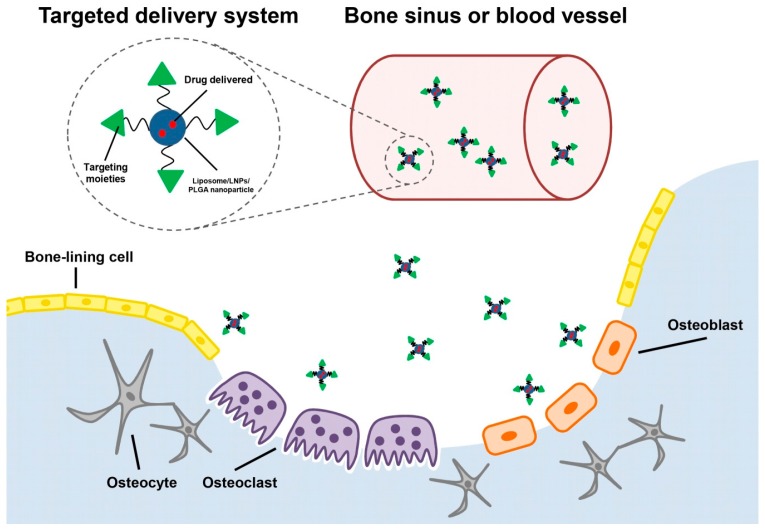
Abnormalities in the integral components of bone, including bone matrix, bone mineral and bone cells, give rise to complex disturbances of skeletal development, growth and homeostasis. Non-specific drug delivery using high-dose systemic administration may decrease therapeutic efficacy of drugs and increase the risk of toxic effects in non-skeletal tissues, which remain clinical challenges in the treatment of skeletal disorders. Thus, targeted delivery systems are urgently needed to achieve higher drug delivery efficiency, improve therapeutic efficacy in the targeted cells/tissues, and minimize toxicities in non-targeted cells/tissues. In this review, we summarize recent progress in the application of different targeting moieties and nanoparticles for targeted drug delivery in skeletal disorders, and also discuss the advantages, challenges and perspectives in their clinical translation.
Keywords: nanoparticles; skeletal disorders; targeted delivery systems; targeting moieties.
Figures
References
-
- Allgrove J. Metabolic bone disease. Paediatr. Child Health. 2010;21:187–193. doi: 10.1016/j.paed.2010.09.003. - DOI
Publication types
MeSH terms
Substances
LinkOut - more resources
Full Text Sources
Other Literature Sources
Medical
