


Risk factors for the need of hip arthroscopy following periacetabular osteotomy
- PMID: 27011862
- PMCID: PMC4732374
- DOI: 10.1093/jhps/hnv053
Risk factors for the need of hip arthroscopy following periacetabular osteotomy
Abstract
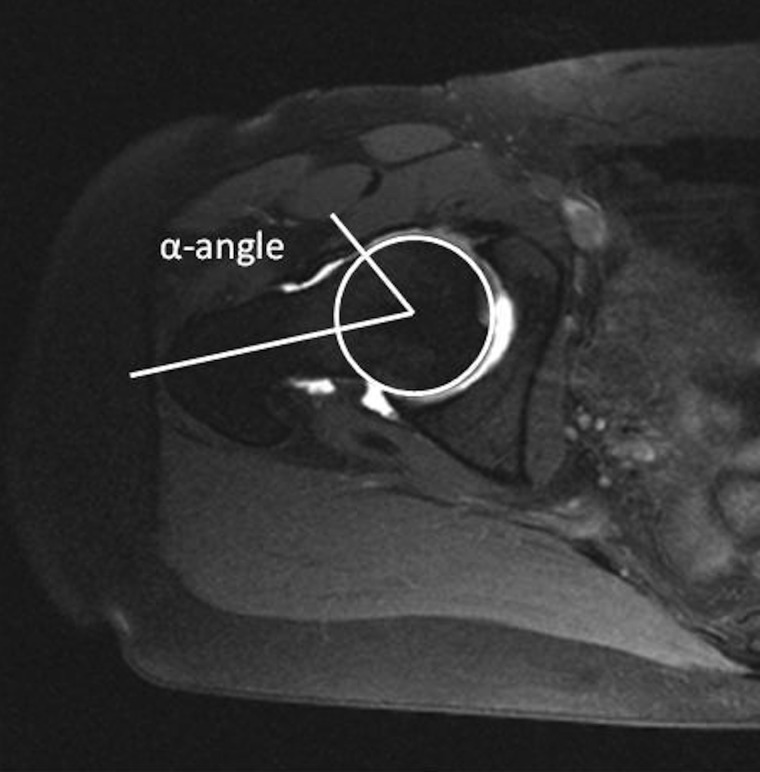
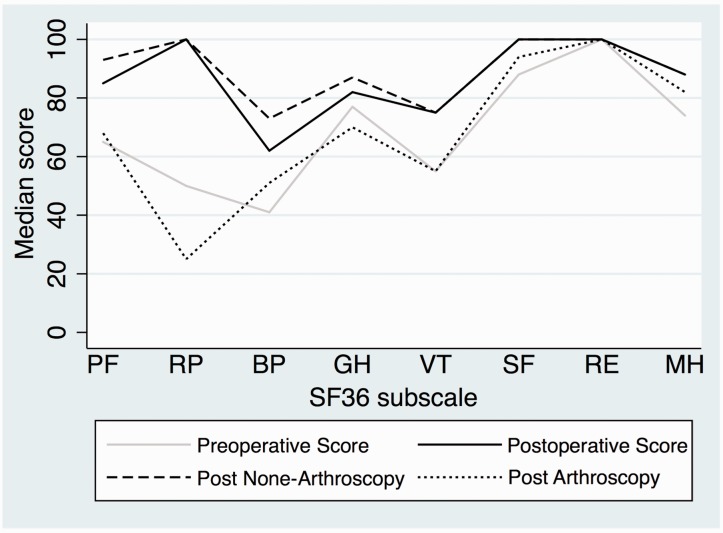
Despite the frequency of labral tears in symptomatic developmental dysplasia of the hip, no consensus exists regarding the treatment of coexisting dysplasia of the hip and tearing of the acetabular labrum. The purpose of this prospective, MR arthrography (MRA) based 2-year follow-up study was to identify risk factors predicting the need for a hip arthroscopy (HA) after periacetabular osteotomy (PAO). Ninety-nine patients (104 hips) scheduled for PAO were evaluated preoperatively and at 2-year follow-up. MRA was performed in all patients prior to PAO. At follow-up, patients were divided into a non-arthroscopy and arthroscopy group. The two groups were compared clinical and radiological, and risk factors for HA after PAO were calculated. Patient reported outcome measures (WOMAC, Oxford Hip and SF36) were filled out before PAO and at follow-up. Ninety-five hips (91.3%) were evaluated. Twenty-six hips (27%) required an arthroscopy within 2 years of the PAO. Risk factors were preoperative borderline dysplasia, acetabular retroversion and complete labral detachment. Labral tearing, degeneration or hypertrophy did not negatively affect the outcome of PAO. Patients not requiring an arthroscopy had a statistically significant better outcome measured by patients reported outcome measures. After PAO, 27% of the hips needed intra-articular assessment. Conventional radiographs and MRA analysis can be used to identify predictors for patients requiring HA after PAO. At 2-year follow-up, the clinical outcome improved in all patients. However, those patients who had no need of a HA after their PAO had superior results.
Figures
References
-
- Ganz R, Klaue K, Vinh TS, et al. A new periacetabular osteotomy for the treatment of hip dysplasias. technique and preliminary results . Clin Orthop Relat Res 1988; 232: 26–36. - PubMed
-
- Dorrell JH, Catterall A. The torn acetabular labrum . J Bone Joint Surg Br 1986; 68: 400–3. - PubMed
-
- Klaue K, Durnin CW, Ganz R. The acetabular rim syndrome. A clinical presentation of dysplasia of the hip . J Bone Joint Surg Br 1991; 73: 423–9. - PubMed
-
- McCarthy JC, Lee JA. Acetabular dysplasia: A paradigm of arthroscopic examination of chondral injuries . Clin Orthop Relat Res 2002; 405: 122–8. - PubMed
LinkOut - more resources
Full Text Sources
Other Literature Sources
