


Neuroprotective Role of Steroidal Sex Hormones: An Overview
- PMID: 27012165
- PMCID: PMC6492877
- DOI: 10.1111/cns.12538
Neuroprotective Role of Steroidal Sex Hormones: An Overview
Abstract
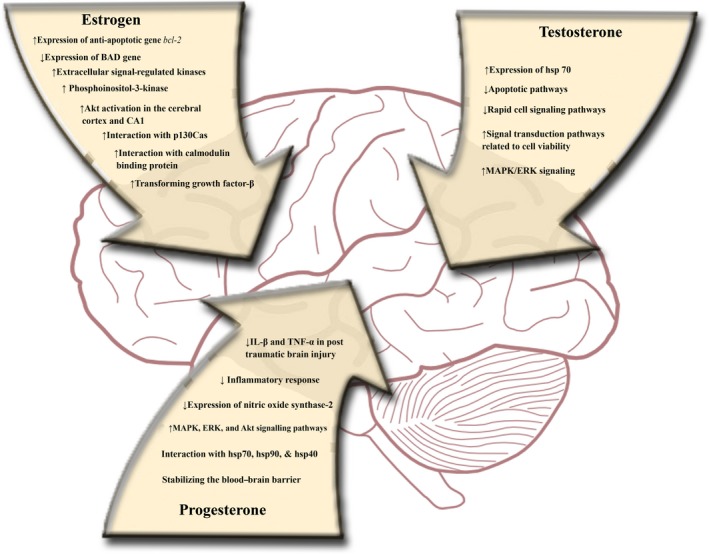
Progesterone, estrogens, and testosterone are the well-known steroidal sex hormones, which have been reported to have "nonreproductive "effects in the brain, specifically in the neuroprotection and neurotrophy. In the last one decade, there has been a surge in the research on the role of these hormones in neuroprotection and their positive impact on different brain injuries. The said interest has been sparked by a desire to understand the action and mechanisms of these steroidal sex hormones throughout the body. The aim of this article was to highlight the potential outcome of the steroidal hormones, viz. progesterone, estrogens, and testosterone in terms of their role in neuroprotection and other brain injuries. Their possible mechanism of action at both genomic and nongenomic level will be also discussed. As far as our knowledge goes, we are for the first time reporting neuroprotective effect and possible mechanism of action of these hormones in a single article.
Keywords: Estrogen; Neuroprotection; Neurotrophy; Progesterone; Steroids; Testosterone.
© 2016 John Wiley & Sons Ltd.
Conflict of interest statement
None to declare.
Figures
References
-
- Reindollar RH, Moretuzzo RW, Ellegood JO, Mahesh VB, McDonough PG. The effects of single‐dose luteinizing hormone‐releasing hormone on ovulatory menstrual function: Support for a single luteinizing hormone‐ and follicle‐stimulating hormone‐releasing factor. Fertil Steril 1985;43:185–195. - PubMed
-
- Baird DT, McNeilly AS. Gonadotrophic control of follicular development and function during the oestrous cycle of the ewe. J Reprod Fertil Suppl 1981;30:119–133. - PubMed
Publication types
MeSH terms
Substances
LinkOut - more resources
Full Text Sources
Other Literature Sources
