


A multicenter, randomized, placebo-controlled study to evaluate the efficacy and safety of Varithena® (polidocanol endovenous microfoam 1%) for symptomatic, visible varicose veins with saphenofemoral junction incompetence
- PMID: 27013511
- PMCID: PMC5405826
- DOI: 10.1177/0268355516635386
A multicenter, randomized, placebo-controlled study to evaluate the efficacy and safety of Varithena® (polidocanol endovenous microfoam 1%) for symptomatic, visible varicose veins with saphenofemoral junction incompetence
Abstract
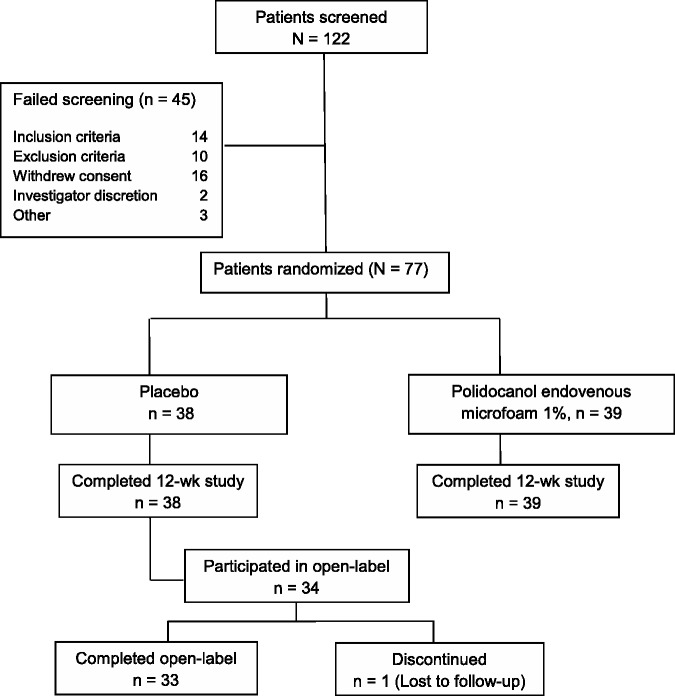
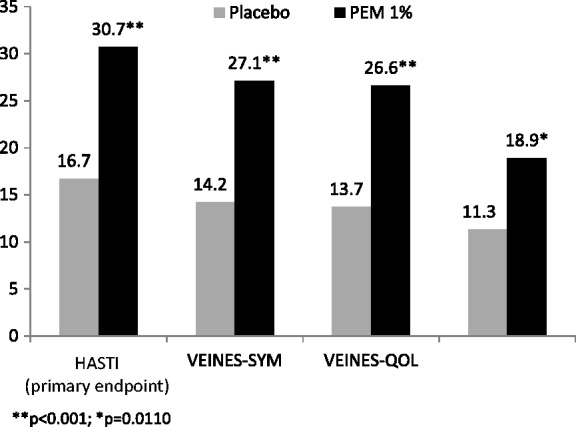
Objectives A randomized, placebo-controlled, multicenter study was conducted to evaluate the safety and efficacy of polidocanol endovenous microfoam (1%, Varithena® [polidocanol injectable foam], BTG International Ltd.). Methods Patients (n = 77) with symptomatic, visible varicose veins were randomized to treatment with either Varithena 1% or placebo. Results Varithena provided greater mean changes from Baseline in patient-reported assessments of symptoms (e.g., heaviness, achiness, swelling, throbbing, itching [HASTI®] score 30.7 points vs 16.7 points, p = 0.0009, primary endpoint; and modified Venous Insufficiency Epidemiological and Economic Study-Quality-of-Life/Symptoms [m-VEINES-QOL/Sym; p < 0.001]), physician-assessed VCSS, and physician- and patient-assessed appearance compared with placebo. The HASTI score correlated highly with the modified-VEINES-QOL/Sym and Chronic Venous Insufficiency Questionnaire-2 scores (r = 0.7 to > 0.9, p ≤ 0.001). Adverse events included contusion, incision-site hematoma, and limb discomfort. Venous thrombus adverse events were reported as mild and generally resolved without sequelae. Conclusions Varithena provided significantly greater symptom relief and improvement in leg appearance compared with placebo. Adverse events were generally mild and transient. ( www.clinicaltrials.gov [NCT00758420]).
Keywords: Varicose veins; great saphenous vein incompetence; patient-reported outcome measures; patient-reported outcomes; polidocanol; polidocanol injectable foam; saphenofemoral incompetence; saphenous vein; self report.
Figures
References
-
- Maurins U, Hoffmann BH, Lösch C, et al. Distribution and prevalence of reflux in the superficial and deep venous system in the general population—results from the Bonn Vein Study, Germany. J Vasc Surg 2008; 48: 680–687. - PubMed
-
- Langer RD, Ho E, Denenberg JO, et al. Relationships between symptoms and venous disease: the San Diego population study. Arch Intern Med 2005; 165: 1420–1424. - PubMed
-
- Beebe-Dimmer JL, Pfeifer JR, Engle JS, et al. The epidemiology of chronic venous insufficiency and varicose veins. Ann Epidemiol 2005; 15: 175–184. - PubMed
-
- Paty J. VVSymQ™ and patient profiles: interpreting a new patient-reported outcome (PRO) instrument for great saphenous vein incompetence (GSVI). J Vasc Interv Radiol 2014; 25: S101–S101. . Abstract no. 216.
Publication types
MeSH terms
Substances
Associated data
LinkOut - more resources
Full Text Sources
Other Literature Sources
Medical
