Urinary Metabolite Risk Biomarkers of Lung Cancer: A Prospective Cohort Study
- PMID: 27013655
- PMCID: PMC4891298
- DOI: 10.1158/1055-9965.EPI-15-1191
Urinary Metabolite Risk Biomarkers of Lung Cancer: A Prospective Cohort Study
Abstract
Background: Lung cancer is a major health burden causing 160,000 and 1.6 million deaths annually in the United States and worldwide, respectively.
Methods: While seeking to identify stable and reproducible biomarkers in noninvasively collected biofluids, we assessed whether previously identified metabolite urinary lung cancer biomarkers, creatine riboside (CR), N-acetylneuraminic acid (NANA), cortisol sulfate, and indeterminate metabolite 561+, were elevated in the urines of subjects prior to lung cancer diagnosis in a well-characterized prospective Southern Community Cohort Study (SCCS). Urine was examined from 178 patients and 351 nondiseased controls, confirming that one of four metabolites was associated with lung cancer risk in the overall case-control set, whereas two metabolites were associated with lung cancer risk in European-Americans.
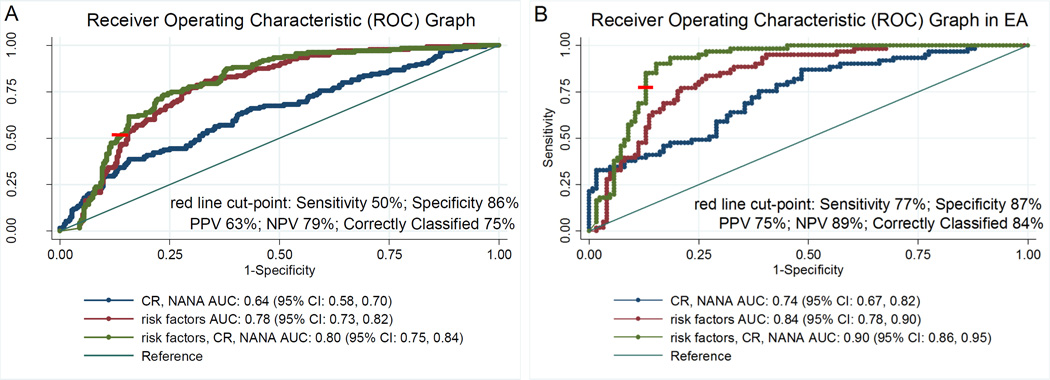
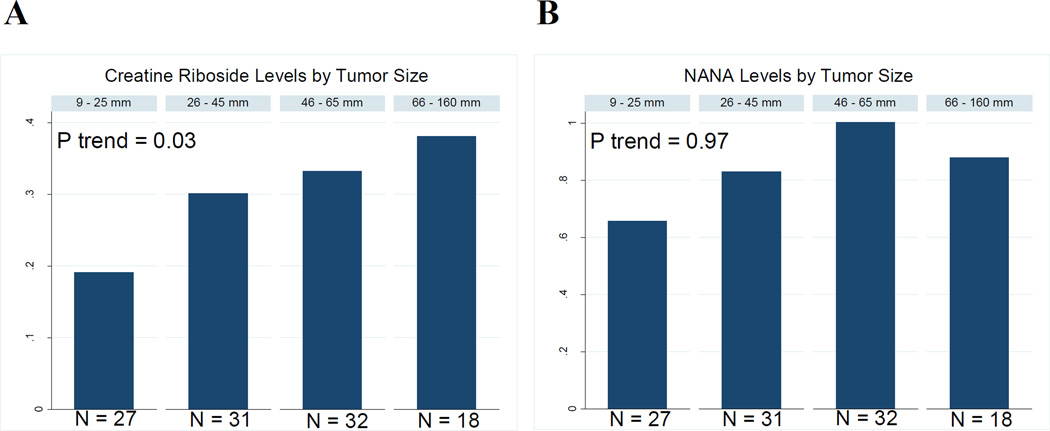
Results: OR of lung cancer associated with elevated CR levels, and adjusted for smoking and other potential confounders, was 2.0 [95% confidence interval (CI), 1.2-3.4; P= 0.01]. In European-Americans, both CR and NANA were significantly associated with lung cancer risk (OR = 5.3; 95% CI, 1.6-17.6; P= 0.006 and OR=3.5; 95% CI, 1.5-8.4; P= 0.004, respectively). However, race itself did not significantly modify the associations. ROC analysis showed that adding CR and NANA to a model containing previously established lung cancer risk factors led to a significantly improved classifier (P= 0.01). Increasing urinary levels of CR and NANA displayed a positive association with increasing tumor size, strengthening a previously established link to altered tumor metabolism.
Conclusion and impact: These replicated results provide evidence that identified urinary metabolite biomarkers have a potential utility as noninvasive, clinical screening tools for early diagnosis of lung cancer. Cancer Epidemiol Biomarkers Prev; 25(6); 978-86. ©2016 AACR.
©2016 American Association for Cancer Research.
Conflict of interest statement
The authors disclose no potential conflicts of interest.
Figures
References
-
- Siegel RL, Miller KD, Jemal A. Cancer statistics, 2015. CA: a cancer journal for clinicians. 2015;65:5–29. - PubMed
-
- Fedewa SA, Sauer AG, Siegel RL, Jemal A. Prevalence of Major Risk Factors and Use of Screening Tests for Cancer in the United States. Cancer epidemiology, biomarkers & prevention : a publication of the American Association for Cancer Research, cosponsored by the American Society of Preventive Oncology. 2015;24:637–652. - PubMed
-
- Jaklitsch MT, Jacobson FL, Austin JH, Field JK, Jett JR, Keshavjee S, et al. The American Association for Thoracic Surgery guidelines for lung cancer screening using low-dose computed tomography scans for lung cancer survivors and other high-risk groups. The Journal of thoracic and cardiovascular surgery. 2012;144:33–38. - PubMed
-
- Boiselle PM, Chiles C, Patz E, Tammemagi M, Wood DE. Expert opinion: United States Preventive Services Task Force recommendation on screening for lung cancer. Journal of thoracic imaging. 2014;29:197. - PubMed
MeSH terms
Substances
Grants and funding
LinkOut - more resources
Full Text Sources
Other Literature Sources
Medical