. 2016 Mar 15:7:317.
doi: 10.3389/fpls.2016.00317. eCollection 2016.

Analysis of the Prefoldin Gene Family in 14 Plant Species

Affiliations

Analysis of the Prefoldin Gene Family in 14 Plant Species

Jun Cao. Front Plant Sci. .

Abstract

Prefoldin is a hexameric molecular chaperone complex present in all eukaryotes and archaea. The evolution of this gene family in plants is unknown. Here, I identified 140 prefoldin genes in 14 plant species. These prefoldin proteins were divided into nine groups through phylogenetic analysis. Highly conserved gene organization and motif distribution exist in each prefoldin group, implying their functional conservation. I also observed the segmental duplication of maize prefoldin gene family. Moreover, a few functional divergence sites were identified within each group pairs. Functional network analyses identified 78 co-expressed genes, and most of them were involved in carrying, binding and kinase activity. Divergent expression profiles of the maize prefoldin genes were further investigated in different tissues and development periods and under auxin and some abiotic stresses. I also found a few cis-elements responding to abiotic stress and phytohormone in the upstream sequences of the maize prefoldin genes. The results provided a foundation for exploring the characterization of the prefoldin genes in plants and will offer insights for additional functional studies.

Keywords: evolution; expression; functional divergence; phylogeny; prefoldin.


Figures
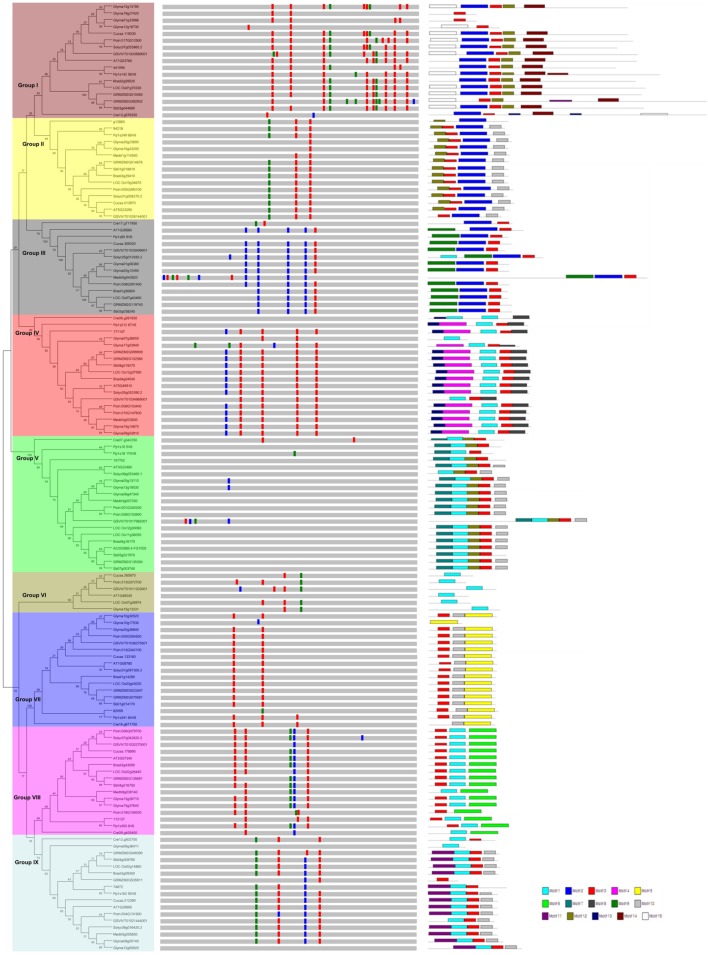
FIGURE 1
FIGURE 1
Phylogenetic relationship, gene structure and motif composition of the prefoldin genes in plants. The phylogenetic tree is constructed and classified into nine major groups (I–IX). The insertion positions of 0, 1, and 2 phase introns are marked with red, green, and blue lines, respectively. Different motifs of the prefoldin proteins are displayed by different colored boxes.
FIGURE 2
FIGURE 2
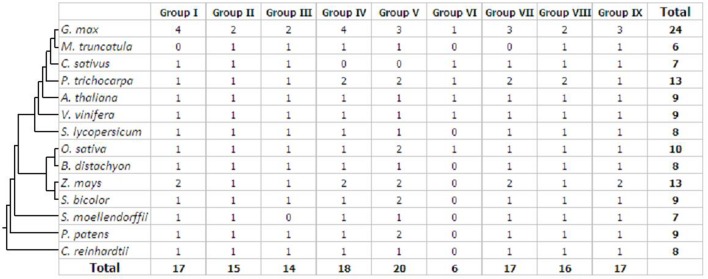
Distribution of the prefoldin genes in different plant species and groups.
FIGURE 3
FIGURE 3
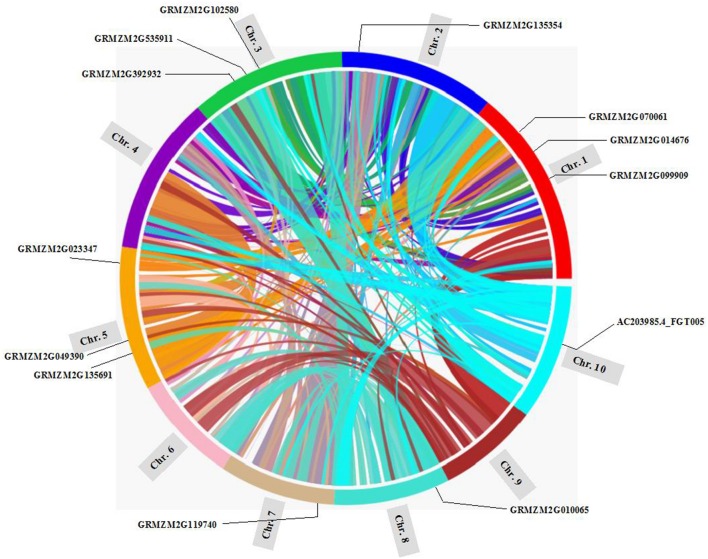
Location of the prefoldin genes and segmental duplication regions on maize chromosomes. The SyMAP database (Soderlund et al., 2011) was used to determine the segmental duplication regions.
FIGURE 4
FIGURE 4
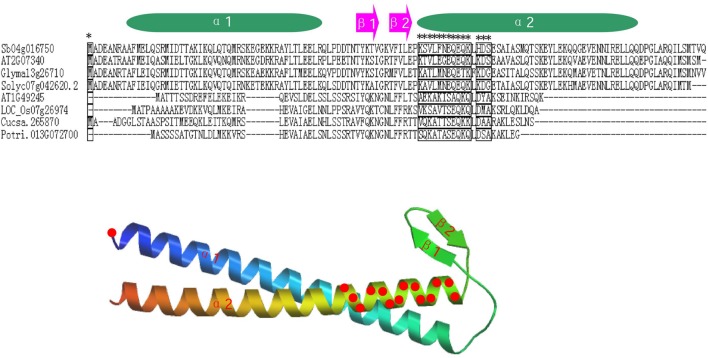
Distribution of functional divergence sites of Group VI/VIII pairs. Alignment results of some prefoldin proteins and the predicted tertiary structure are shown. Fifteen potential functional divergence sites are marked with a star in alignment results and marked with red circles on the predicted tertiary structure of the prefoldin protein.
FIGURE 5
FIGURE 5
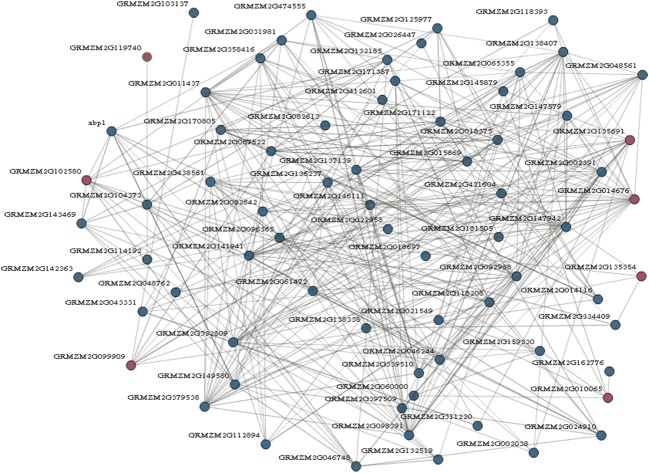
Prefoldin genes interaction network. Seven prefoldin genes are mapped to the co-expression database and reveal a total of 78 unique genes that showed 347 interactions in maize.
FIGURE 6
FIGURE 6
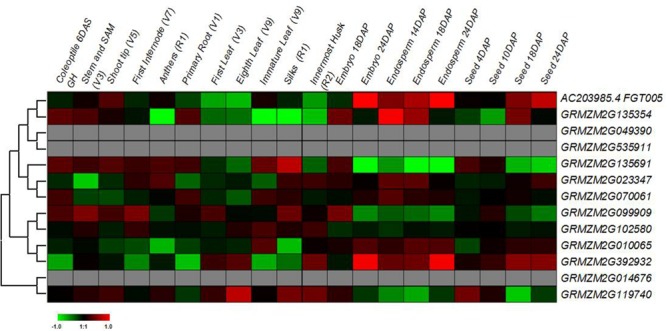
Expression profiles of the maize prefoldin genes in 20 different developmental stages.
FIGURE 7
FIGURE 7
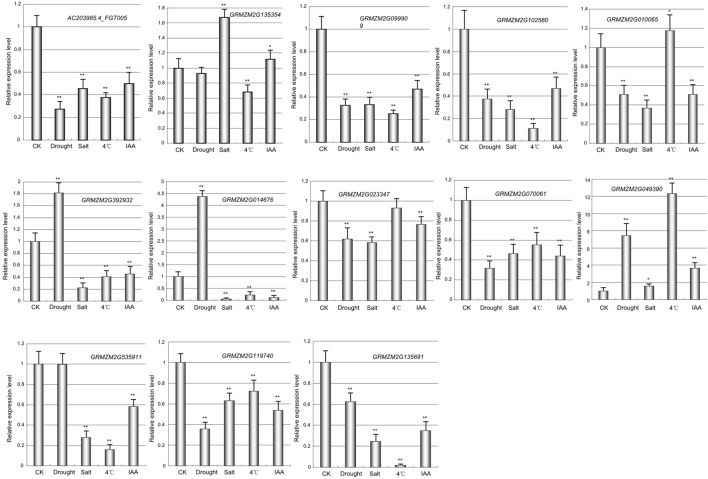
Expression profiles of the maize prefoldin genes under abiotic stresses and IAA. Experiments were conducted in triplicate. Significance was tested relative to each CK using t-test. Significance of P < 0.05 and ∗∗P < 0.01. Error bar: standard deviation.
FIGURE 8
FIGURE 8
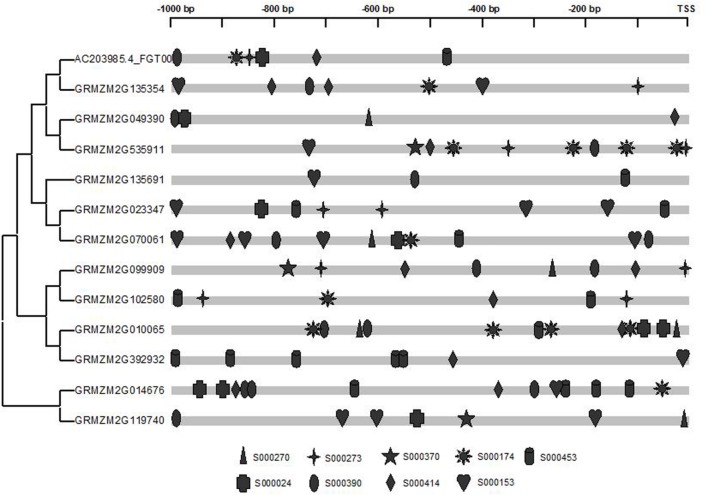
Promoter analyses of the maize prefoldin genes. Cis-regulated elements responsive to abiotic stresses and phytohormones are marked differently.

References

    1. Bailey T. L., Williams N., Misleh C., Li W. W. (2006). MEME: discovering and analyzing DNA and protein sequence motifs. Nucleic Acids Res. 34 W369–W373. 10.1093/nar/gkl198 - DOI - PMC - PubMed
    1. Bartolo M. E., Carter J. V. (1991). Microtubules in mesophyll cells of nonacclimated and cold-acclimated spinach: visualization and responses to freezing, low temperature, and dehydration. Plant Physiol. 97 175–181. 10.1104/pp.97.1.175 - DOI - PMC - PubMed
    1. Bernard C., Traub M., Kunz H. H., Hach S., Trentmann O., Möhlmann T. (2011). Equilibrative nucleoside transporter 1 (ENT1) is critical for pollen germination and vegetative growth in Arabidopsis. J. Exp. Bot. 62 4627–4637. 10.1093/jxb/err183 - DOI - PMC - PubMed
    1. Cao J. (2012). The pectin lyases in Arabidopsis thaliana: evolution, selection and expression profiles. PLoS ONE 7:e46944 10.1371/journal.pone.0046944 - DOI - PMC - PubMed
    1. Cao J., Huang J., Yang Y., Hu X. (2011). Analyses of the oligopeptide transporter gene family in poplar and grape. BMC Genomics 12:465 10.1186/1471-2164-12-465 - DOI - PMC - PubMed

LinkOut - more resources