Insulin delivery methods: Past, present and future
- PMID: 27014614
- PMCID: PMC4787057
- DOI: 10.4103/2230-973X.176456
Insulin delivery methods: Past, present and future
Abstract
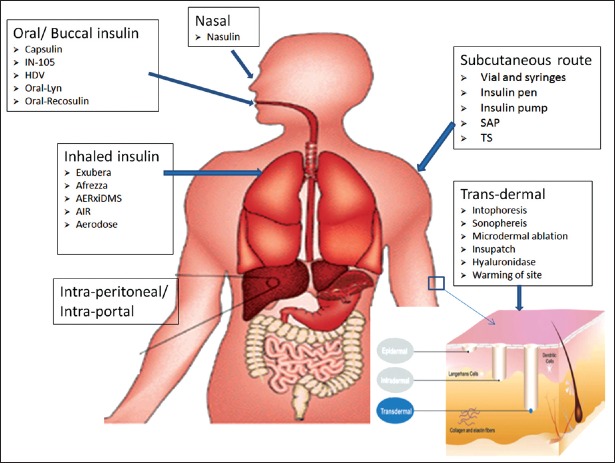
Many patients with advanced type 2 diabetes mellitus (T2DM) and all patients with T1DM require insulin to keep blood glucose levels in the target range. The most common route of insulin administration is subcutaneous insulin injections. There are many ways to deliver insulin subcutaneously such as vials and syringes, insulin pens, and insulin pumps. Though subcutaneous insulin delivery is the standard route of insulin administration, it is associated with injection pain, needle phobia, lipodystrophy, noncompliance and peripheral hyperinsulinemia. Therefore, the need exists for delivering insulin in a minimally invasive or noninvasive and in most physiological way. Inhaled insulin was the first approved noninvasive and alternative way to deliver insulin, but it has been withdrawn from the market. Technologies are being explored to make the noninvasive delivery of insulin possible. Some of the routes of insulin administration that are under investigation are oral, buccal, nasal, peritoneal and transdermal. This review article focuses on the past, present and future of various insulin delivery techniques. This article has focused on different possible routes of insulin administration with its advantages and limitation and possible scope for the new drug development.
Keywords: Diabetes mellitus; artificial pancreas; closed-loop system; inhaled insulin; insulin delivery; oral insulin; technology.
Conflict of interest statement
Figures
References
-
- IDF Diabetes Atlas. 6th ed. Brussels, Belgium: International Diabetes Federation; 2013. [Last accessed on 2013 Sep 16]. The Global Burden. International Diabetes Federation. Available from: http://www.idf.org/diabetesatlas/5e/theglobal-burden .
-
- Garg SK, Michels AW, Shah VN. Use of non-insulin therapies for type 1 diabetes. Diabetes Technol Ther. 2013;15:901–8. - PubMed
-
- U.K. prospective diabetes study 16. Overview of 6 yers’ therapy of type II diabetes: A progressive disease. U.K. Prospective Diabetes Study Group. Diabetes. 1995;44:1249–58. - PubMed
-
- Shah VN, Moser EG, Blau A, Dhingra M, Garg SK. The future of basal insulin. Diabetes Technol Ther. 2013;15:727–32. - PubMed
-
- The effect of intensive treatment of diabetes on the development and progression of long-term complications in insulin-dependent diabetes mellitus. The Diabetes Control and Complications Trial Research Group. N Engl J Med. 1993;329:977–86. - PubMed
Publication types
LinkOut - more resources
Full Text Sources
Other Literature Sources
Miscellaneous