


Investigation Into an Outbreak of Dengue-like Illness in Pernambuco, Brazil, Revealed a Cocirculation of Zika, Chikungunya, and Dengue Virus Type 1
- PMID: 27015222
- PMCID: PMC4998417
- DOI: 10.1097/MD.0000000000003201
Investigation Into an Outbreak of Dengue-like Illness in Pernambuco, Brazil, Revealed a Cocirculation of Zika, Chikungunya, and Dengue Virus Type 1
Abstract
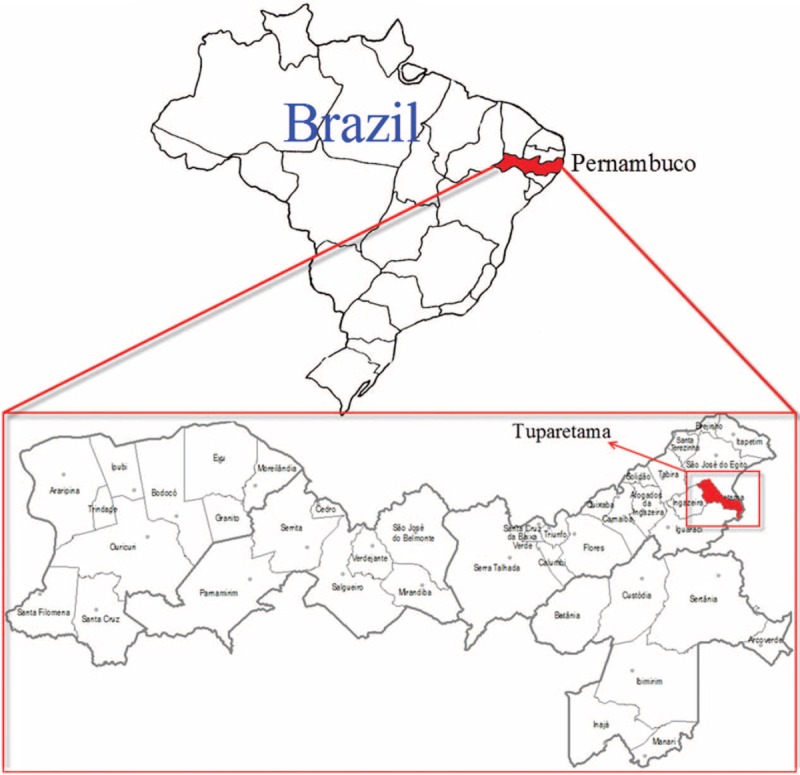
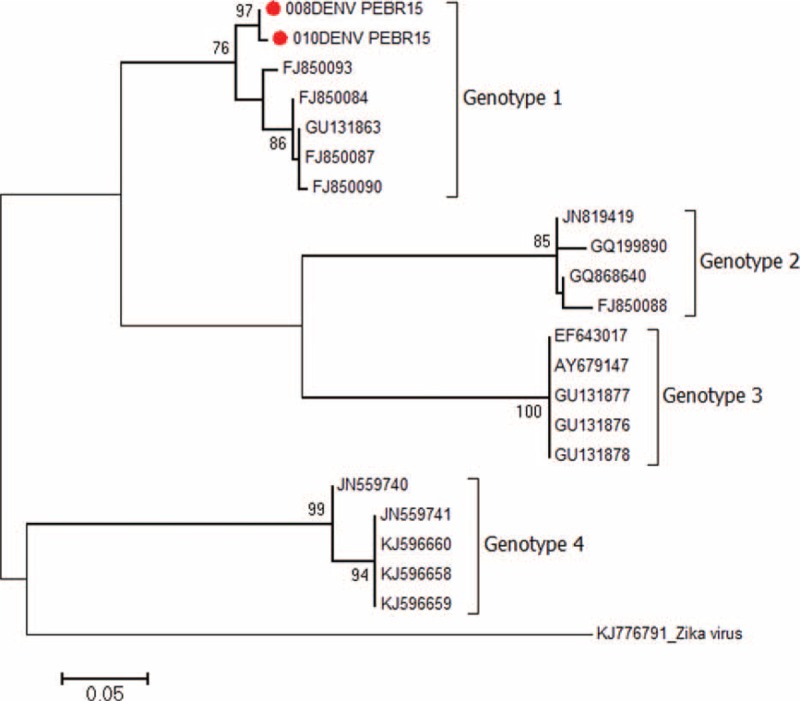
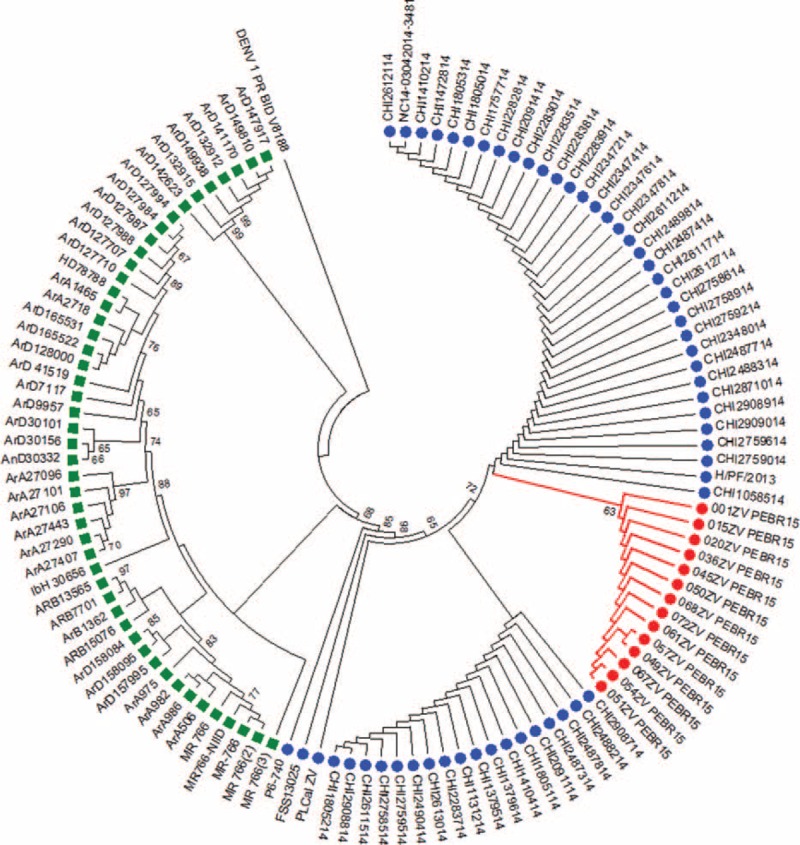
In April 2015, an outbreak of dengue-like illness occurred in Tuparetama, a small city in the northeast region of Brazil; this outbreak was characterized by its fast expansion. An investigation was initiated to identify the viral etiologies and advise the health authorities on implementing control measures to contain the outbreak. This is the first report of this outbreak in the northeast, even though a few cases were documented earlier in a neighboring city.Plasma samples were obtained from 77 suspected dengue patients attending the main hospital in the city. Laboratory assays, such as real-time reverse transcription polymerase chain reaction, virus cDNA sequencing, and enzyme-linked immunosorbent assay, were employed to identify the infecting virus and molecular phylogenetic analysis was performed to define the circulating viral genotypes.RNA of Zika virus (ZIKV) and Dengue virus (DENV) or IgM antibodies (Abs) to DENV or chikungunya (CHIKV) were detected in 40 of the 77 plasma samples (51.9%). DENV was found in 9 patients (11.7%), ZIKV was found in 31 patients (40.2%), CHIKV in 1 patient (1.3%), and coinfection of DENV and ZIKV was detected in 2 patients (2.6%). The phylogenetic analysis of 2 available partial DENV and 14 ZIKV sequences revealed the identities of genotype 1 and the Asiatic lineage, respectively.Consistent with recent reports from the same region, our results showed that the ongoing outbreak is caused by ZIKV, DENV, and CHIKV. This emphasizes the need for a routine and differential diagnosis of arboviruses in patients with dengue-like illness. Coordinated efforts are necessary to contain the outbreak. Continued surveillance will be important to assess the effectiveness of current and future prevention strategies.
Conflict of interest statement
The authors have no funding and conflicts of interest to disclose.
Figures
References
-
- Kirya BG. A yellow fever epizootic in Zika forest, Uganda, during 1972: Part 1: Virus isolation and sentinel monkeys. Trans R Soc Trop Med Hyg 1977; 71:254–260. - PubMed
-
- Duffy MR, Chen TH, Hancock WT, et al. Zika virus outbreak on Yap Island, Federated States of Micronesia. N Engl J Med 2009; 360:2536–2543. - PubMed
-
- Roth A, Mercier A, Lepers C, et al. Concurrent outbreaks of dengue, chikungunya and Zika virus infections - an unprecedented epidemic wave of mosquito-borne viruses in the Pacific 2012–2014. Euro Surveill 2014; 19: - PubMed
-
- Tappe D, Rissland J, Gabriel M, et al. First case of laboratory-confirmed Zika virus infection imported into Europe, November 2013. Euro Surveill 2014; 19: - PubMed
Publication types
MeSH terms
LinkOut - more resources
Full Text Sources
Other Literature Sources
Medical
Miscellaneous
