


Nasal high flow oxygen therapy in patients with COPD reduces respiratory rate and tissue carbon dioxide while increasing tidal and end-expiratory lung volumes: a randomised crossover trial
- PMID: 27015801
- PMCID: PMC4975837
- DOI: 10.1136/thoraxjnl-2015-207962
Nasal high flow oxygen therapy in patients with COPD reduces respiratory rate and tissue carbon dioxide while increasing tidal and end-expiratory lung volumes: a randomised crossover trial
Abstract
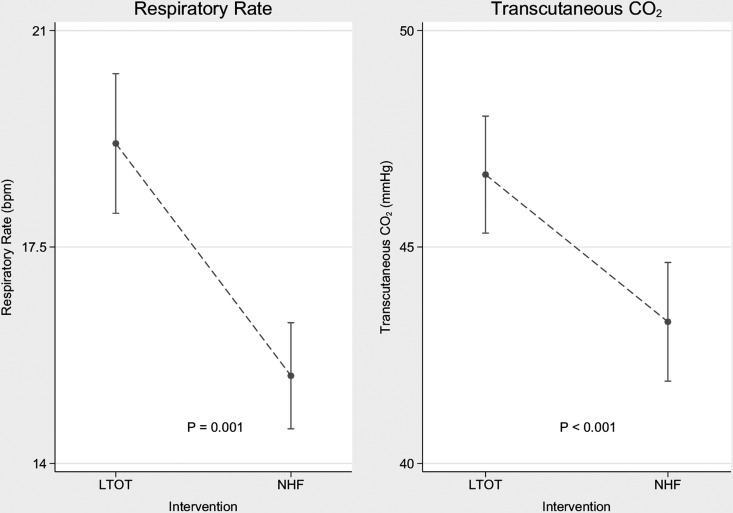
Patients with COPD using long-term oxygen therapy (LTOT) over 15 h per day have improved outcomes. As inhalation of dry cold gas is detrimental to mucociliary clearance, humidified nasal high flow (NHF) oxygen may reduce frequency of exacerbations, while improving lung function and quality of life in this cohort. In this randomised crossover study, we assessed short-term physiological responses to NHF therapy in 30 males chronically treated with LTOT. LTOT (2-4 L/min) through nasal cannula was compared with NHF at 30 L/min from an AIRVO through an Optiflow nasal interface with entrained supplemental oxygen. Comparing NHF with LTOT: transcutaneous carbon dioxide (TcCO2) (43.3 vs 46.7 mm Hg, p<0.001), transcutaneous oxygen (TcO2) (97.1 vs 101.2 mm Hg, p=0.01), I:E ratio (0.75 vs 0.86, p=0.02) and respiratory rate (RR) (15.4 vs 19.2 bpm, p<0.001) were lower; and tidal volume (Vt) (0.50 vs 0.40, p=0.003) and end-expiratory lung volume (EELV) (174% vs 113%, p<0.001) were higher. EELV is expressed as relative change from baseline (%Δ). Subjective dyspnoea and interface comfort favoured LTOT. NHF decreased TcCO2, I:E ratio and RR, with a concurrent increase in EELV and Vt compared with LTOT. This demonstrates a potential mechanistic rationale behind the improved outcomes observed in long-term treatment with NHF in oxygen-dependent patients.
Trial registration number: ACTRN12613000028707.
Keywords: COPD Exacerbations; Long Term Oxygen Therapy (LTOT); Non invasive ventilation.
Published by the BMJ Publishing Group Limited. For permission to use (where not already granted under a licence) please go to http://www.bmj.com/company/products-services/rights-and-licensing/
Figures
References
Publication types
MeSH terms
Substances
Associated data
LinkOut - more resources
Full Text Sources
Other Literature Sources
Medical
Molecular Biology Databases
Research Materials
