


Comparison of clinical outcomes between luminal invasive ductal carcinoma and luminal invasive lobular carcinoma
- PMID: 27015895
- PMCID: PMC4807554
- DOI: 10.1186/s12885-016-2275-4
Comparison of clinical outcomes between luminal invasive ductal carcinoma and luminal invasive lobular carcinoma
Abstract
Background: The pathological and clinical features of invasive lobular carcinoma (ILC) differ from those of invasive ductal carcinoma (IDC). Several studies have indicated that patients with ILC have a better prognosis than those with ductal carcinoma. However, no previous study has considered the molecular subtypes and histological subtypes of ILC. We compared prognosis between IDC and classical, luminal type ILC and developed prognostic factors for early breast cancer patients with classical luminal ILC.
Methods: Four thousand one hundred ten breast cancer patients were treated at the Aichi Cancer Center Hospital from 2003 to 2012. We identified 1,661 cases with luminal IDC and 105 cases with luminal classical ILC. We examined baseline characteristics, clinical outcomes, and prognostic factors of luminal ILC.
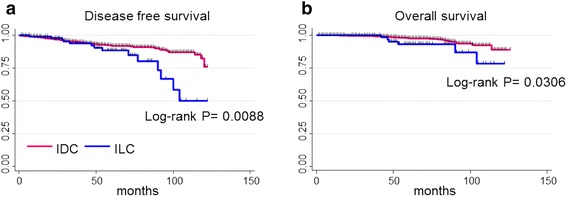
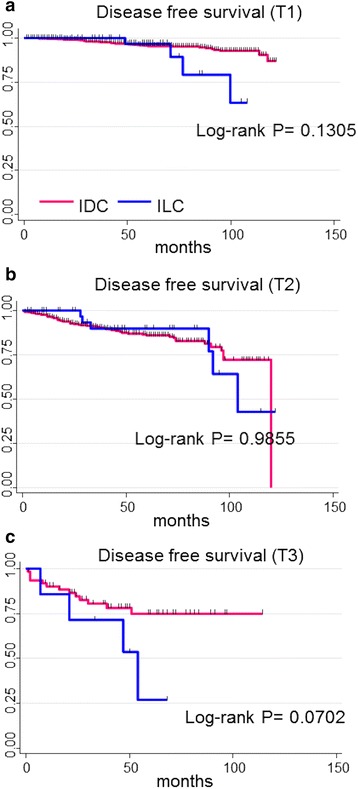
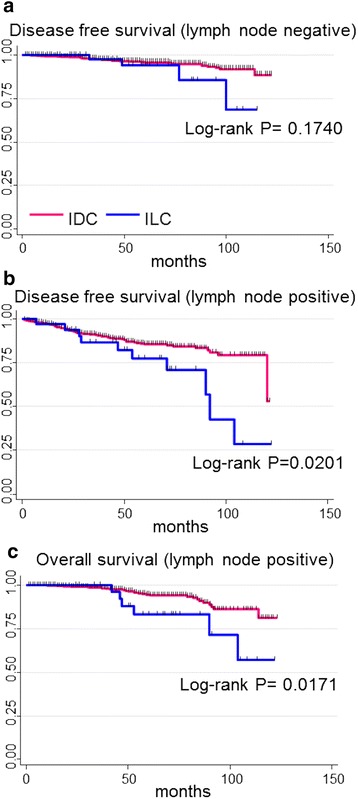
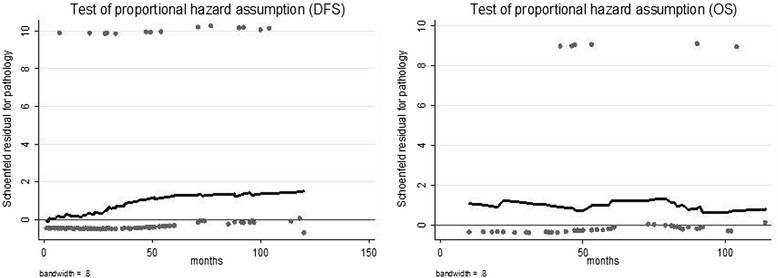
Results: The prognosis of luminal ILC was significantly worse than that of luminal IDC. The rates of 5-year disease free survival (DFS) were 91.9% and 88.4% for patients with luminal IDC and luminal ILC, respectively (P = 0.008). The rates of 5-year overall survival (OS) were 97.6% and 93.1% for patients with luminal IDC and luminal ILC respectively (P = 0.030). Although we analyzed prognosis according to stratification by tumor size, luminal ILC tended to have worse DFS than luminal IDC in the large tumor group. In addition, although our analysis was performed according to matching lymph node status, luminal ILC had a significantly worse DFS and OS than luminal IDC in node-positive patients. Survival curves showed that the prognosis for ILC became worse than IDC over time. Multivariate analysis showed that ILC was an important factor related to higher risk of recurrence of luminal type breast cancer, even when tumor size, lymph node status and histological grade were considered.
Conclusions: Luminal ILC had worse outcomes than luminal IDC. Consequently, different treatment approaches should be used for luminal ILC than for luminal IDC.
Keywords: Invasive ductal carcinoma; Invasive lobular carcinoma; Luminal; Prognosis.
Figures
References
-
- Rosen P. Rosen's breast pathology. 3. Philadelphia: Lippincott williams & wilkins; 2009.
-
- Pestalozzi BC, Zahrieh D, Mallon E, Gusterson BA, Price KN, Gelber RD, Holmberg SB, Lindtner J, Snyder R, Thurlimann B, et al. Distinct clinical and prognostic features of infiltrating lobular carcinoma of the breast: combined results of 15 International Breast Cancer Study Group clinical trials. J Clin Oncol. 2008;26(18):3006–14. - PubMed
-
- Wasif N, Maggard MA, Ko CY, Giuliano AE. Invasive lobular vs. ductal breast cancer: a stage-matched comparison of outcomes. Ann Surg Oncol. 2010;17(7):1862-69. - PubMed
-
- Iorfida M, Maiorano E, Orvieto E, Maisonneuve P, Bottiglieri L, Rotmensz N, Montagna E, Dellapasqua S, Veronesi P, Galimberti V et al. Invasive lobular breast cancer: subtypes and outcome. Breast Cancer Res Treat. 2012;133(2):713-23. - PubMed
-
- Lakhani S, Ellis I, Schnitt S, Tan P, van de Vijver M. WHO classification of tumours of the breast. 4. Lyon: International agency for resurch on cancer; 2012.
MeSH terms
LinkOut - more resources
Full Text Sources
Other Literature Sources
Medical
