


Motivational Enhancement for Increasing Adherence to CPAP: A Randomized Controlled Trial
- PMID: 27018174
- PMCID: PMC4980541
- DOI: 10.1016/j.chest.2016.03.019
Motivational Enhancement for Increasing Adherence to CPAP: A Randomized Controlled Trial
Abstract
Background: Motivational enhancement (ME) shows promise as a means of increasing adherence to CPAP for OSA.
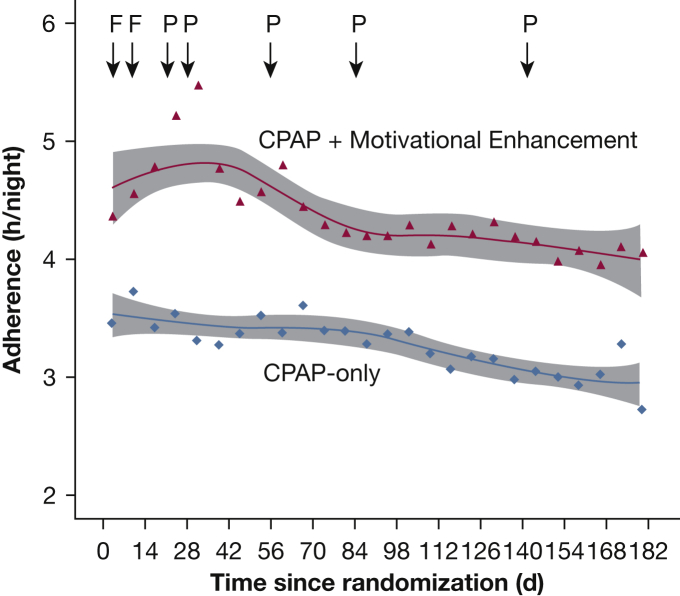
Methods: We performed an open-label, parallel-arm, randomized controlled trial of CPAP only or CPAP + ME, recruiting individuals 45 to 75 years with moderate or severe OSA without marked sleepiness and with either established cardiovascular disease (CVD) or at risk for CVD. All participants received standardized CPAP support from a sleep technologist; those randomly assigned to CPAP + ME also received standardized ME delivered by a psychologist during two appointments and six phone calls over 32 weeks. Mixed-effect models with subject-specific intercepts and slopes were fitted to compare objective CPAP adherence between arms, adjusting for follow-up duration, randomization factors, and device manufacturer. All analyses were intention-to-treat.
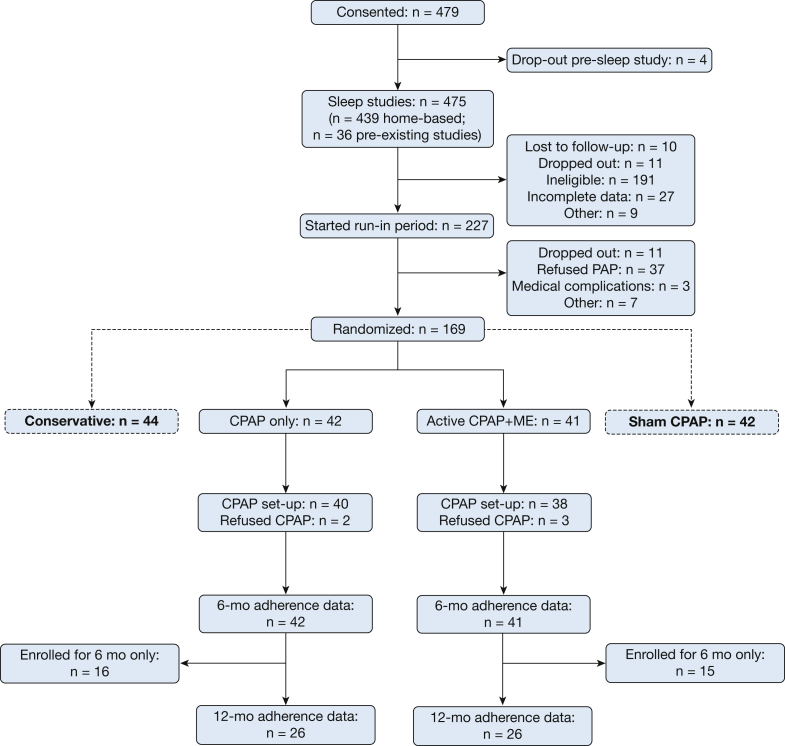
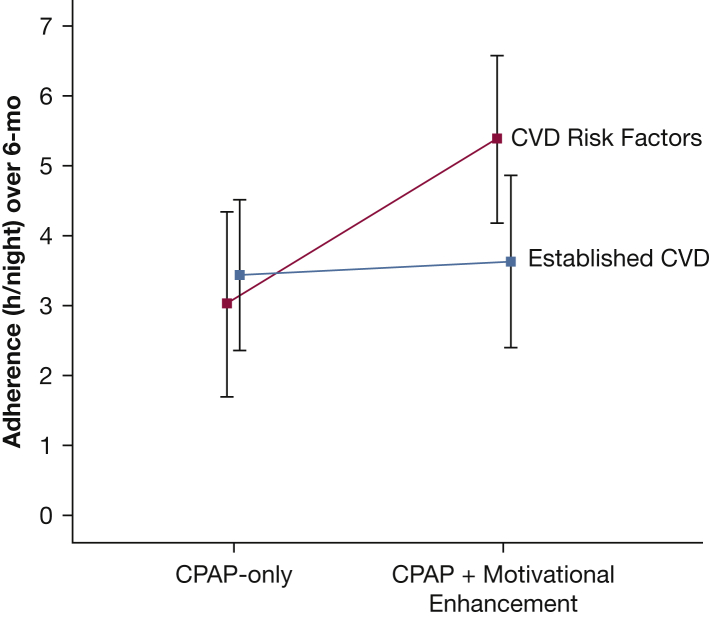
Results: Overall, 83 participants (n = 42 CPAP only; n = 41 CPAP + ME) contributed 14,273 nights of data for 6 months. Participants were predominantly male (67%) and had a mean ± SD age of 63.9 ± 7.4 years, a BMI of 31.1 ± 5.2 kg/m(2), and an apnea-hypopnea index of 26.2 ± 12.9 events/h. In our fully adjusted model, average nightly adherence for 6 months was 99.0 min/night higher with CPAP + ME compared with CPAP only (P = .003; primary analysis). A subset of 52 participants remained in the study for 12 months; modeling these data yielded a consistent difference in adherence between arms of 97 min/night (P = .006) favoring CPAP + ME.
Conclusions: ME delivered during brief appointments and phone calls resulted in a clinically significant increase in CPAP adherence. This strategy may represent a feasible approach for optimizing management of OSA.
Trial registry: ClinicalTrials.gov; No.: NCT01261390; URL: www.clinicaltrials.gov.
Keywords: CPAP; OSA; adherence; behavioral therapy; randomized controlled trial.
Copyright © 2016 American College of Chest Physicians. Published by Elsevier Inc. All rights reserved.
Figures
References
-
- Barbé F., Durán-Cantolla J., Capote F., Spanish Sleep and Breathing Group Long-term effect of continuous positive airway pressure in hypertensive patients with sleep apnea. Am J Respir Crit Care Med. 2010;181(7):718–726. - PubMed
-
- Zimmerman M.E., Arnedt J.T., Stanchina M., Millman R.P., Aloia M.S. Normalization of memory performance and positive airway pressure adherence in memory-impaired patients with obstructive sleep apnea. Chest. 2006;130(6):1772–1778. - PubMed
Publication types
MeSH terms
Associated data
Grants and funding
LinkOut - more resources
Full Text Sources
Other Literature Sources
Medical
