


Pulled in or pushed out? Understanding the complexities of motivation for alternative therapies use in Ghana
- PMID: 27018431
- PMCID: PMC4808739
- DOI: 10.3402/qhw.v11.29667
Pulled in or pushed out? Understanding the complexities of motivation for alternative therapies use in Ghana
Abstract
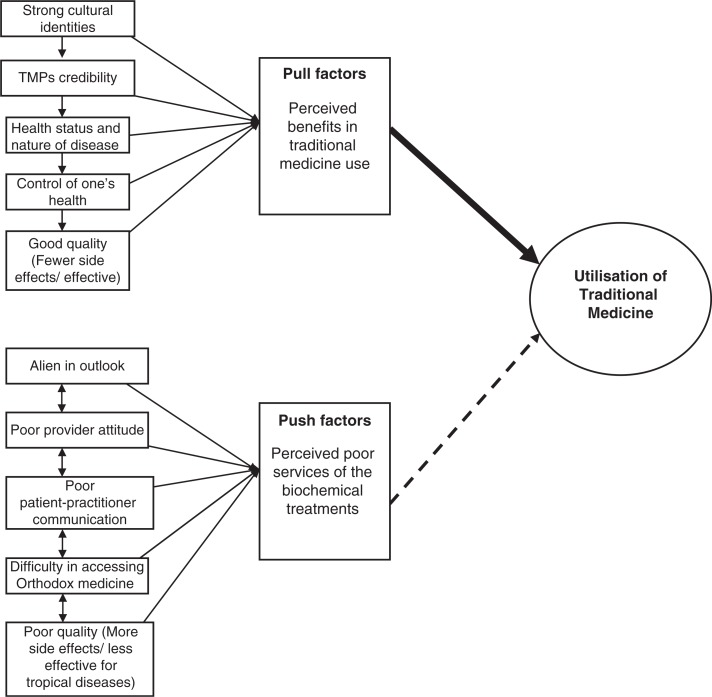
The impact of strong cultural beliefs on specific reasons for traditional medicine (TRM) use among individuals and populations has long been advanced in health care and spatio-medical literature. Yet, little has been done in Ghana and the Ashanti Region in particular to bring out the precise "pull" and "push" relative influences on TRM utilization. With a qualitative research approach involving rural and urban character, the study explored health beliefs and motivations for TRM use in Kumasi Metropolis and Sekyere South District, Ghana. The study draws on data from 36 in-depth interviews with adults, selected through theoretical sampling. We used the a posteriori inductive reduction model to derive broad themes and subthemes. The "pull factors"-perceived benefits in TRM use vis-à-vis the "push factors"-perceived poor services of the biomedical treatments contributed to the growing trends in TRM use. The result however indicates that the "pull factors," viz.-personal health beliefs, desire to take control of one's health, perceived efficacy, and safety of various modalities of TRM-were stronger in shaping TRM use. Poor access to conventional medicine accounted for the differences in TRM use between rural and urban areas. Understanding the treatment and health-seeking behaviour of a cultural-related group is critical for developing and sustaining traditional therapy in Ghana.
Keywords: Ashanti Region; a posteriori; cultural belief; health-seeking behaviour; pull factors; traditional medicine.
Figures
References
-
- Addo V. N. Herbal medicines: Socio-demographic characteristics and pattern of use by patients in a tertiary obstetrics and gynaecology unit. Journal of Science and Technology. 2007;27(3):149–155.
-
- Adib-Hajbagherya M, Hoseinian M. Knowledge, attitude and practice toward complementary and traditional medicine among Kashan health care staff, 2012. Complementary Therapies in Medicine. 2014;22:126–132. doi: http://dx.doi.org/10.1016/j.ctim.2013.11.009. - DOI - PubMed
-
- Angen M. J. Evaluating interpretive inquiry: Reviewing the validity debate and opening the dialogue. Qualitative Health Research. 2000;10(3):378–395. - PubMed
Publication types
MeSH terms
LinkOut - more resources
Full Text Sources
Other Literature Sources
Medical
