


Maternal phthalate exposure during pregnancy is associated with DNA methylation of LINE-1 and Alu repetitive elements in Mexican-American children
- PMID: 27019040
- PMCID: PMC4874877
- DOI: 10.1016/j.envres.2016.03.025
Maternal phthalate exposure during pregnancy is associated with DNA methylation of LINE-1 and Alu repetitive elements in Mexican-American children
Abstract
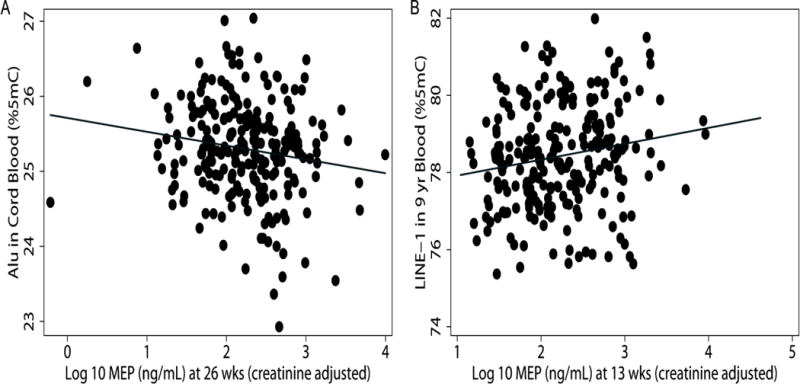
Phthalates are frequently used in personal care products and plasticizers and phthalate exposure is ubiquitous in the US population. Exposure to phthalates during critical periods in utero has been associated with a variety of adverse health outcomes but the biological mechanisms linking these exposures with disease are not well characterized. In this study, we examined the relationship of in utero phthalate exposure with repetitive element DNA methylation, an epigenetic marker of genome instability, in children from the longitudinal birth cohort CHAMACOS. Methylation of Alu and long interspersed nucleotide elements (LINE-1) was determined using pyrosequencing of bisulfite-treated DNA isolated from whole blood samples collected from newborns and 9 year old children (n=355). Concentrations of eleven phthalate metabolites were measured in urine collected from pregnant mothers at 13 and 26 weeks gestation. We found a consistent inverse association between prenatal concentrations of monoethyl phthalate, the most frequently detected urinary metabolite, with cord blood methylation of Alu repeats (β(95%CI): -0.14 (-0.28,0.00) and -0.16 (-0.31, -0.02)) for early and late pregnancy, respectively, and a similar but weaker association with LINE-1 methylation. Additionally, increases in urinary concentrations of di-(2-ethylhexyl) phthalate metabolites during late pregnancy were associated with lower levels of methylation of Alu repeats in 9 year old blood (significant p-values ranged from 0.003 to 0.03). Our findings suggest that prenatal exposure to some phthalates may influence differences in repetitive element methylation, highlighting epigenetics as a plausible biological mechanism through which phthalates may affect health.
Keywords: Alu repeats; DNA methylation; In Utero exposure; LINE-1 repeats; Phthalate.
Copyright © 2016 Elsevier Inc. All rights reserved.
Conflict of interest statement
AB has served as a volunteer member of the Board for The organic Center, a non-profit organization that provides information for scientific research about organic food and farming.
Figures
References
Publication types
MeSH terms
Substances
Grants and funding
LinkOut - more resources
Full Text Sources
Other Literature Sources
Medical
