


Recapitulating amyloid β and tau pathology in human neural cell culture models: clinical implications
- PMID: 27019672
- PMCID: PMC4803079
- DOI: 10.17925/USN.2015.11.02.102
Recapitulating amyloid β and tau pathology in human neural cell culture models: clinical implications
Abstract
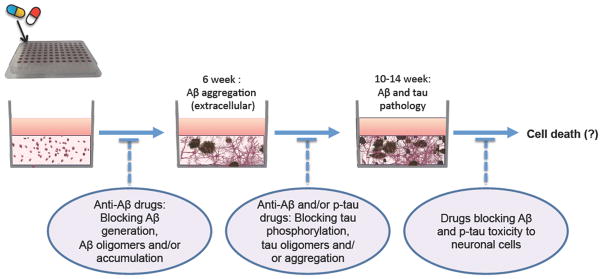
The "amyloid β hypothesis" of Alzheimer's disease (AD) has been the reigning hypothesis explaining pathogenic mechanisms of AD over the last two decades. However, this hypothesis has not been fully validated in animal models, and several major unresolved issues remain. We recently developed a human neural cell culture model of AD based on a three-dimensional (3D) cell culture system. This unique, cellular model recapitulates key events of the AD pathogenic cascade, including β-amyloid plaques and neurofibrillary tangles. Our 3D human neural cell culture model system provides a premise for a new generation of cellular AD models that can serve as a novel platform for studying pathogenic mechanisms and for high-throughput drug screening in a human brain-like environment.
Keywords: 3D culture model; APP; Alzheimer’s disease; Aβ; Induced pluripotent stem cells; amyloid β; human neural progenitor cells; iPSCs; β-amyloid precursor protein.
Conflict of interest statement
The authors report no competing financial interest.
Figures
References
-
- 2015 Alzheimer’s disease facts and figures. Alzheimer’s & Dementia. 2015;11:332–384. - PubMed
-
- Alzheimer A, Forstl H, Levy R. On certain peculiar diseases of old age. History of psychiatry. 1991;2:71–101. - PubMed
-
- Tanzi RE, Bertram L. Twenty years of the Alzheimer’s disease amyloid hypothesis: a genetic perspective. Cell. 2005;120:545–555. - PubMed
-
- Glenner GG, Wong CW. Alzheimer’s disease: initial report of the purification and characterization of a novel cerebrovascular amyloid protein. Biochem Biophys Res Commun. 1984;120:885–890. - PubMed
Grants and funding
LinkOut - more resources
Full Text Sources