Review
. 2016 Mar 25;17(4):451.
doi: 10.3390/ijms17040451.

Epigenetic Modifications in Essential Hypertension

Affiliations
Review

Epigenetic Modifications in Essential Hypertension

Ingrid A Wise et al. Int J Mol Sci. .

Abstract

Essential hypertension (EH) is a complex, polygenic condition with no single causative agent. Despite advances in our understanding of the pathophysiology of EH, hypertension remains one of the world's leading public health problems. Furthermore, there is increasing evidence that epigenetic modifications are as important as genetic predisposition in the development of EH. Indeed, a complex and interactive genetic and environmental system exists to determine an individual's risk of EH. Epigenetics refers to all heritable changes to the regulation of gene expression as well as chromatin remodelling, without involvement of nucleotide sequence changes. Epigenetic modification is recognized as an essential process in biology, but is now being investigated for its role in the development of specific pathologic conditions, including EH. Epigenetic research will provide insights into the pathogenesis of blood pressure regulation that cannot be explained by classic Mendelian inheritance. This review concentrates on epigenetic modifications to DNA structure, including the influence of non-coding RNAs on hypertension development.

Keywords: DNA methylation; epigenetics; essential hypertension; histone modifications; microRNAs; non-coding RNA.


Figures
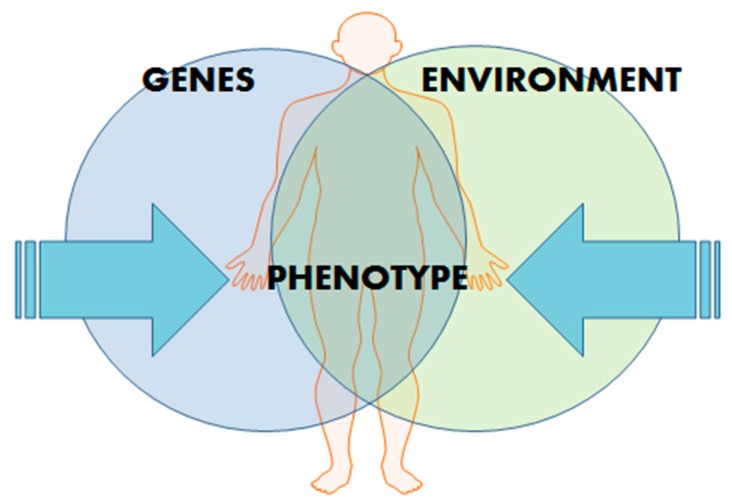
Figure 1
Figure 1
Influences on phenotype manifestation. Development of polygenic conditions, such as essential hypertension (EH), depend on a complex but interactive genetic and environmental system.
Figure 2
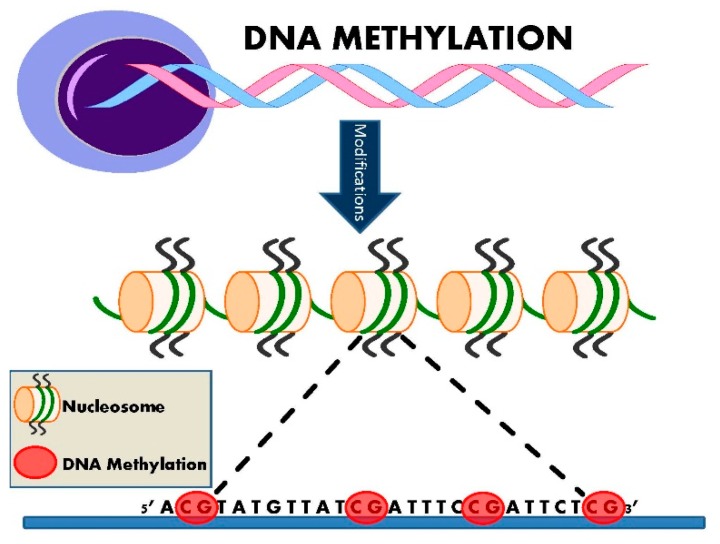
Figure 2
Epigenetic DNA methylation. DNA methylation involves the binding of a methyl group to the 5’ carbon of cytosine ring. This primarily occurs at CpG islands and results in inhibition of gene transcription, particularly if it occurs in the gene promoter region. It may also promote transcription if it is located at gene exons sites. DNA methylation is an essential biological process which is linked with several epigenetic phenomena including X-chromosome inactivation, genomic imprinting and repetitive element repression.
Figure 3
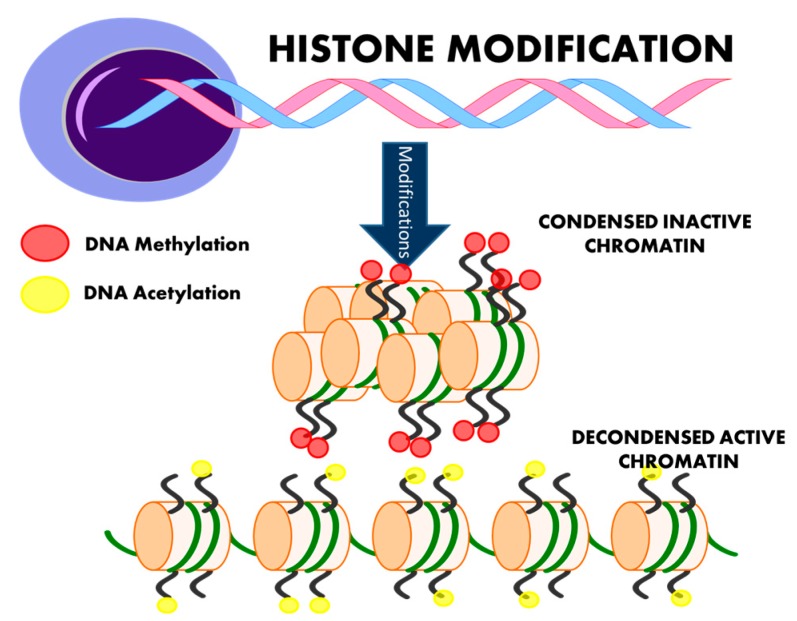
Figure 3
Histone modification. Post-translational changes in the form of histone modifications influence gene expression by controlling chromatin dynamics. Methylation is commonly associated with gene silencing and can directly interfere with the binding of transcription factors. Histone tail acetylation can increase the access of transcription factors to DNA by transforming condensed chromatin into a more relaxed structure.
Figure 4
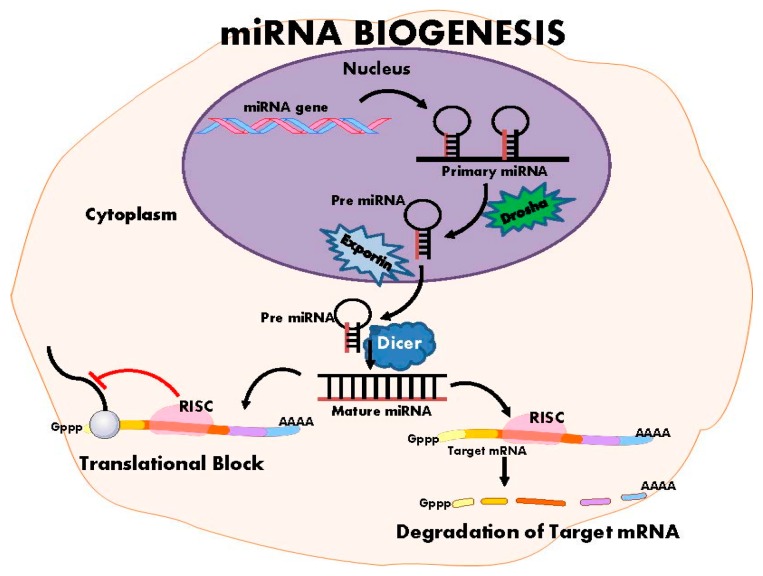
Figure 4
MicroRNA biogenesis. MiRNA biogenesis involves down-regulation of gene transcription via target mRNA degradation or by mRNA translation blockage. RISC: RNA-induced silencing complex.
Figure 5
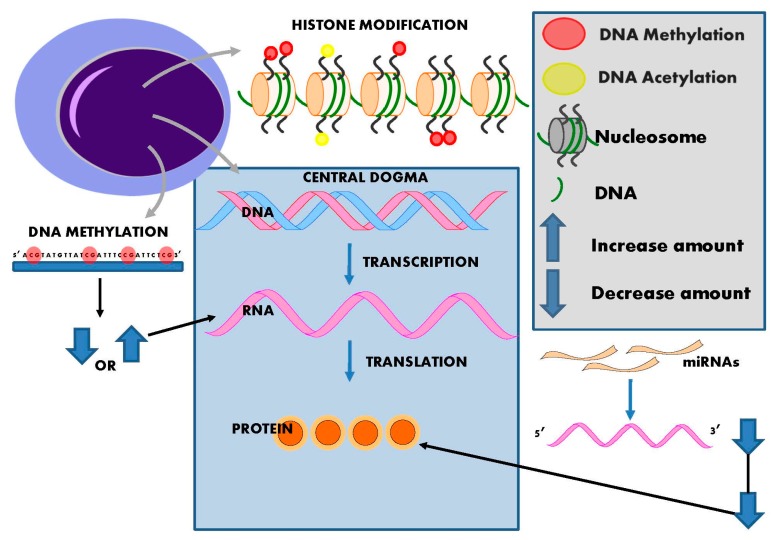
Figure 5
Impact of epigenetic modifications. DNA wrapped around nucleosomes are made up of four pairs of histone proteins. Histone proteins are prone to epigenetic modification, primarily acetylation and methylation but also phosphorylation, sumolyation, and biotinylation. These modifications change the formation of chromatin to either an open (active) or closed (inactive) state, thereby altering their transcriptional activity. DNA methylation changes the structure of DNA itself, allowing active transcription or silencing of genes. The outcome of DNA methylation is dependent on the location of the methylated site. miRNAs primarily target the 3’ UTR of mRNA (although 5’ targeting is possible). This negatively regulates the quantity of the encoded protein produced via degradation of mRNA molecules or by post-transcriptional regulation of mRNA stability.

References

    1. Lim S.S., Vos T., Flaxman A.D., Danaei G., Shibuya K., Adair-Rohani H., AlMazroa M.A., Amann M., Anderson H.R., Andrews K.G., et al. A comparative risk assessment of burden of disease and injury attributable to 67 risk factors and risk factor clusters in 21 regions, 1990–2010: A systematic analysis for the global burden of disease study 2010. Lancet. 2013;380:2224–2260. doi: 10.1016/S0140-6736(12)61766-8. - DOI - PMC - PubMed
    1. Poulter N.R., Prabhakaran D., Caulfield M. Hypertension. Lancet. 2015;386:801–812. doi: 10.1016/S0140-6736(14)61468-9. - DOI - PubMed
    1. Kunes J., Zicha J. The interaction of genetic and environmental factors in the etiology of hypertension. Physiol. Res. 2009;58(Suppl. 2):S33–S41. - PubMed
    1. Loscalzo J., Handy D.E. Epigenetic modifications: Basic mechanisms and role in cardiovascular disease (2013 grover conference series) Pulm. Circ. 2014;4:169–174. doi: 10.1086/675979. - DOI - PMC - PubMed
    1. Lorenzen J.M., Martino F., Thum T. Epigenetic modifications in cardiovascular disease. Basic Res. Cardiol. 2012;107:1–10. doi: 10.1007/s00395-012-0245-9. - DOI - PMC - PubMed

Publication types