


Glycosyltransferases and Transpeptidases/Penicillin-Binding Proteins: Valuable Targets for New Antibacterials
- PMID: 27025527
- PMCID: PMC4810414
- DOI: 10.3390/antibiotics5010012
Glycosyltransferases and Transpeptidases/Penicillin-Binding Proteins: Valuable Targets for New Antibacterials
Abstract
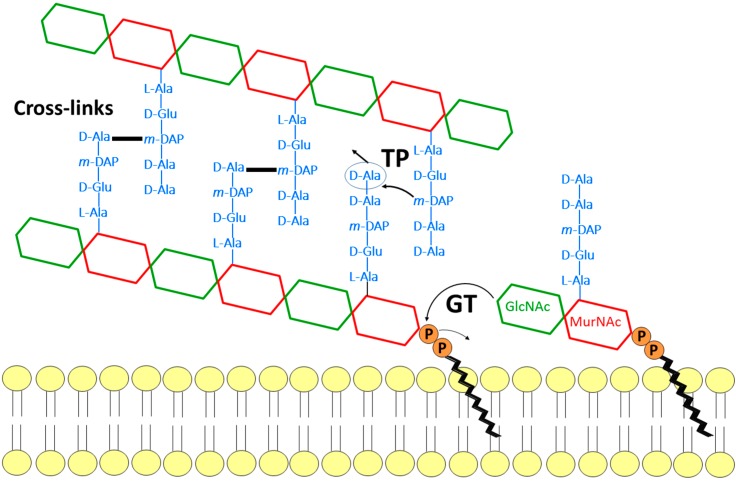
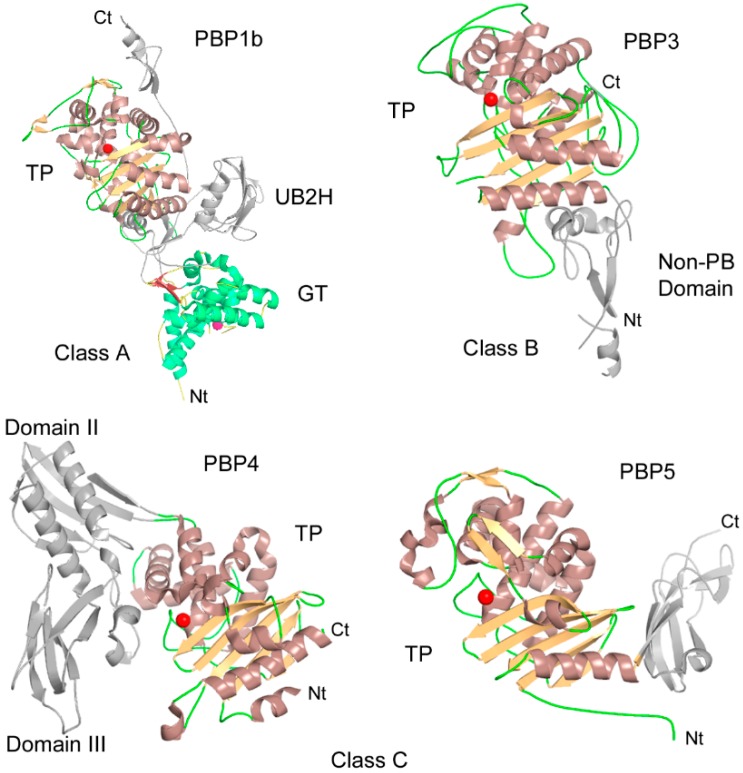
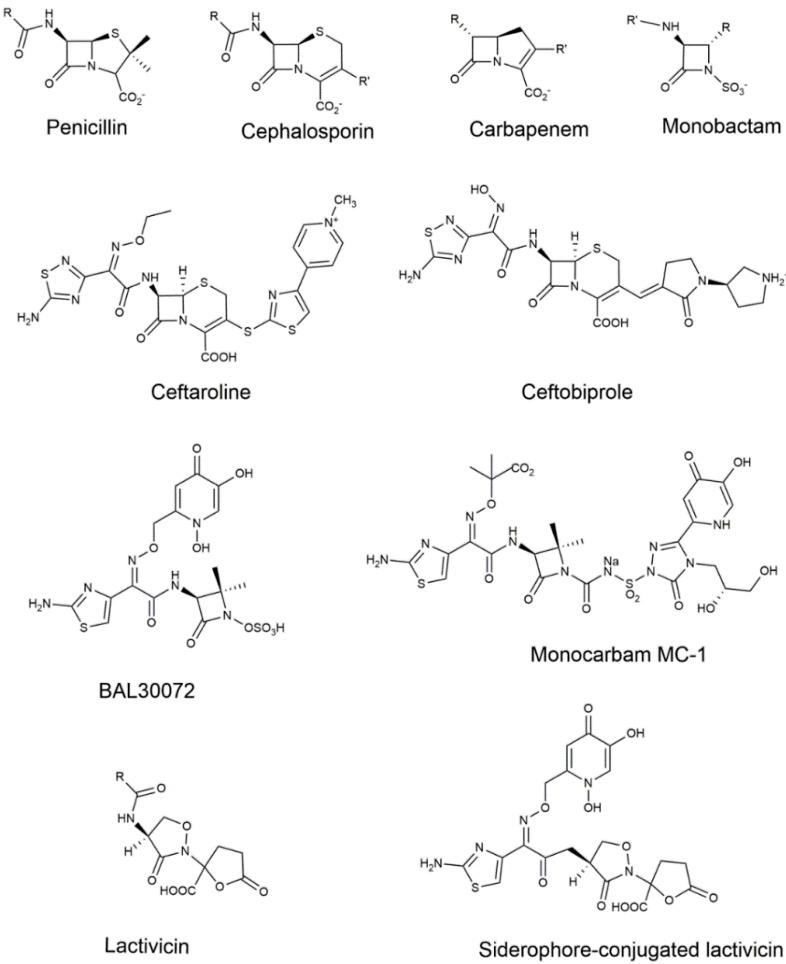
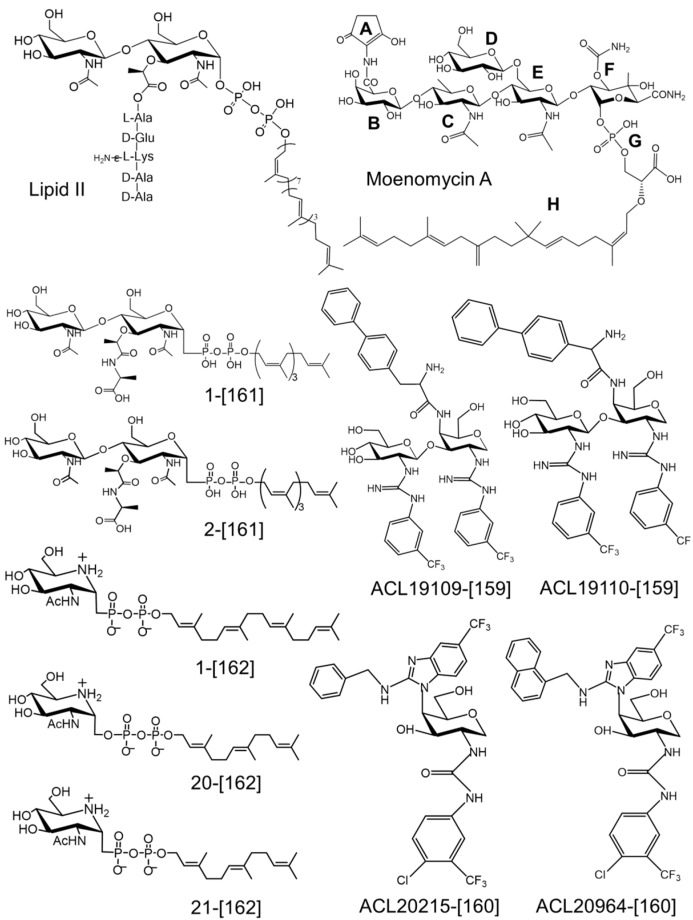
Peptidoglycan (PG) is an essential macromolecular sacculus surrounding most bacteria. It is assembled by the glycosyltransferase (GT) and transpeptidase (TP) activities of multimodular penicillin-binding proteins (PBPs) within multiprotein complex machineries. Both activities are essential for the synthesis of a functional stress-bearing PG shell. Although good progress has been made in terms of the functional and structural understanding of GT, finding a clinically useful antibiotic against them has been challenging until now. In contrast, the TP/PBP module has been successfully targeted by β-lactam derivatives, but the extensive use of these antibiotics has selected resistant bacterial strains that employ a wide variety of mechanisms to escape the lethal action of these antibiotics. In addition to traditional β-lactams, other classes of molecules (non-β-lactams) that inhibit PBPs are now emerging, opening new perspectives for tackling the resistance problem while taking advantage of these valuable targets, for which a wealth of structural and functional knowledge has been accumulated. The overall evidence shows that PBPs are part of multiprotein machineries whose activities are modulated by cofactors. Perturbation of these systems could lead to lethal effects. Developing screening strategies to take advantage of these mechanisms could lead to new inhibitors of PG assembly. In this paper, we present a general background on the GTs and TPs/PBPs, a survey of recent issues of bacterial resistance and a review of recent works describing new inhibitors of these enzymes.
Keywords: antibiotics resistance; glycosyltransferase; lipid II; penicillin-binding proteins; peptidoglycan; transpeptidase; β-lactam.
Figures

References
-
- Terrak M., Ghosh T.K., van Heijenoort J., Van Beeumen J., Lampilas M., Aszodi J., Ayala J.A., Ghuysen J.M., Nguyen-Distèche M. The catalytic, glycosyl transferase and acyl transferase modules of the cell wall peptidoglycan-polymerizing penicillin-binding protein 1b of Escherichia coli. Mol. Microbiol. 1999;34:350–364. doi: 10.1046/j.1365-2958.1999.01612.x. - DOI - PubMed
Publication types
LinkOut - more resources
Full Text Sources
Other Literature Sources
Research Materials
Miscellaneous
