


Effects of indexes of consciousness (IoC1 and IoC2) monitoring on remifentanil dosage in modified radical mastectomy: a randomized trial
- PMID: 27026012
- PMCID: PMC4810508
- DOI: 10.1186/s13063-016-1298-0
Effects of indexes of consciousness (IoC1 and IoC2) monitoring on remifentanil dosage in modified radical mastectomy: a randomized trial
Abstract
Background: This study investigated the effects of indexes of consciousness (IoC1 and IoC2) monitoring on remifentanil dosage.
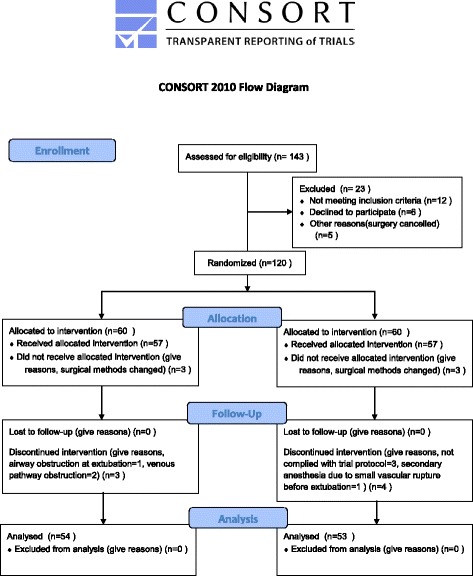
Methods: In this randomized, single-blinded, prospective study, 120 patients undergoing unilateral modified radical mastectomy were randomly assigned to the treatment group (T group, n = 60) or control group (C group, n = 60). In the T group, patients received both IoC1 (sedation) and IoC2 (analgesia) monitoring, and remifentanil dosages were adjusted by anesthetists according to IoC2. In the C group, remifentanil dosages were adjusted based on the anesthetists' judgment according to the patients' vital signs. Remifentanil dose, adjustment frequency, infusion duration, intraoperative adverse events, and quality of anesthetic recovery were compared between the two groups. The primary outcome was the dose of remifentanil.
Results: Compared with the C group, mean remifentanil dosage was significantly higher in the T group (3.8 ± 1.9 versus 3.2 ± 1.2 μg kg(-1) h(-1), P < 0.05) during the anesthetic period, as was the adjustment frequency of target-controlled infusion (2.9 ± 1.9 versus 2.0 ± 1.2 times/surgery, P < 0.05), but there was no difference in infusion duration. Voluntary eye opening, extubation time, and recovery score were not significantly different between the two groups (P > 0.05). Total adverse events were significantly reduced in the T group (P < 0.05).
Conclusions: IoC1-targeted propofol dosing does not seem to be significantly different to hemodynamic-based monitoring, whereas IoC2 monitoring can increase remifentanil dosage during modified radical mastectomy, but the anesthetic process is more controllable and total adverse events are reduced, which improves the controllability of anesthesia.
Trial registration number: ChiCTR-TRC-13004101 , registered on 27 November 2013.
Keywords: Index of consciousness; IoC2 monitoring; Propofol; Remifentanil; Unilateral modified radical mastectomy.
References
-
- Mashour GA, Shanks A, Tremper KK, Kheterpal S, Turner CR, Ramachandran SK, et al. Prevention of intraoperative awareness with explicit recall in an unselected surgical population: a randomized comparative effectiveness trial. Anesthesiology. 2012;117:717–25. doi: 10.1097/ALN.0b013e31826904a6. - DOI - PMC - PubMed
Publication types
MeSH terms
Substances
Associated data
LinkOut - more resources
Full Text Sources
Other Literature Sources
