


Hip arthroscopy in obese, a successful combination?
- PMID: 27026817
- PMCID: PMC4808258
- DOI: 10.1093/jhps/hnv076
Hip arthroscopy in obese, a successful combination?
Abstract
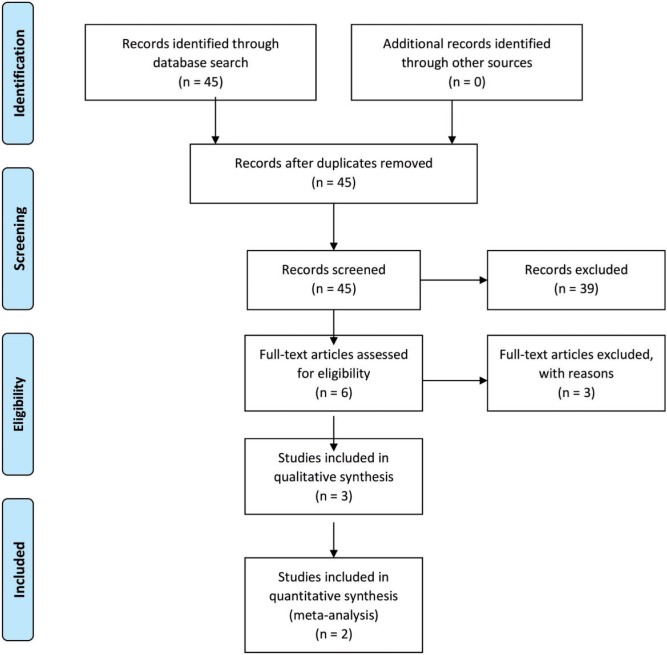
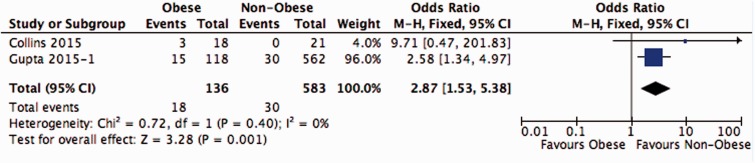
Discussion persists about the outcome and results of hip arthroscopy in obese patients. Hip arthroscopy gained popularity over time. A current discussion is if obese patients can reach similar results after surgery compared with non-obese. To our knowledge, this is the first systematic review of literature about hip arthroscopy and obesity. We searched the Pubmed/Medline databases for literature and included three studies that compared the outcome of hip arthroscopy between different BMI groups. We extracted and pooled the data. For continues data a weighted mean difference was calculated, for dichotomous variables a weighted odds ratio (OR) was calculated using Review Software Manager. Heterogeneity of the included studies was calculated using I(2) statistics. Data were extracted from two studies. In the Obese group, there was significant more conversion to total hip replacement or resurfacing hip replacement (OR = 2.21, 95% CI 1.07-4.56) and more re-arthroscopy (OR = 4.68, 95% CI 1.41-15.45). Any reoperation occurred more often in the obese group (OR = 2.87, 95% CI 1.53-5.38). In the Non Arthritic Hip Score obese scored lower than the non-Obese group [10.9 (-14,6 to 7.1)]. For the modified Harris Hip Score the score is - 6,6, according to the MCID this difference is clinically relevant. For both scores obese show lower outcomes but similar improvement after hip arthroscopy. Regarding a higher chance of needing a re-operation and lower subjective outcome scores obesity appears to have a negative influence on the outcome of hip arthroscopy.
Figures




References
-
- Jiang L, Rong J, Wang Y, et al. The relationship between body mass index and hip osteoarthritis: a systematic review and meta-analysis. Joint Bone Spine 2011; 78: 150–5. - PubMed
-
- World Health Organization Obesity and overweight factsheet. Updated January 2015. http://www.who.int/mediacentre/factsheets/fs311/en/. Accessed: 21 May 2015.
-
- Clohisy JC, Baca G, Beaulé PE, et al. Descriptive epidemiology of femoroacetabular impingement: a North American cohort of patients undergoing surgery. Am J Sports Med 2013; 41: 1348–56. - PubMed
-
- Paans N, van den Akker-Scheek I, Dilling RG, et al. Effect of exercise and weight loss in people who have hip osteoarthritis and are overweight or obese: a prospective cohort study. Phys Ther 2013; 93: 137–46. - PubMed
Publication types
LinkOut - more resources
Full Text Sources
Other Literature Sources
