


EPIDEMIOLOGICAL CHARACTERISTICS AND CAUSES OF PROXIMAL FEMORAL FRACTURES AMONG THE ELDERLY
- PMID: 27027070
- PMCID: PMC4799322
- DOI: 10.1016/S2255-4971(15)30322-0
EPIDEMIOLOGICAL CHARACTERISTICS AND CAUSES OF PROXIMAL FEMORAL FRACTURES AMONG THE ELDERLY
Abstract
Objective: The social and economic cost of proximal femoral fractures is high, due the morbidity and mortality relating to the fracture itself, among other factors. Despite the importance of this issue, studies on this topic are still scarce in Brazil. This was a retrospective, observational and cross-sectional (ecological) study with the aims of outlining an epidemiological profile for proximal femoral fractures among the elderly and analyzing the causes of these fractures and the physical characteristics of patients admitted to a single university hospital in São Paulo.
Methods: This was a study on medical records over a one-year period, with group comparisons using the chi-square test; p > 0.05 was considered significant.
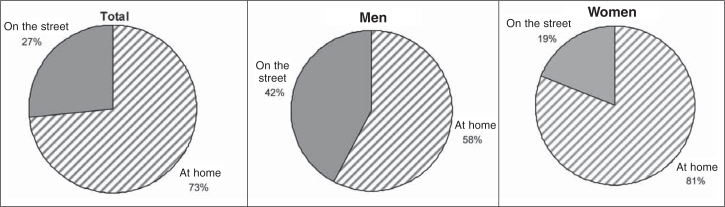
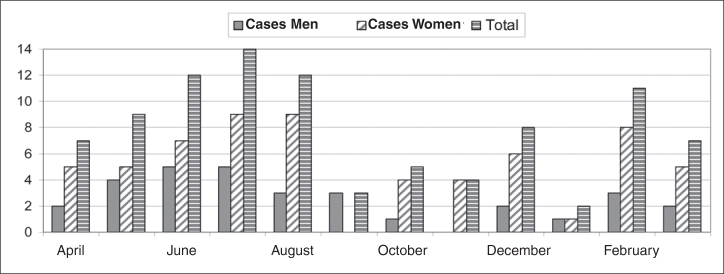
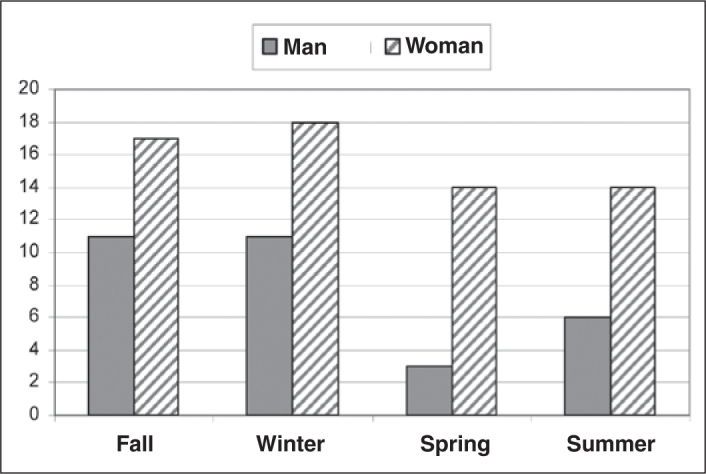
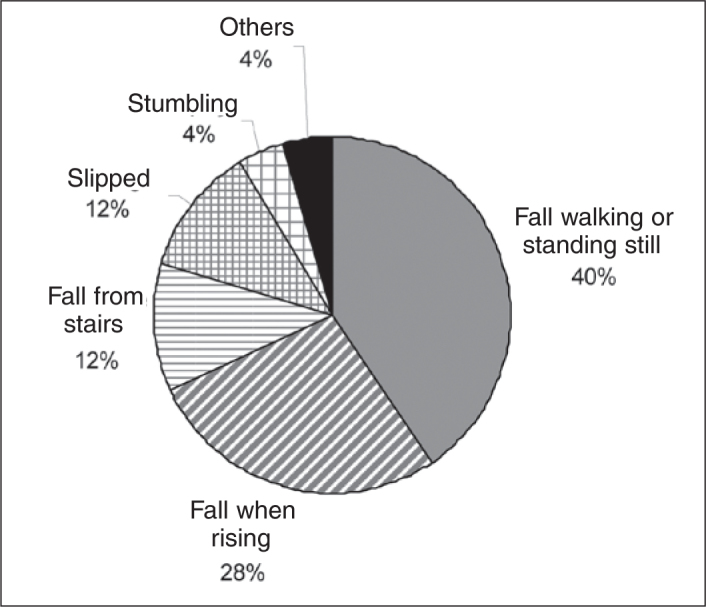
Results: Ninety-four individuals were evaluated: predominantly female (2:1); 81-85 years of age; body mass index within normal limits; white and Asian patients (p > 0.05). The vast majority of the fractures occurred through low-energy trauma and inside the patients' homes (p > 0.05). After excluding the trauma resulting from high-energy events, over 39% occurred as the patients were moving from sitting to standing up or were using stairs, and approximately 40% occurred while they were standing still or walking. A greater number of cases corresponded to the cold seasons of the year (p > 0.05);
Conclusion: Most injuries occurred inside the patients' own homes and had low-energy causes. Thus, some accidents might be avoided through simple low-cost measures that guide the elderly regarding situations of risk, which would bring major quality-of-life benefits and significant decreases in morbidity, mortality and the socioeconomic costs of this increasingly frequent problem.
Keywords: Aged; Epidemiology; Femoral Fractures.
Figures

References
-
- Carvalho MI. Osteoporose: visão do ortopedista. Rev Bras Ortop. 2006;41(4):91–97.
-
- Rocha MA, Carvalho WS, Zanqueta C, Lemos SC. Estudo epidemiológico retrospectivo das fraturas do fêmur proximal tratados no Hospital Escola da Faculdade de Medicina do Triângulo Mineiro. Rev Bras Ortop. 2001;36(8):311–316.
-
- Cummings SR, Kelsey JL, Nevitt MC, O'Dowd KJ. Epidemiology of osteoporosis and osteoporotic fractures. Epidemiol Rev. 1985;7:178–208. - PubMed
-
- Brumel JE, Ayarza E, Pavez A, Silva I. Incidencia de fractura de cuello de fêmur (FCF), area sur y sur oriente de Santiago. Cuad Med Soc. 1991;32(1):9–15.
-
- Bagur A, Mautalen C, Rubin Z. Epidemiology of hip fractures in an urban population of central Argentina. Osteoporos Int. 1994;4(6):332–335. - PubMed
LinkOut - more resources
Full Text Sources