


Glycaemic control and risk of incident urinary incontinence in women with Type 1 diabetes: results from the Diabetes Control and Complications Trial and Epidemiology of Diabetes Interventions and Complications (DCCT/EDIC) study
- PMID: 27028025
- PMCID: PMC5045319
- DOI: 10.1111/dme.13126
Glycaemic control and risk of incident urinary incontinence in women with Type 1 diabetes: results from the Diabetes Control and Complications Trial and Epidemiology of Diabetes Interventions and Complications (DCCT/EDIC) study
Abstract
Aims: To study the impact of glycaemic control on urinary incontinence in women who participated in the Diabetes Control and Complications Trial (DCCT; 1983-1993) and its observational follow-up study, the Epidemiology of Diabetes Interventions and Complications (EDIC; 1994-present).
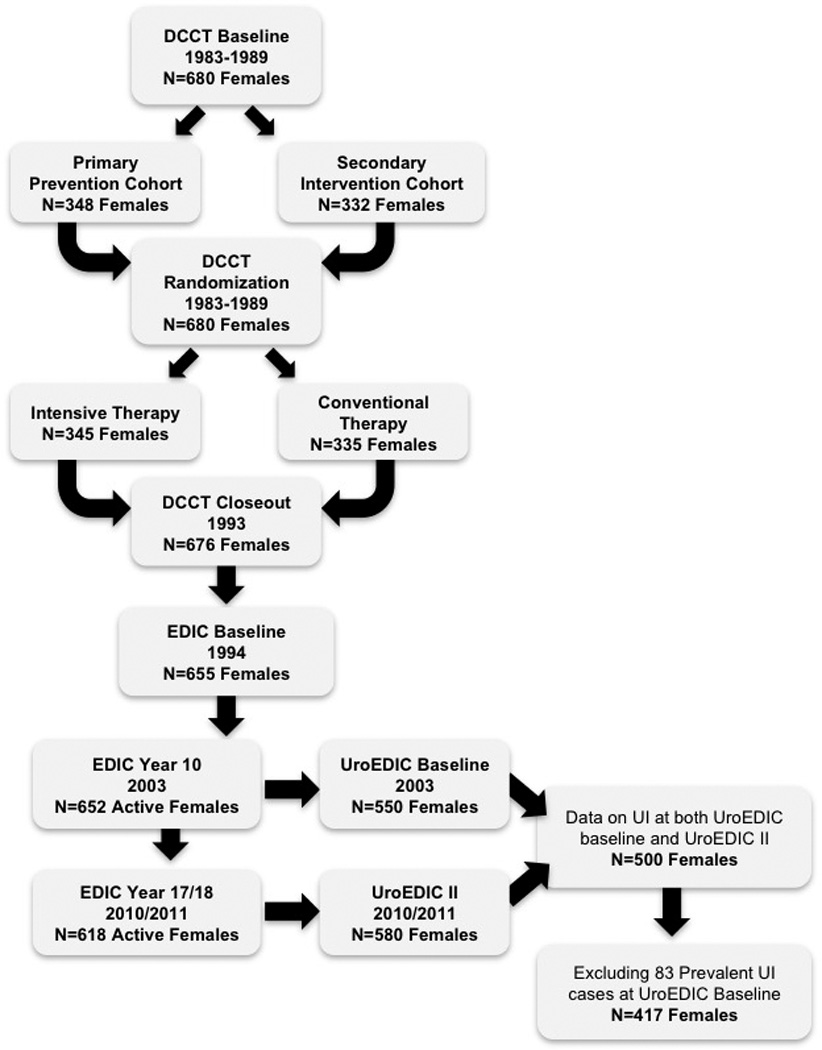
Methods: Study participants were women who completed, at both years 10 (2003) and 17 (2010) of the EDIC follow-up, the urological assessment questionnaire (UroEDIC). Urinary incontinence was defined as self-reported involuntary leakage of urine that occurred at least weekly. Incident urinary incontinence was defined as weekly urinary incontinence present at EDIC year 17 but not at EDIC year 10. Multivariable regression models were used to examine the association of incident urinary incontinence with comorbid prevalent conditions and glycaemic control (mean HbA1c over the first 10 years of EDIC).
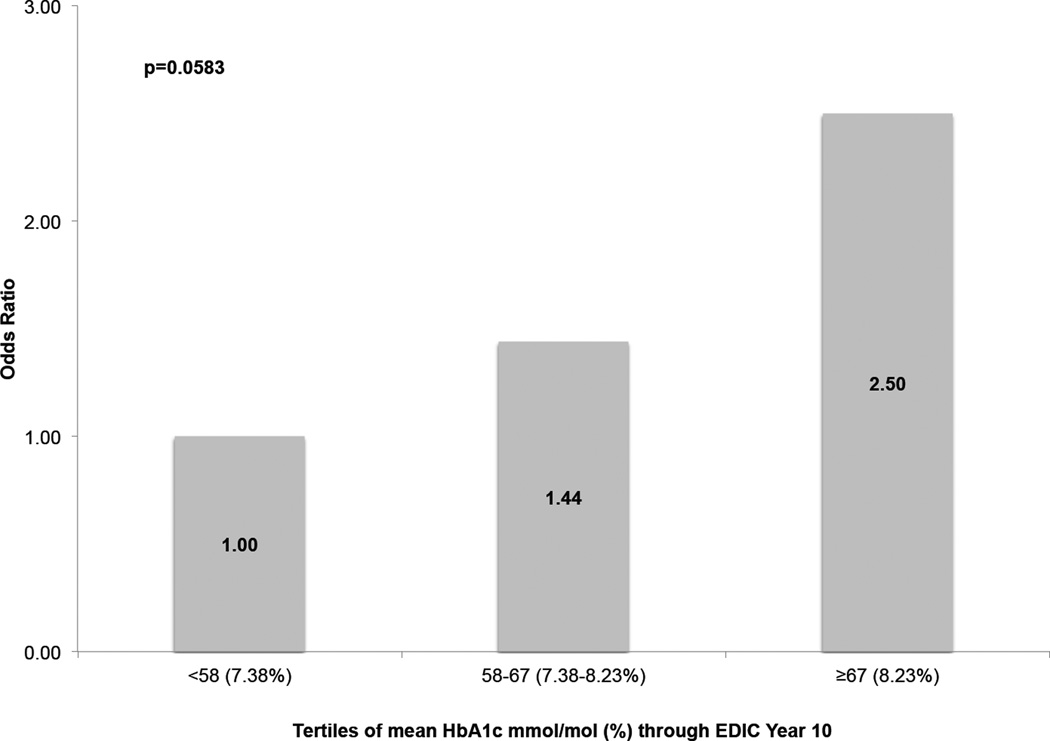
Results: A total of 64 (15.3%) women with Type 1 diabetes (mean age 43.6 ± 6.3 years at EDIC year 10) reported incident urinary incontinence at EDIC year 17. When adjusted for clinical covariates (including age, DCCT cohort assignment, DCCT treatment arm, BMI, insulin dosage, parity, hysterectomy, autonomic neuropathy and urinary tract infection in the last year), the mean EDIC HbA1c was associated with increased odds of incident urinary incontinence (odds ratio 1.03, 95% CI 1.01-1.06 per mmol/mol increase; odds ratio 1.41, 95% CI 1.07-1.89 per % HbA1c increase).
Conclusions: Incident urinary incontinence was associated with higher HbA1c levels in women with Type 1 diabetes, independent of other recognized risk factors. These results suggest the potential for women to modify their risk of urinary incontinence with improved glycaemic control. (Clinical Trials Registry no: NCT00360815 and NCT00360893).
© 2016 Diabetes UK.
Figures
References
-
- Hunskaar S, Burgio K, Diokno A, Herzog AR, Hjalmas K, Lapitan MC. Epidemiology and natural history of urinary incontinence in women. Urology. 2003;62:16–23. - PubMed
-
- Brown JS, Vittinghoff E, Lin F, Nyberg LM, Kusek JW, Kanaya AM. Prevalence and risk factors for urinary incontinence in women with type 2 diabetes and impaired fasting glucose: findings from the National Health and Nutrition Examination Survey (NHANES) 2001–2002. Diabetes Care. 2006;29:1307–1312. - PMC - PubMed
-
- Lifford KL, Curhan GC, Hu FB, Barbieri RL, Grodstein F. Type 2 diabetes mellitus and risk of developing urinary incontinence. J Am Geriatr Soc. 2005;53:1851–1857. - PubMed
-
- Brown JS, Wessells H, Chancellor MB, Howards SS, Stamm WE, Stapleton AE, et al. Urologic complications of diabetes. Diabetes Care. 2005;28:177–185. - PubMed
Publication types
MeSH terms
Substances
Associated data
Grants and funding
LinkOut - more resources
Full Text Sources
Other Literature Sources
Medical
Miscellaneous
