


Declining trends in invasive orthopedic interventions for people with hemophilia enrolled in the Universal Data Collection program (2000-2010)
- PMID: 27030396
- PMCID: PMC4958548
- DOI: 10.1111/hae.12932
Declining trends in invasive orthopedic interventions for people with hemophilia enrolled in the Universal Data Collection program (2000-2010)
Abstract
Introduction: Recurrent joint hemarthroses due to hemophilia (Factor VIII and Factor IX deficiency) often lead to invasive orthopedic interventions to decrease frequency of bleeding and/or to alleviate pain associated with end-stage hemophilic arthropathy.
Aim: Identify trends in invasive orthopedic interventions among people with hemophilia who were enrolled in the Universal Data Collection (UDC) program during the period 2000-2010.
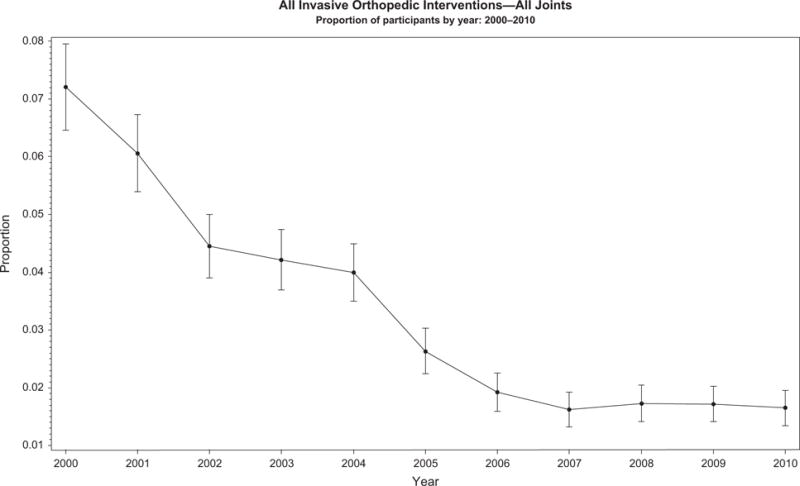
Methods: Data were collected from 130 hemophilia treatment centers in the United States annually during the period 2000-2010, in collaboration with the Centers for Disease Control and Prevention (CDC). The number of visits in which an invasive orthopedic intervention was reported was expressed as a proportion of the total visits in each year of the program. Invasive orthopedic interventions consisted of arthroplasty, arthrodesis, and synovectomy. Joints included in this study were the shoulder, elbow, hip, knee, and ankle.
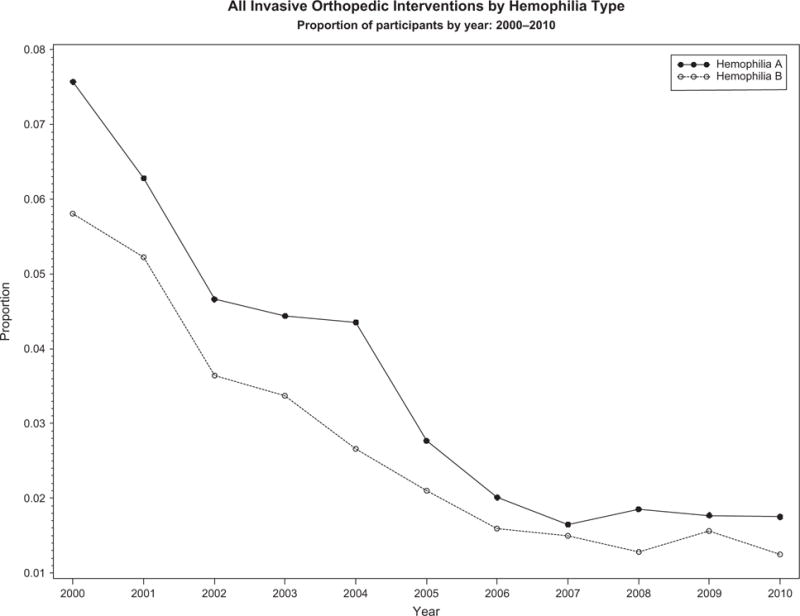
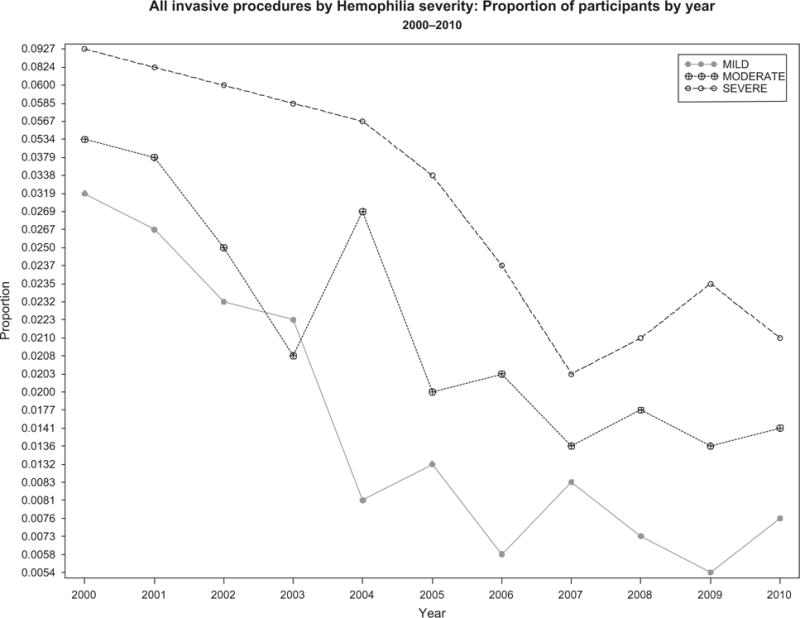
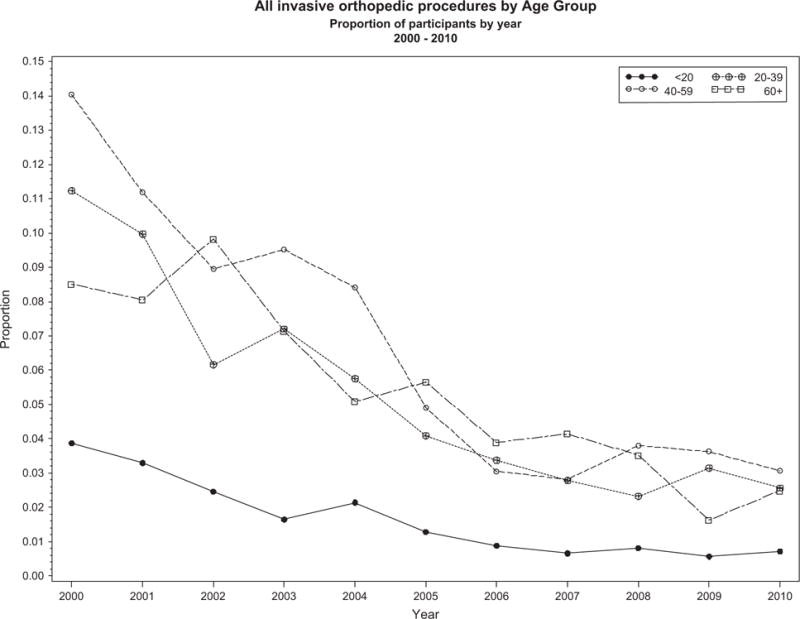
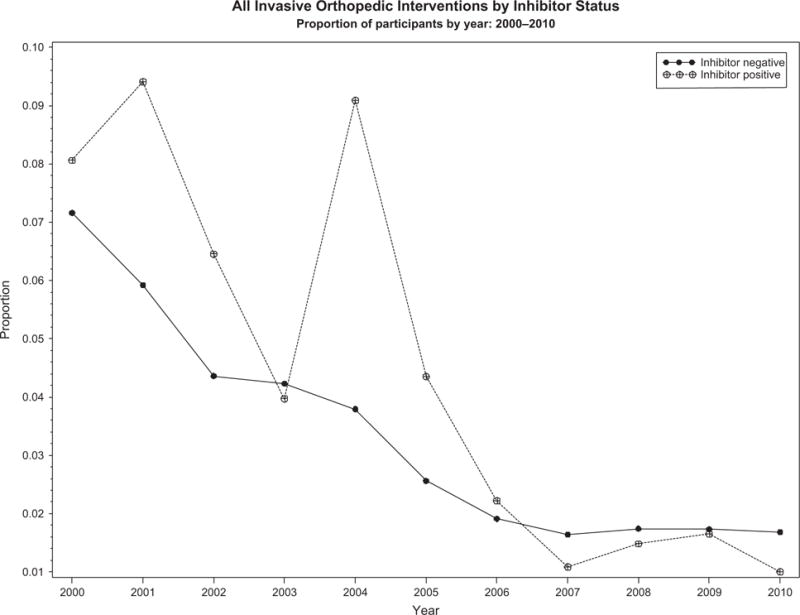
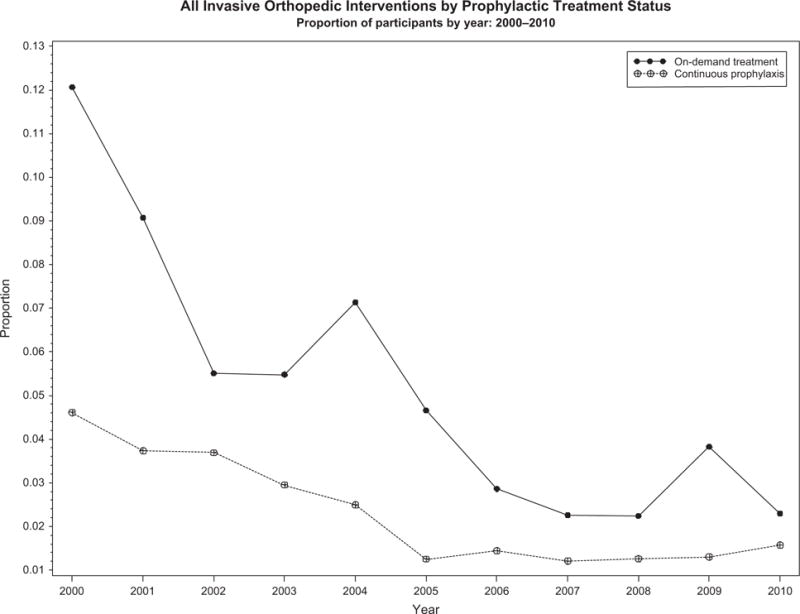
Results: A 5.6% decrease in all invasive orthopedic interventions in all joints of people with hemophilia enrolled in the UDC program over the 11-year study period was observed.
Conclusions: These data reflect a declining trend in invasive orthopedic interventions in people with hemophilia. Further research is needed to understand the characteristics that may influence invasive orthopedic interventions.
Keywords: arthropathy; arthroplasty; hemophilia; orthopedic.
© 2016 John Wiley & Sons Ltd.
Conflict of interest statement
PT received honoraria for speaking for Bayer Pharmaceuticals. HL received honoraria for speaking and consulting for Bayer and Baxter Pharmaceuticals. All other authors have no conflicts of interest that might be perceived as posing a conflict or bias.
Figures
References
-
- Klamroth R, Pollmann H, Hermans C, et al. The relative burden of haemophilia A and the impact of target joint development on health-related quality of life: results from the ADVATE Post-Authorization Safety Surveillance (PASS) study. Haemophilia. 2011;17:412–21. - PubMed
-
- Soucie JM, McAlister S, McClellan A, Oakley M, Su Y. The universal data collection surveillance system for rare bleeding disorders. Am J Prev Med. 2010;38:S475–81. - PubMed
-
- Rahme M, Ehlinger M, Faradji A, et al. Total knee arthroplasty in severe haemophilic patients under continuous infusion of clotting factors. Knee Surg Sports Traumatol Arthrosc. 2012;20:1781–6. - PubMed
-
- Rodriguez-Merchan EC. Aspects of current management: orthopaedic surgery in haemophilia. Haemophilia. 2012;18:8–16. - PubMed
-
- Goddard NJ, Rodriguez-Merchan EC, Wiedel JD. Total knee replacement in haemophilia. Haemophilia. 2002;8:382–6. - PubMed
MeSH terms
Grants and funding
LinkOut - more resources
Full Text Sources
Other Literature Sources
Medical
