


Functional characterization of a mouse model for central post-stroke pain
- PMID: 27030713
- PMCID: PMC4956143
- DOI: 10.1177/1744806916629049
Functional characterization of a mouse model for central post-stroke pain
Abstract
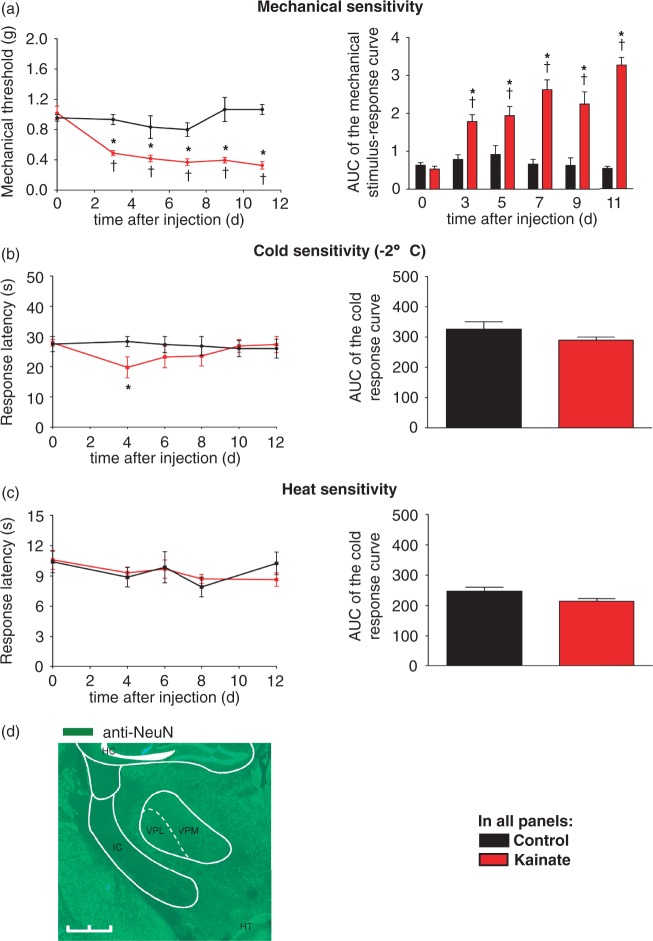
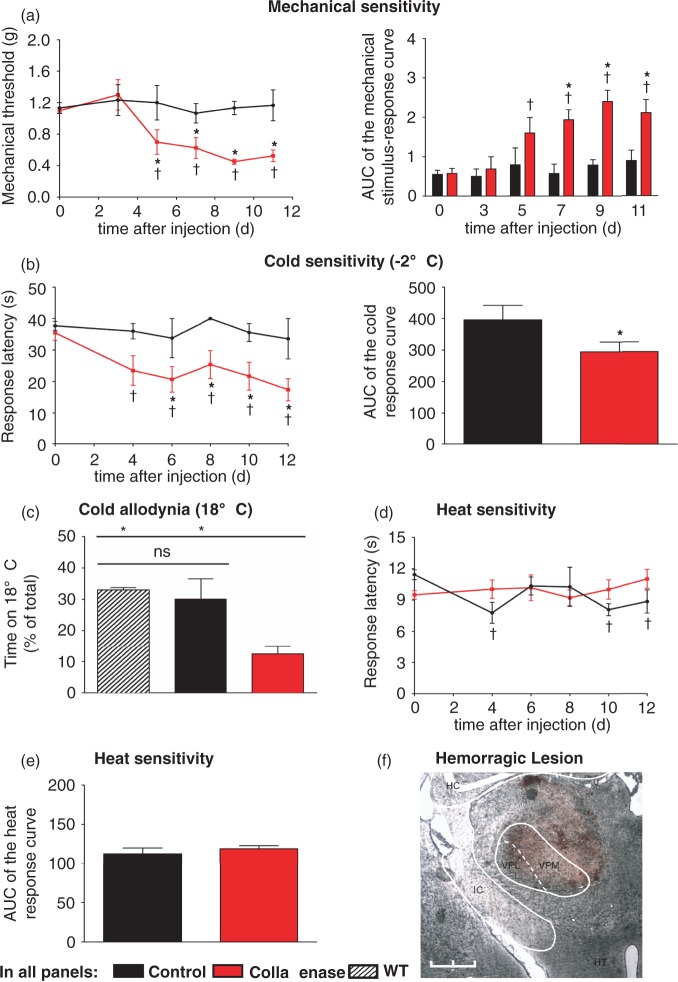
Background: Stroke patients often suffer from a central neuropathic pain syndrome called central post-stroke pain. This syndrome is characterized by evoked pain hypersensitivity as well as spontaneous, on-going pain in the body area affected by the stroke. Clinical evidence strongly suggests a dysfunction in central pain pathways as an important pathophysiological factor in the development of central post-stroke pain, but the exact underlying mechanisms remain poorly understood. To elucidate the underlying pathophysiology of central post-stroke pain, we generated a mouse model that is based on a unilateral stereotactic lesion of the thalamic ventral posterolateral nucleus, which typically causes central post-stroke pain in humans.
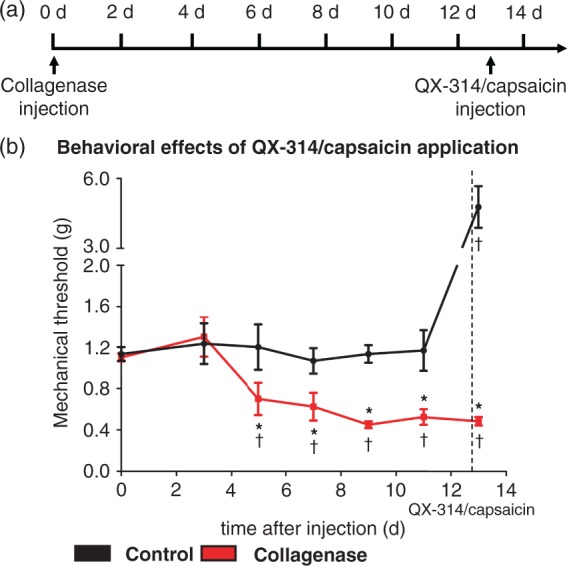
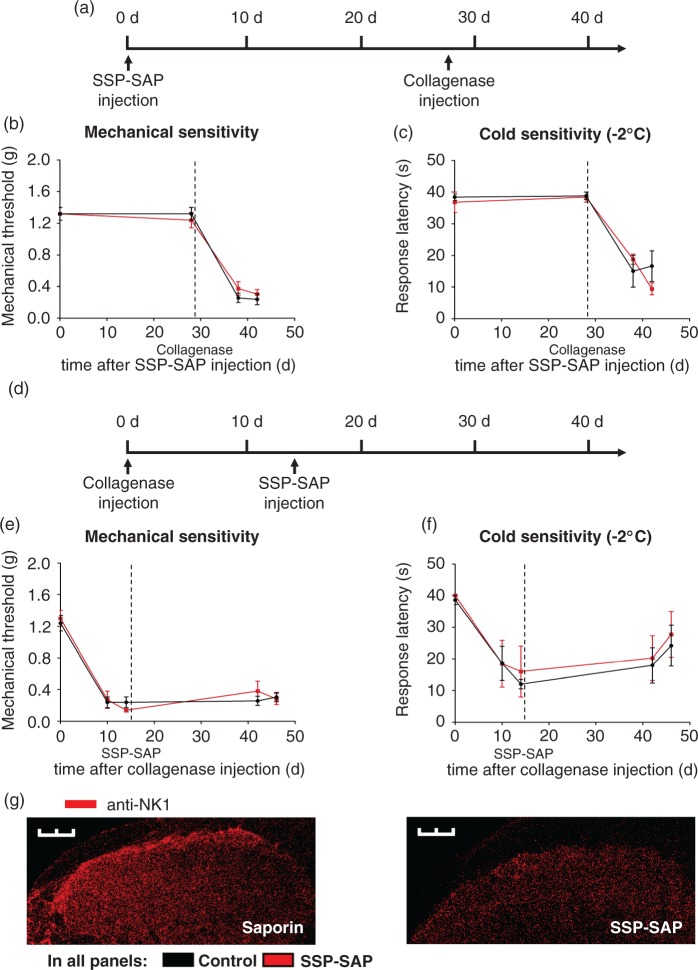
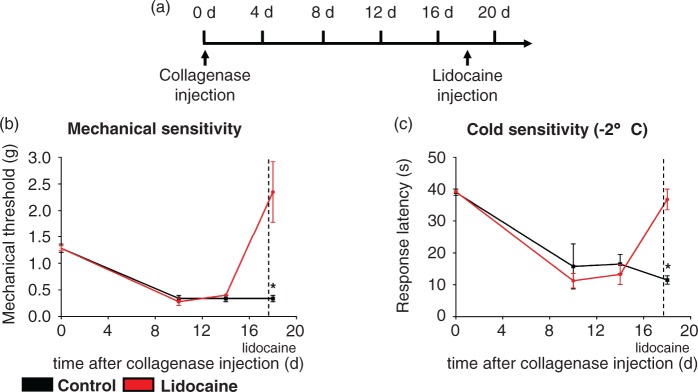
Results: Behavioral analysis showed that the sensory changes in our model are comparable to the sensory abnormalities observed in patients suffering from central post-stroke pain. Surprisingly, pharmacological inhibition of spinal and peripheral key components of the pain system had no effect on the induction or maintenance of the evoked hypersensitivity observed in our model. In contrast, microinjection of lidocaine into the thalamic lesion completely reversed injury-induced hypersensitivity.
Conclusions: These results suggest that the evoked hypersensitivity observed in central post-stroke pain is causally linked to on-going neuronal activity in the lateral thalamus.
Keywords: central post-stroke pain; mouse model; pain; stroke.
© The Author(s) 2016.
Figures
References
-
- Bowsher D. Pain after thalamic stroke: right diencephalic predominance and clinical features in 180 patients. Neurology 1998; 51: 927. - PubMed
-
- MacGowan DJ, Janal MN, Clark WC, et al. Central poststroke pain and Wallenberg’s lateral medullary infarction: frequency, character, and determinants in 63 patients. Neurology 1997; 49: 120–125. - PubMed
-
- Andersen G, Vestergaard K, Ingeman-Nielsen M, et al. Incidence of central post-stroke pain. Pain 1995; 61: 187–193. - PubMed
-
- Appelros P. Prevalence and predictors of pain and fatigue after stroke: a population-based study. Int J Rehab Res 2006; 29: 329–333. DOI: 10.1097/MRR.0b013e328010c7b8. - PubMed
-
- Bowsher D. Stroke and central poststroke pain in an elderly population. J Pain 2001; 2: 258–261. DOI: 10.1054/jpai.2001.24549. - PubMed
Publication types
MeSH terms
Substances
LinkOut - more resources
Full Text Sources
Other Literature Sources
Medical
