. 2016 Mar 31;11(3):e0152796.
doi: 10.1371/journal.pone.0152796. eCollection 2016.

Melanins Protect Sporothrix brasiliensis and Sporothrix schenckii from the Antifungal Effects of Terbinafine

Affiliations

Melanins Protect Sporothrix brasiliensis and Sporothrix schenckii from the Antifungal Effects of Terbinafine

Rodrigo Almeida-Paes et al. PLoS One. .

Abstract

Terbinafine is a recommended therapeutic alternative for patients with sporotrichosis who cannot use itraconazole due to drug interactions or side effects. Melanins are involved in resistance to antifungal drugs and Sporothrix species produce three different types of melanin. Therefore, in this study we evaluated whether Sporothrix melanins impact the efficacy of antifungal drugs. Minimal inhibitory concentrations (MIC) and minimal fungicidal concentrations (MFC) of two Sporothrix brasiliensis and four Sporothrix schenckii strains grown in the presence of the melanin precursors L-DOPA and L-tyrosine were similar to the MIC determined by the CLSI standard protocol for S. schenckii susceptibility to amphotericin B, ketoconazole, itraconazole or terbinafine. When MICs were determined in the presence of inhibitors to three pathways of melanin synthesis, we observed, in four strains, an increase in terbinafine susceptibility in the presence of tricyclazole, a DHN-melanin inhibitor. In addition, one S. schenckii strain grown in the presence of L-DOPA had a higher MFC value when compared to the control. Growth curves in presence of 2×MIC concentrations of terbinafine showed that pyomelanin and, to a lesser extent, eumelanin were able to protect the fungi against the fungicidal effect of this antifungal drug. Our results suggest that melanin protects the major pathogenic species of the Sporothrix complex from the effects of terbinafine and that the development of new antifungal drugs targeting melanin synthesis may improve sporotrichosis therapies.


Conflict of interest statement

Competing Interests: The authors have declared that no competing interests exist.

Figures

Fig 1
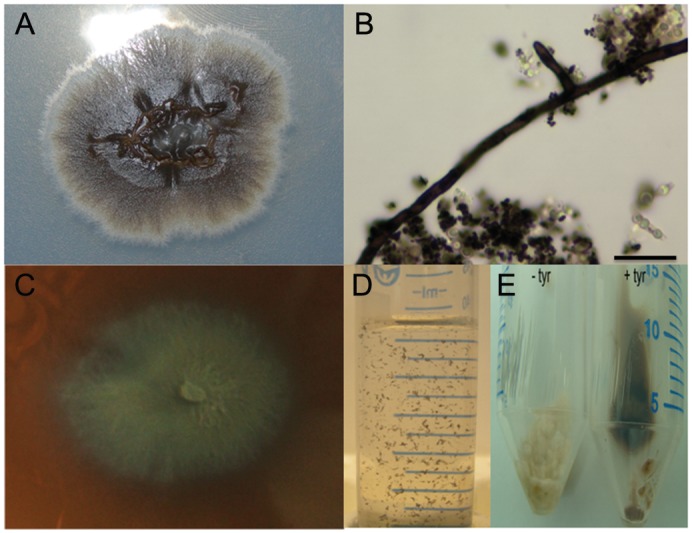
Fig 1. Production of melanin by Sporothrix under the conditions required for antifungal susceptibility tests.
Data presented is for S. brasiliensis IPEC 26449, which is representative of all strains examined. (A) Dark pigmented colony on PDA after 7 days of incubation at 37°C; (B) Melanin ghosts from cells isolated from a seven day old culture in PDA supplemented with L-DOPA at 37°C showing similar structures in shapes and sizes relative to the Sporothrix hyphal and conidial propagules, compatible with eumelanin; (C) Dark pigment formation on PDA supplemented with L-tyrosine after 7 days of incubation at 37°C, compatible with pyomelanin; (D) Suspension of melanin ghosts isolated from a seven day old culture in RPMI1640 at 37°C; (E) Sporothrix cells harvested from RPMI1640 without L-tyrosine, at left, or supplemented with L-tyrosine, at right.
Fig 2
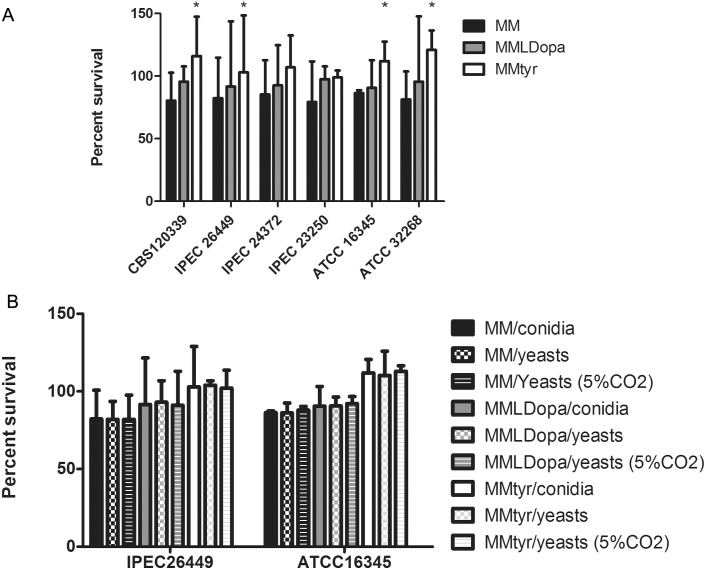
Fig 2. Protective role of Sporothrix melanins against terbinafine.
(A) Percent survival of six Sporothrix spp. strains cultivated in minimal medium (MM), minimal medium with L-Dopa (MMLDopa), or minimal medium with L-tyrosine (MMtyr) after 24 hours of incubation with a two times MIC concentration of terbinafine. (B) Comparison between mycelia and yeast. The percent survival was calculated using Sporothrix cells grown without terbinafine as a control. Bars represent mean + standard deviation. * P<0.05.

References

    1. Barros MBL, Almeida-Paes R, Schubach AO. Sporothrix schenckii and Sporotrichosis. Clin Microbiol Rev. 2011;24(4):633–654. 10.1128/CMR.00007-11 - DOI - PMC - PubMed
    1. Song Y, Li SS, Zhong SX, Liu YY, Yao L, Huo SS. Report of 457 sporotrichosis cases from Jilin province, northeast China, a serious endemic region. J Eur Acad Dermatol Venereol. 2013;27(3):313–318. 10.1111/j.1468-3083.2011.04389.x - DOI - PubMed
    1. Chakrabarti A, Bonifaz A, Gutierrez-Galhardo MC, Mochizuki T, Li S. Global epidemiology of sporotrichosis. Med Mycol. 2015;53(1):3–14. 10.1093/mmy/myu062 - DOI - PubMed
    1. Dias NM, Oliveira MM, Santos C, Zancope-Oliveira RM, Lima N. Sporotrichosis caused by Sporothrix mexicana, Portugal. Emerg Infect Dis. 2011;17(10):1975–1976. 10.3201/eid1710.110737 - DOI - PMC - PubMed
    1. Marimon R, Gene J, Cano J, Guarro J. Sporothrix luriei: a rare fungus from clinical origin. Med Mycol. 2008;46(6):621–625. 10.1080/13693780801992837 - DOI - PubMed

Publication types

LinkOut - more resources