


Relationship between pain relief, reduction in pain-associated sleep interference, and overall impression of improvement in patients with postherpetic neuralgia treated with extended-release gabapentin
- PMID: 27037091
- PMCID: PMC4818513
- DOI: 10.1186/s12955-016-0456-0
Relationship between pain relief, reduction in pain-associated sleep interference, and overall impression of improvement in patients with postherpetic neuralgia treated with extended-release gabapentin
Abstract
Background: Postherpetic neuralgia (PHN) interferes with patients' quality of life, and disturbed sleep is a prevalent complaint. Pain-associated sleep interference in turn enhances pain and/or reduces pain tolerance. Therefore, reducing sleep interference by pain, in addition to pain control, may improve patient care. To address this notion, we characterized relationships among changes in pain intensity, sleep interference, and overall impression of improvement in PHN patients treated with gastroretentive gabapentin (G-GR).
Methods: Patients with PHN (n = 556) received G-GR 1,800 mg once-daily in two phase 3 and one phase 4 study. Visual Analog Scale (VAS) and Brief Pain Inventory (BPI) were completed at baseline and the end of study. Patients' Global Impression of Change (PGIC) was completed at the end of study. Regression analyses examined relationships between VAS, BPI sleep interference by pain, and PGIC.
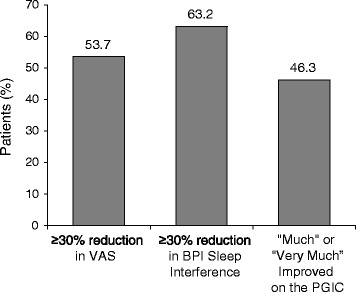
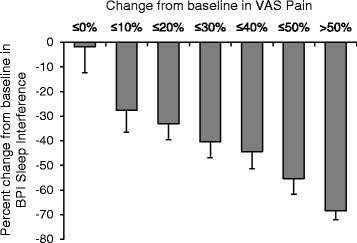
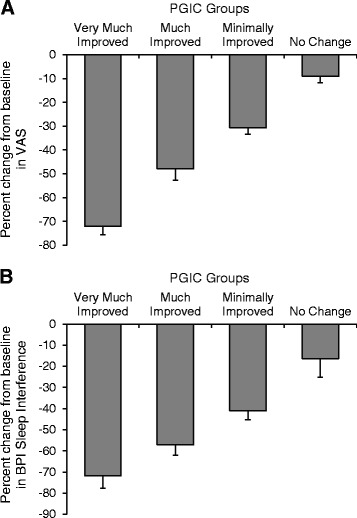
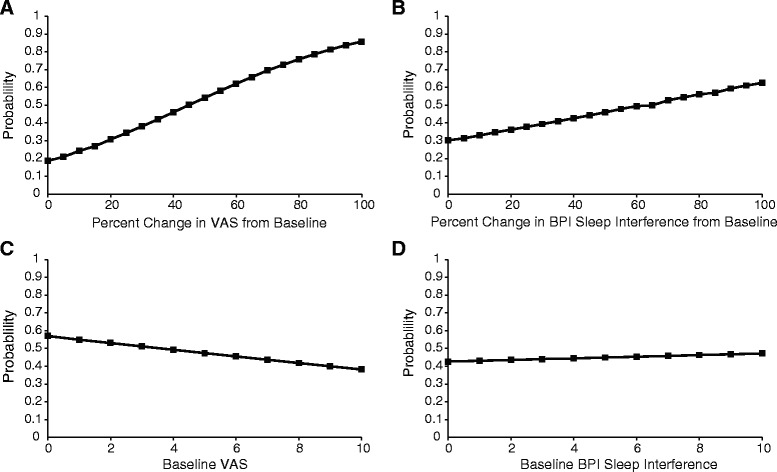
Results: At the end of treatment, 53.7 and 63.2 % of patients reported a ≥ 30 % reduction in VAS and BPI pain-associated sleep interference (BPISI) respectively; 46.3 % reported feeling "Much" or "Very Much" improved on the PGIC. There were positive correlations between the percent reductions in VAS and BPISI; both correlated with PGIC improvements. Percent changes in VAS and BPISI were significant (p < 0.0001 and p = 0.0082, respectively), and were independent predictors of feeling "Much" or "Very Much" improved on the PGIC.
Conclusions: Reductions in pain intensity and in BPISI were correlated, and both also correlated with overall impression of improvement for patients with PHN treated with G-GR. Both pain relief and improvement BPISI independently predicted improvement in PGIC. For optimal patient care, clinicians should consider reducing the impact of pain on quality of sleep as well as overall pain reduction.
Trial registration: ClinicalTrials.gov numbers, NCT00335933 , NCT00636636 , NCT01426230.
Keywords: Gabapentin; Gastroretentive; Neuropathic pain; Postherpetic neuralgia; Quality of life; Sleep.
Figures
References
-
- Gharibo C, Kim C. Neuropathic pain of postherpetic neuralgia. Pain Med News. 2011;9:84–92.
Publication types
MeSH terms
Substances
Associated data
LinkOut - more resources
Full Text Sources
Other Literature Sources
Medical
