


MicroRNAs in chronic lymphocytic leukemia: miRacle or miRage for prognosis and targeted therapies?
- PMID: 27040698
- PMCID: PMC5533104
- DOI: 10.1053/j.seminoncol.2016.02.015
MicroRNAs in chronic lymphocytic leukemia: miRacle or miRage for prognosis and targeted therapies?
Abstract
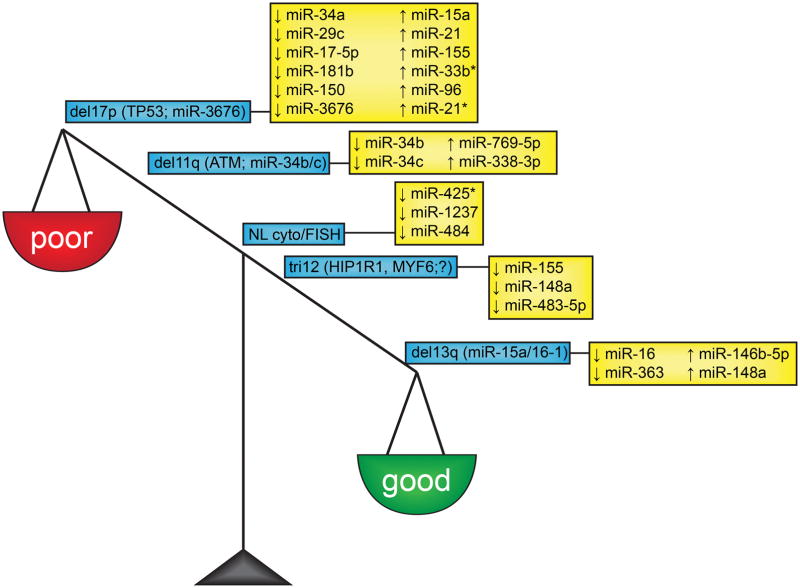
Chronic lymphocytic leukemia (CLL) is a heterogeneous disease and has a highly variable clinical course with survival ranging from a couple of months to several decades. MicroRNAs (miRNAs), small non-coding RNAs that regulate transcription and translation of genes, have been found to be involved in CLL initiation, progression, and resistance to therapy. In addition, they can be used as prognostic biomarkers and as targets for novel therapies. In this review, we describe the association between miRNAs and the cytogenetic aberrations commonly found in CLL, as well as with other prognostic factors. We describe the presence of miRNAs as extracellular entities in the plasma and serum of CLL patients and discuss their role in resistance to therapy. Finally, we will explore the potential of targeted miRNA therapy for the treatment of CLL, with a special emphasis on MRX34, the first miRNA mimic that is currently being evaluated for clinical use.
Keywords: Biomarker; Chronic lymphocytic leukemia; MicroRNA; Targeted therapy; miR-34 mimic.
Copyright © 2016 Elsevier Inc. All rights reserved.
Figures

References
-
- Van Roosbroeck K, Pollet J, Calin GA. miRNAs and long noncoding RNAs as biomarkers in human diseases. Expert review of molecular diagnostics. 2013;13:183–204. - PubMed
-
- Dohner H, Stilgenbauer S, Benner A, et al. Genomic aberrations and survival in chronic lymphocytic leukemia. The New England journal of medicine. 2000;343:1910–6. - PubMed
-
- Bullrich F, Fujii H, Calin G, et al. Characterization of the 13q14 tumor suppressor locus in CLL: identification of ALT1, an alternative splice variant of the LEU2 gene. Cancer research. 2001;61:6640–8. - PubMed
Publication types
MeSH terms
Substances
Grants and funding
LinkOut - more resources
Full Text Sources
Other Literature Sources
