. 2016 Apr 7;62(1):104-10.
doi: 10.1016/j.molcel.2016.02.029. Epub 2016 Mar 31.

Unlinking an lncRNA from Its Associated cis Element

Affiliations

Unlinking an lncRNA from Its Associated cis Element

Vikram R Paralkar et al. Mol Cell. .

Abstract

Long non-coding (lnc) RNAs can regulate gene expression and protein functions. However, the proportion of lncRNAs with biological activities among the thousands expressed in mammalian cells is controversial. We studied Lockd (lncRNA downstream of Cdkn1b), a 434-nt polyadenylated lncRNA originating 4 kb 3' to the Cdkn1b gene. Deletion of the 25-kb Lockd locus reduced Cdkn1b transcription by approximately 70% in an erythroid cell line. In contrast, homozygous insertion of a polyadenylation cassette 80 bp downstream of the Lockd transcription start site reduced the entire lncRNA transcript level by >90% with no effect on Cdkn1b transcription. The Lockd promoter contains a DNase-hypersensitive site, binds numerous transcription factors, and physically associates with the Cdkn1b promoter in chromosomal conformation capture studies. Therefore, the Lockd gene positively regulates Cdkn1b transcription through an enhancer-like cis element, whereas the lncRNA itself is dispensable, which may be the case for other lncRNAs.


Figures

Figure 1
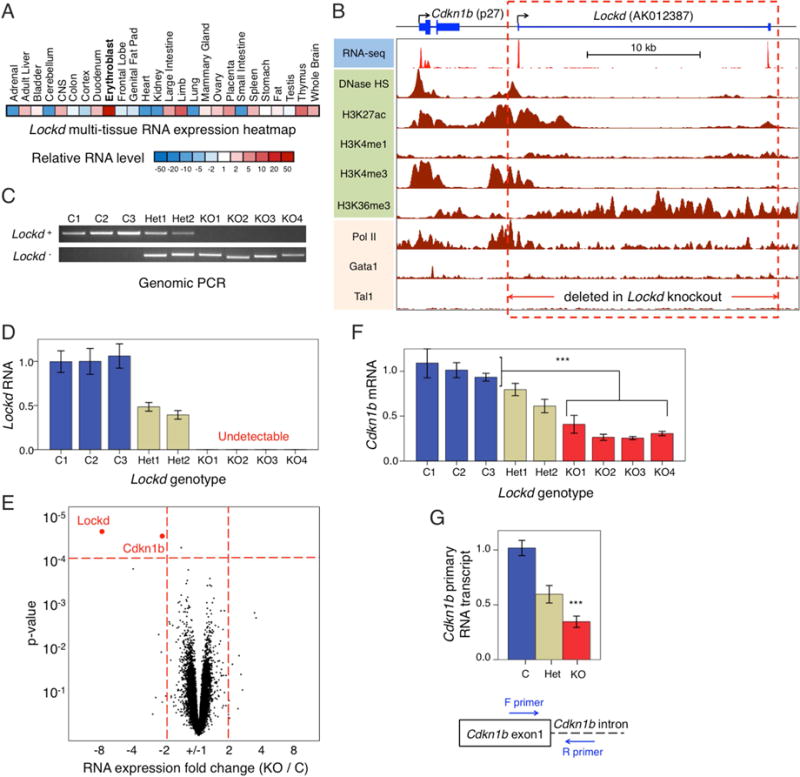
Figure 1. The Lockd genomic locus positively regulates Cdkn1b expression
(A) Heatmap showing relative expression levels of Lockd lncRNA in different mouse tissues according to mouse ENCODE RNA-seq datasets. (B) UCSC genome browser image of Lockd and its upstream gene, Cdkn1b. Tracks for RNA-seq studies, DNase hypersensitivity, histone modifications, RNA Polymerase II binding, and TF binding are indicated. The RNA-seq track is from primary mouse fetal liver erythroblasts(Paralkar et al., 2014). All other tracks are from the mouse erythroid cell line G1E and its derivative G1E-ER4(Wu et al., 2011). The red dotted rectangle indicates the 25 kb region deleted using CRISPR/Cas9-guided DNA cleavage. (C) Identification of Lockd intact (Lockd+) or deleted (Lockd) alleles by PCR (see also Figure S3A). C, Control (homozygous non-deleted); Het, heterozygous deleted; KO, homozygous deleted. (D) Expression of Lockd RNA in C, Het and KO clones, measured by quantitative RT-PCR and normalized to Gapdh and Actb mRNA levels. Data are represented as mean +/− SEM. (E) Microarray transcriptome analysis comparing KO (n=4) and C (n=3) clones. The volcano plot shows fold-change in expression and its significance, with each dot representing an individual gene. Only 2 genes (Lockd and Cdkn1b) passed FDR < 5% cutoff (p-value < 10−4, horizontal dotted red line) with at least 2-fold change (vertical dotted red lines). (F) Expression of Cdkn1b mRNA in Lockd C, Het and KO clones, as measured by quantitative RT-PCR and normalized to Gapdh and Actb mRNA levels. Data are represented as mean +/− SEM. (G) Expression of Cdkn1b primary transcript (pre-mRNA) as measured by quantitative RT-PCR and normalized to Gapdh and Actb mRNA levels. Data are represented as mean +/− SEM.
Figure 2
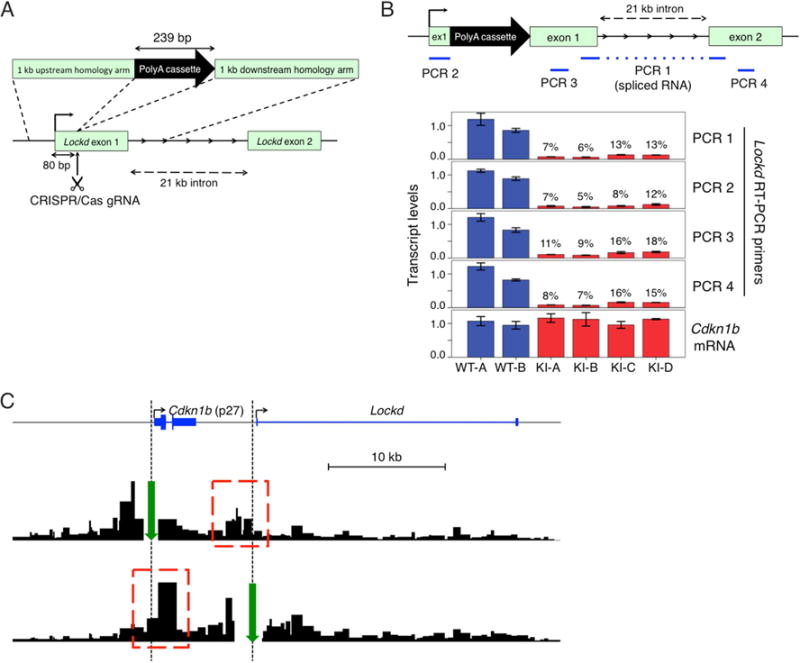
Figure 2. The Lockd lncRNA transcript is dispensable for Cdkn1b expression
(A) Strategy for premature termination of the Lockd lncRNA transcript. CRISPR/Cas9-mediated homologous recombination was used to insert a 239 bp bovine growth hormone (BGH) polyadenylation (PolyA) cassette into exon 1 of Lockd, 80 bp downstream of the transcription start site (see also Figure S3B). (B) Diagram of the modified Lockd locus is shown on top, with the PCR products used to quantify expression of Lockd lncRNA indicated in blue. The bargraph shows expression of various regions of Lockd lncRNA and of Cdkn1b mRNA, normalized to Gapdh and Actb mRNA levels. Data are represented as mean +/− SEM. (C) Next generation Capture-C tracks showing contacts of anchor regions (green arrows) with adjacent chromosomal regions (red dotted boxes) above background signal.
Figure 3
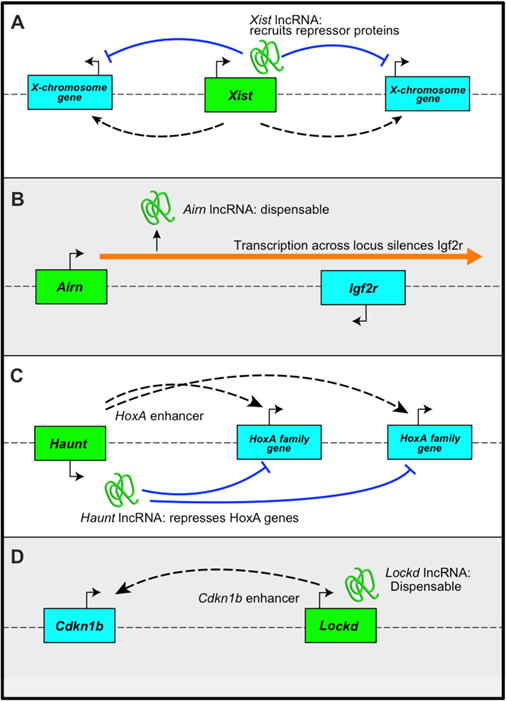
Figure 3. LncRNA genes regulate transcription though multiple mechanisms
(A) The Xist gene interacts physically with multiple regions of the X chromosome, enhancing spread of Xist lncRNA, which recruits repressor proteins that promote X-inactivation. (B) Airn gene transcription interferes with expression of Igf2r on the antisense strand, while the Airn lncRNA itself is dispensable for Igf2r repression. (C) Haunt genomic element(s) act as enhancer(s) for HoxA family genes, while the Haunt lncRNA represses those genes. (D) The Lockd locus acts as an enhancer for Cdkn1b to promote its transcription. In contrast, the Lockd lncRNA is dispensable for Cdkn1b expression. The dotted lines indicate physical contact or “looping” between lncRNA gene loci and other genes.

Comment in

References

    1. Bassett AR, Akhtar A, Barlow DP, Bird AP, Brockdorff N, Duboule D, Ephrussi A, Ferguson-Smith AC, Gingeras TR, Haerty W, Higgs DR, Miska EA, Ponting CP. Considerations when investigating lncRNA function in vivo. Elife. 2014;3:e03058. - PMC - PubMed
    1. Beletskii A, Hong YK, Pehrson J, Egholm M, Strauss WM. PNA interference mapping demonstrates functional domains in the noncoding RNA Xist. Proc Natl Acad Sci U S A. 2001;98:9215–9220. - PMC - PubMed
    1. Bolstad BM, Irizarry RA, Astrand M, Speed TP. A comparison of normalization methods for high density oligonucleotide array data based on variance and bias. Bioinformatics. 2003;19:185–193. - PubMed
    1. Cong L, Ran FA, Cox D, Lin S, Barretto R, Habib N, Hsu PD, Wu X, Jiang W, Marraffini LA, Zhang F. Multiplex genome engineering using CRISPR/Cas systems. Science. 2013;339:819–823. - PMC - PubMed
    1. Davies JO, Telenius JM, McGowan SJ, Roberts NA, Taylor S, Higgs DR, Hughes JR. Multiplexed analysis of chromosome conformation at vastly improved sensitivity. Nat Methods 2015 - PMC - PubMed

Publication types