


Mechanisms Behind the Resistance to Trastuzumab in HER2-Amplified Breast Cancer and Strategies to Overcome It
- PMID: 27042153
- PMCID: PMC4811269
- DOI: 10.4137/CMO.S34537
Mechanisms Behind the Resistance to Trastuzumab in HER2-Amplified Breast Cancer and Strategies to Overcome It
Abstract
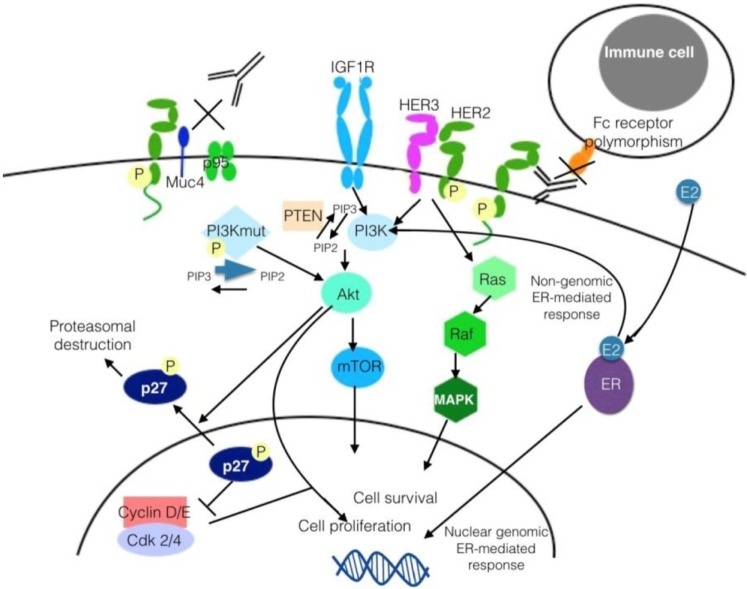
The introduction of trastuzumab therapy markedly improved the poor prognosis associated with HER2-amplified breast cancers. Despite this, the presence of primary and acquired resistance to trastuzumab treatment remains a significant common challenge. The identification of resistance mechanisms and the incorporation of new drugs that achieve a better blockade of HER family receptors signaling have resulted in improved outcomes. The phosphatidylinositol 3'-kinase/protein kinase B/mammalian target of rapamycin pathway, cross-talk with estrogen receptors, immune response, cell cycle control mechanisms, and other tyrosine kinase receptors such as insulin-like growth factor I receptor are potential pathways involved in trastuzumab resistance. Different therapeutic interventions targeting these pathways are currently under evaluation.
Keywords: HER2 overexpression; biomarker; breast cancer; resistance; trastuzumab.
Figures

References
-
- Slamon DJ, Clark GM, Wong SG, Levin WJ, Ullrich A, McGuire WL. Human breast cancer: correlation of relapse and survival with amplification of the HER-2/neu oncogene. Science. 1987;235:177–82. - PubMed
-
- Yarden Y. The EGFR family and its ligands in human cancer: signalling mechanisms and therapeutic opportunities. Eur J Cancer. 2001;37(suppl 4):S3–8. - PubMed
-
- Brennan PJ, Kumogai T, Berezov A, Murali R, Greene MI. HER2/Neu: mechanisms of dimerization/oligomerization. Oncogene. 2000;19:6093–101. - PubMed
-
- Hudis CA. Trastuzumab – mechanism of action and use in clinical practice. N Engl J Med. 2007;357(1):39–51. - PubMed
-
- Slamon DJ, Leyland-Jones B, Shak S, et al. Use of chemotherapy plus a monoclonal antibody against HER2 for metastatic breast cancer that overexpresses HER2. N Engl J Med. 2001;344(11):783–92. - PubMed
Publication types
LinkOut - more resources
Full Text Sources
Other Literature Sources
Research Materials
Miscellaneous
