


Abnormalities in Diffusional Kurtosis Metrics Related to Head Impact Exposure in a Season of High School Varsity Football
- PMID: 27042763
- PMCID: PMC5124736
- DOI: 10.1089/neu.2015.4267
Abnormalities in Diffusional Kurtosis Metrics Related to Head Impact Exposure in a Season of High School Varsity Football
Abstract
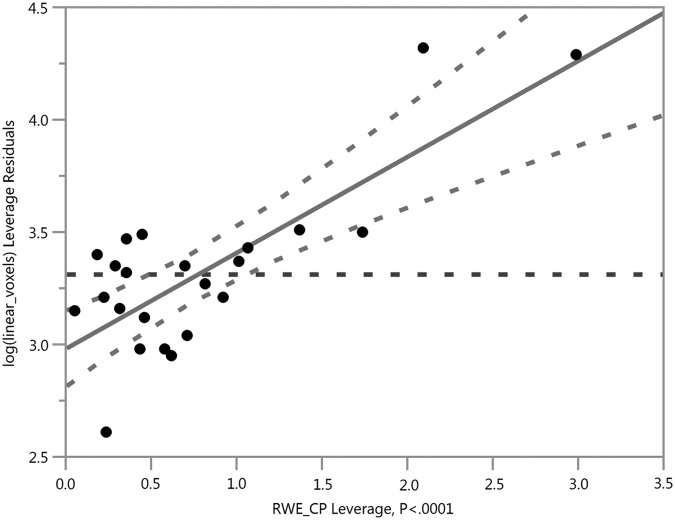
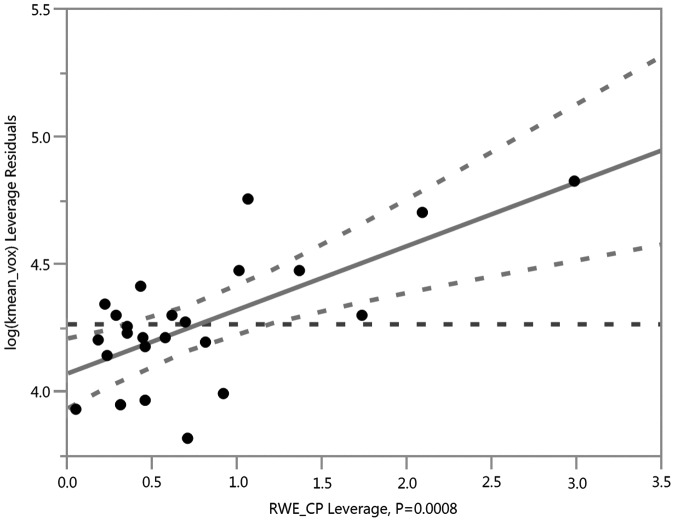
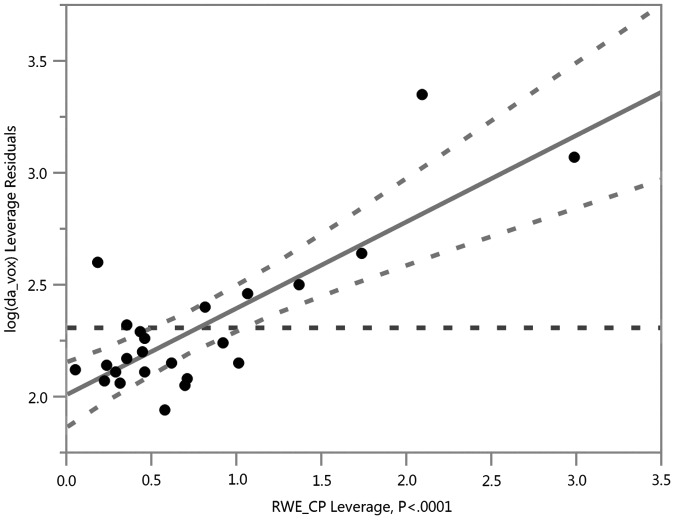
The purpose of this study was to determine whether the effects of cumulative head impacts during a season of high school football produce changes in diffusional kurtosis imaging (DKI) metrics in the absence of clinically diagnosed concussion. Subjects were recruited from a high school football team and were outfitted with the Head Impact Telemetry System (HITS) during all practices and games. Biomechanical head impact exposure metrics were calculated, including: total impacts, summed acceleration, and Risk Weighted Cumulative Exposure (RWE). Twenty-four players completed pre- and post-season magnetic resonance imaging, including DKI; players who experienced clinical concussion were excluded. Fourteen subjects completed pre- and post-season Immediate Post-Concussion Assessment and Cognitive Testing (ImPACT). DKI-derived metrics included mean kurtosis (MK), axial kurtosis (K axial), and radial kurtosis (K radial), and white matter modeling (WMM) parameters included axonal water fraction, tortuosity of the extra-axonal space, extra-axonal diffusivity (De axial and radial), and intra-axonal diffusivity (Da). These metrics were used to determine the total number of abnormal voxels, defined as 2 standard deviations above or below the group mean. Linear regression analysis revealed a statistically significant relationship between RWE combined probability (RWECP) and MK. Secondary analysis of other DKI-derived and WMM metrics demonstrated statistically significant linear relationships with RWECP after covariate adjustment. These results were compared with the results of DTI-derived metrics from the same imaging sessions in this exact same cohort. Several of the DKI-derived scalars (Da, MK, K axial, and K radial) explained more variance, compared with RWECP, suggesting that DKI may be more sensitive to subconcussive head impacts. No significant relationships between DKI-derived metrics and ImPACT measures were found. It is important to note that the pathological implications of these metrics are not well understood. In summary, we demonstrate a single season of high school football can produce DKI measurable changes in the absence of clinically diagnosed concussion.
Keywords: Head Impact Telemetry System; Risk Weighted Cumulative Exposure; concussion; diffusion kurtosis imaging; football.
Figures
References
-
- Marar M., McIlvain N.M., Fields S.K., and Comstock R.D. (2012). Epidemiology of concussions among United States high school athletes in 20 sports. Am. J. Sports Med. 40, 747–755 - PubMed
-
- OTL: Pop Warner participation drops. Available at: http://espn.go.com/espn/otl/story/_/page/popwarner/pop-warner-youth-foot... Accessed April20, 2016
-
- Brolinson P.G., Manoogian S., McNeely D., Goforth M., Greenwald R., and Duma S. (2006). Analysis of linear head accelerations from collegiate football impacts. Curr. Sports Med. Rep. 5, 23–28 - PubMed
-
- Duma S.M., Manoogian S.J., Bussone W.R., Brolinson P.G., Goforth M.W., Donnenwerth J.J., Greenwald R.M., Chu J.J., and Crisco J.J. (2005). Analysis of real-time head accelerations in collegiate football players. Clin. J. Sport Med. 15, 3–8 - PubMed
-
- Schnebel B., Gwin J.T., Anderson S., and Gatlin R. (2007). In vivo study of head impacts in football: a comparison of National Collegiate Athletic Association Division I versus high school impacts. Neurosurgery 60, 490–495 - PubMed
Publication types
MeSH terms
Grants and funding
LinkOut - more resources
Full Text Sources
Other Literature Sources
Medical
Miscellaneous
