


The Current Case of Quinolones: Synthetic Approaches and Antibacterial Activity
- PMID: 27043501
- PMCID: PMC6274096
- DOI: 10.3390/molecules21040268
The Current Case of Quinolones: Synthetic Approaches and Antibacterial Activity
Abstract
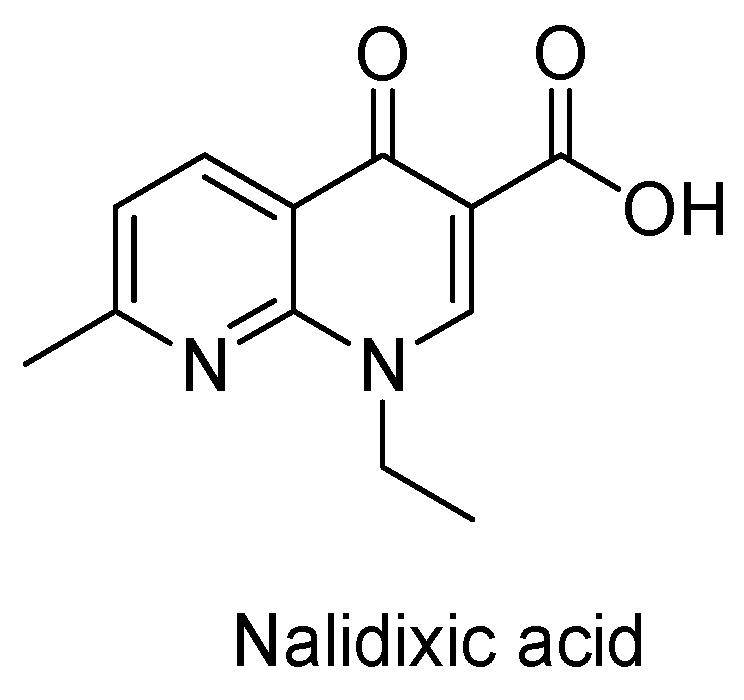
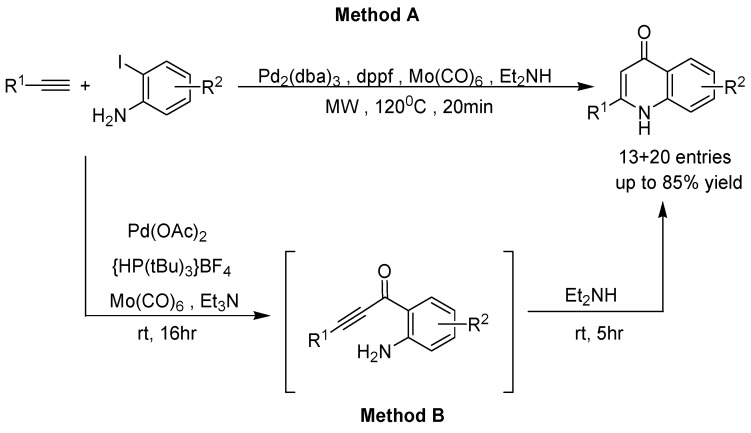
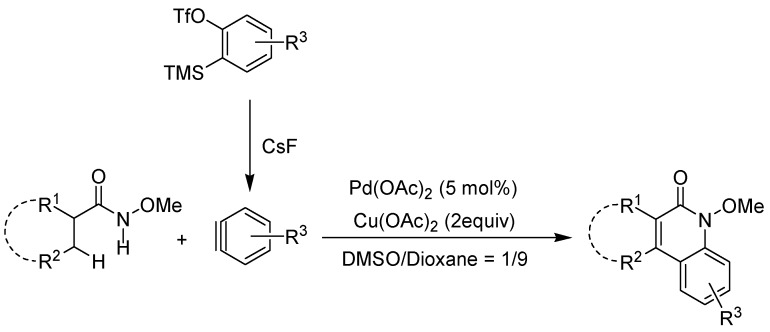
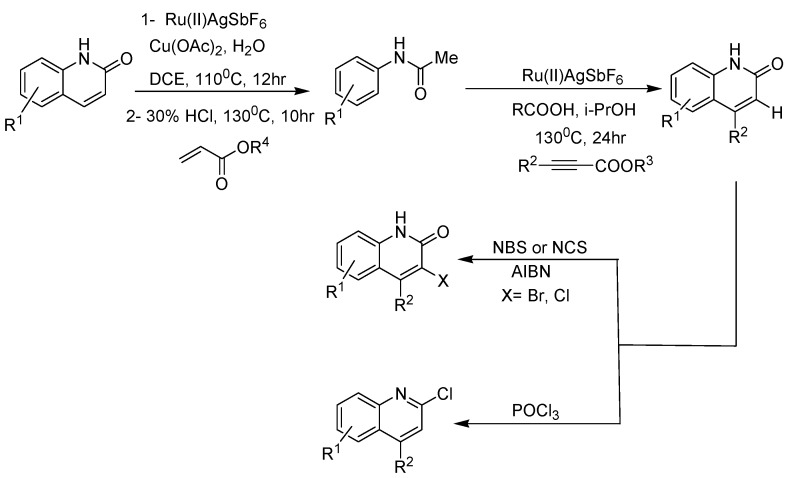
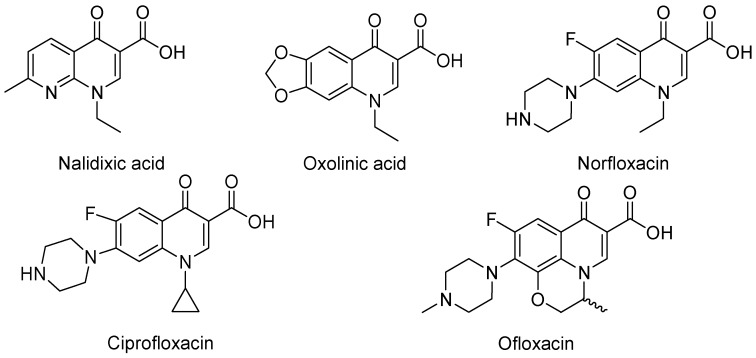
Quinolones are broad-spectrum synthetic antibacterial drugs first obtained during the synthesis of chloroquine. Nalidixic acid, the prototype of quinolones, first became available for clinical consumption in 1962 and was used mainly for urinary tract infections caused by Escherichia coli and other pathogenic Gram-negative bacteria. Recently, significant work has been carried out to synthesize novel quinolone analogues with enhanced activity and potential usage for the treatment of different bacterial diseases. These novel analogues are made by substitution at different sites--the variation at the C-6 and C-8 positions gives more effective drugs. Substitution of a fluorine atom at the C-6 position produces fluroquinolones, which account for a large proportion of the quinolones in clinical use. Among others, substitution of piperazine or methylpiperazine, pyrrolidinyl and piperidinyl rings also yields effective analogues. A total of twenty six analogues are reported in this review. The targets of quinolones are two bacterial enzymes of the class II topoisomerase family, namely gyrase and topoisomerase IV. Quinolones increase the concentration of drug-enzyme-DNA cleavage complexes and convert them into cellular toxins; as a result they are bactericidal. High bioavailability, relative low toxicity and favorable pharmacokinetics have resulted in the clinical success of fluoroquinolones and quinolones. Due to these superior properties, quinolones have been extensively utilized and this increased usage has resulted in some quinolone-resistant bacterial strains. Bacteria become resistant to quinolones by three mechanisms: (1) mutation in the target site (gyrase and/or topoisomerase IV) of quinolones; (2) plasmid-mediated resistance; and (3) chromosome-mediated quinolone resistance. In plasmid-mediated resistance, the efflux of quinolones is increased along with a decrease in the interaction of the drug with gyrase (topoisomerase IV). In the case of chromosome-mediated quinolone resistance, there is a decrease in the influx of the drug into the cell.
Keywords: analogues; gyrase; quinolones; resistance; topoisomerase IV.
Conflict of interest statement
All the authors declare that they have no competing interests.
Figures


References
-
- Cross R.M., Flanigan D.L., Monastyrskyi A., LaCrue A.N., Saenz F.E., Maignan J.R., Mutka T.S., White K.L., Shackleford D.M., Bathurst I. Orally bioavailable 6-chloro-7-methoxy-4(1H)-quinolones efficacious against multiple stages of plasmodium. J. Med. Chem. 2014;57:8860–8879. doi: 10.1021/jm500942v. - DOI - PMC - PubMed
Publication types
MeSH terms
Substances
LinkOut - more resources
Full Text Sources
Other Literature Sources
Medical
