


Mechanism of Sleep Disturbance in Children with Atopic Dermatitis and the Role of the Circadian Rhythm and Melatonin
- PMID: 27043528
- PMCID: PMC4848918
- DOI: 10.3390/ijms17040462
Mechanism of Sleep Disturbance in Children with Atopic Dermatitis and the Role of the Circadian Rhythm and Melatonin
Abstract
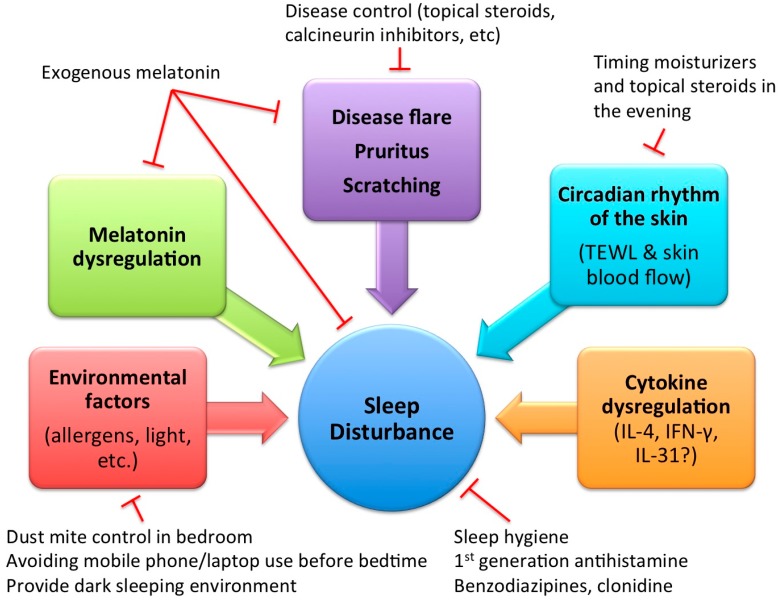
Sleep disturbance is common in children with atopic dermatitis (AD). It is a major factor leading to impaired quality of life in these patients and could have negative effects on neurocognitive function and behavior. However, the pathophysiology of sleep disturbance in children with AD is poorly understood, and there is no consensus on how to manage sleep problems in these patients. Pruritus and scratching could lead to sleep disruption but is unlikely the sole etiology. The circadian rhythm of cytokines, the immune system, and skin physiology such as transcutaneous water loss and skin blood flow might also play a role. Recent studies have suggested that melatonin could also be involved due to its multiple effects on sleep, immunomodulation, and anti-oxidant ability. Environmental factors should also be considered. In this review, we summarize the current understanding of the pathophysiology of sleep disturbance in children with AD, and discuss possible therapeutic implications.
Keywords: atopic dermatitis (AD); circadian rhythm; melatonin; sleep disturbance.
Figures
References
Publication types
MeSH terms
Substances
LinkOut - more resources
Full Text Sources
Other Literature Sources
Medical
