


Factors associated with polypharmacy and excessive polypharmacy in older people with intellectual disability differ from the general population: a cross-sectional observational nationwide study
- PMID: 27044582
- PMCID: PMC4823458
- DOI: 10.1136/bmjopen-2015-010505
Factors associated with polypharmacy and excessive polypharmacy in older people with intellectual disability differ from the general population: a cross-sectional observational nationwide study
Abstract
Objectives: (1) To evaluate the prevalence of polypharmacy (5-9 medicines) and excessive polypharmacy (10+ medicines) and (2) to determine associated demographic and clinical characteristics in an ageing population with intellectual disabilities (IDs).
Design: Observational cross-sectional study.
Setting: Wave One (2009/2010) of the Intellectual Disability Supplement to the Irish Longitudinal Study on Ageing (IDS-TILDA).
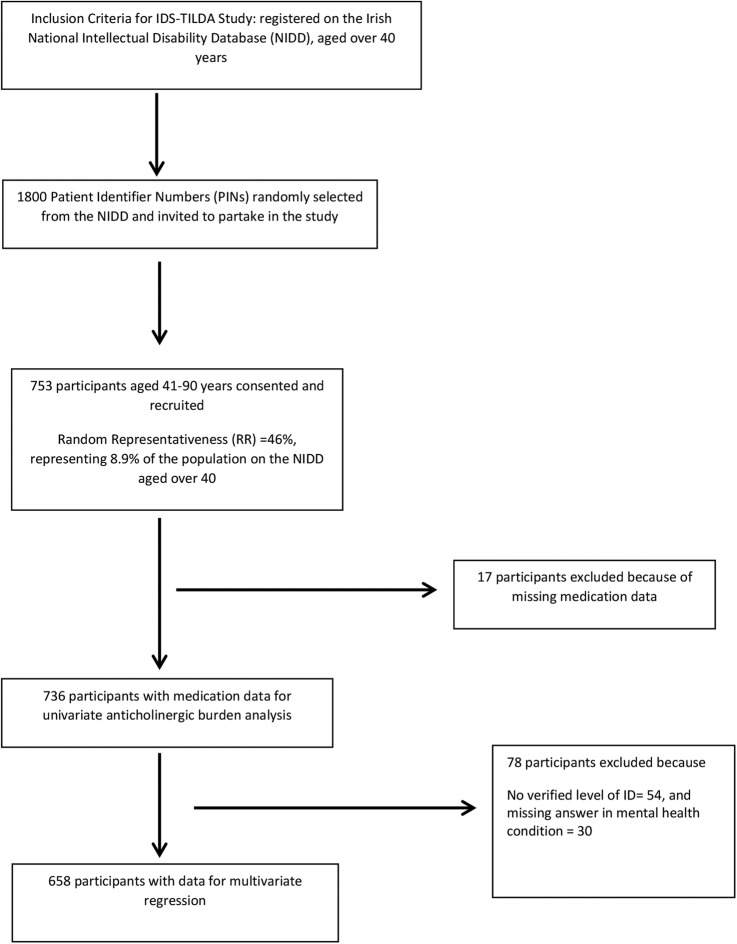
Participants: A nationally representative sample of 753 persons with ID, aged between 41 and 90 years. Participants/proxy reported medicines (prescription and over the counter) taken on a regular basis; medication data was available for 736 participants (98%).
Main outcome measures/interventions: Participants were divided into those with no polypharmacy (0-4 medicines), polypharmacy (5-9 medicines) and excessive polypharmacy (10+ medicines). Medication use patterns were analysed according to demographic variables and reported chronic conditions. A multinomial logistic regression model identified factors associated with polypharmacy (5-9 medicines) and excessive polypharmacy (≥10 medicines).
Results: Overall, 90% of participants reported use of medicines. Polypharmacy was observed in 31.5% of participants and excessive polypharmacy in 20.1%. Living in a residential institution, and reporting a mental health or neurological condition were strongly associated with polypharmacy and excessive polypharmacy after adjusting for confounders, but age or gender had no significant effect.
Conclusions: Polypharmacy was commonplace for older adults with ID and may be partly explained by the high prevalence of multimorbidity reported. Review of appropriateness of medication use is essential, as polypharmacy places ageing people with ID at risk of adverse effects.
Keywords: intellectual disability; multimorbidity; polypharmacy.
Published by the BMJ Publishing Group Limited. For permission to use (where not already granted under a licence) please go to http://www.bmj.com/company/products-services/rights-and-licensing/
Figures
References
-
- Rojahn J, Schroeder SR, Hoch TA. Self-injurious behavior in intellectual disabilities. Access Online via Elsevier, 2007.
-
- Haveman M, Heller T, Lee LA, et al. Report on the State of Science on Health Risks and Ageing in People with Intellectual Disabilities. IASSID Special Interest Research Group on Ageing and Intellectual Disabilities/Faculty Rehabilitation Sciences, University of Dortmund, 2009.
-
- Emerson E, Baines S, Allerton L et al. Health inequalities and people with learning disabilities in the UK: 2010. Durham: Improving Health & Lives: Learning Disabilities Observatory, 2010.
Publication types
MeSH terms
Substances
LinkOut - more resources
Full Text Sources
Other Literature Sources
Medical
