The Importance of Medication Errors Reporting in Improving the Quality of Clinical Care Services
- PMID: 27045415
- PMCID: PMC5016354
- DOI: 10.5539/gjhs.v8n8p243
The Importance of Medication Errors Reporting in Improving the Quality of Clinical Care Services
Abstract
Introduction: Medication errors have significant implications on patient safety. Error detection through an active management and effective reporting system discloses medication errors and encourages safe practices.
Objectives: To improve patient safety through determining and reducing the major causes of medication errors (MEs), after applying tailored preventive strategies.
Methodology: A pre-test, post-test study was conducted on all inpatients at a 177 bed hospital where all medication procedures in each ward were monitored by a clinical pharmacist. The patient files were reviewed, as well. Error reports were submitted to a hospital multidisciplinary committee to identify major causes of errors. Accordingly, corrective interventions that consisted of targeted training programs for nurses and physicians were conducted.
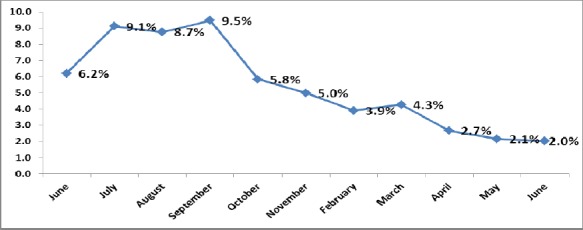
Results: Medication errors were higher during ordering/prescription stage (38.1%), followed by administration phase (20.9%). About 45% of errors reached the patients: 43.5% were harmless and 1.4% harmful. 7.7% were potential errors and more than 47% could be prevented. After the intervention, error rates decreased from (6.7%) to (3.6%) (P≤0.001).
Conclusion: The role of a ward based clinical pharmacist with a hospital multidisciplinary committee was effective in recognizing, designing and implementing tailored interventions for reduction of medication errors. A systematic approach is urgently needed to decrease organizational susceptibility to errors, through providing required resources to monitor, analyze and implement effective interventions.
Conflict of interest statement
The authors declare that there is no conflict of interests regarding the publication of this paper.
Figures
References
-
- Alagha H. Z, Badary O. A, Ibrahim H. M, Sabri N. A. Reducing prescribing errors in the pediatrics intensive care unit:An experience from Egypt. Acts paediatr. 2011;100(10):e169–e174. - PubMed
-
- Barach P, Small S. D. Reporting and preventing medical mishaps:Lessons from non-medical near miss reporting systems. British Medical Journal. 2000;320(7237):759–763. http://dx.doi.org/10.1136/bmj.320.7237.759 . - PMC - PubMed
-
- Bates D. W, Boyle D, Vander V. M, Schneider J, Leape L. Relationship between medication errors and adverse drug events. J Gen Intern Med. 1995;10:199–205. http://dx.doi.org/10.1007/BF02600255 . - PubMed
-
- Bates D. W, Miller E. B, Cullen D. J, Burdick L, Williams L, Laird N. P, Leape L. Patient risk factors for adverse drug events in hospitalized patients. ADE prevention Study Group. Arch Intern Med. 1999;159(21):2553–2560. http://dx.doi.org/10.1001/archinte.159.21.2553 . - PubMed
-
- Chedoe I, Molendijk H, Hospes W, Van den Heuvel E. R, Taxis K. The effect of a multifaceted educational intervention on medication preparation and administration errors in neonatal intensive care. Arch Dis Child Fetal Neonatal. 2012;97:F449–F455. http://dx.doi.org/10.1136/fetalneonatal-2011-300989 . - PubMed
LinkOut - more resources
Full Text Sources
Other Literature Sources
Miscellaneous