


Mitochondrial Genome Analysis of Wild Rice (Oryza minuta) and Its Comparison with Other Related Species
- PMID: 27045847
- PMCID: PMC4821559
- DOI: 10.1371/journal.pone.0152937
Mitochondrial Genome Analysis of Wild Rice (Oryza minuta) and Its Comparison with Other Related Species
Abstract
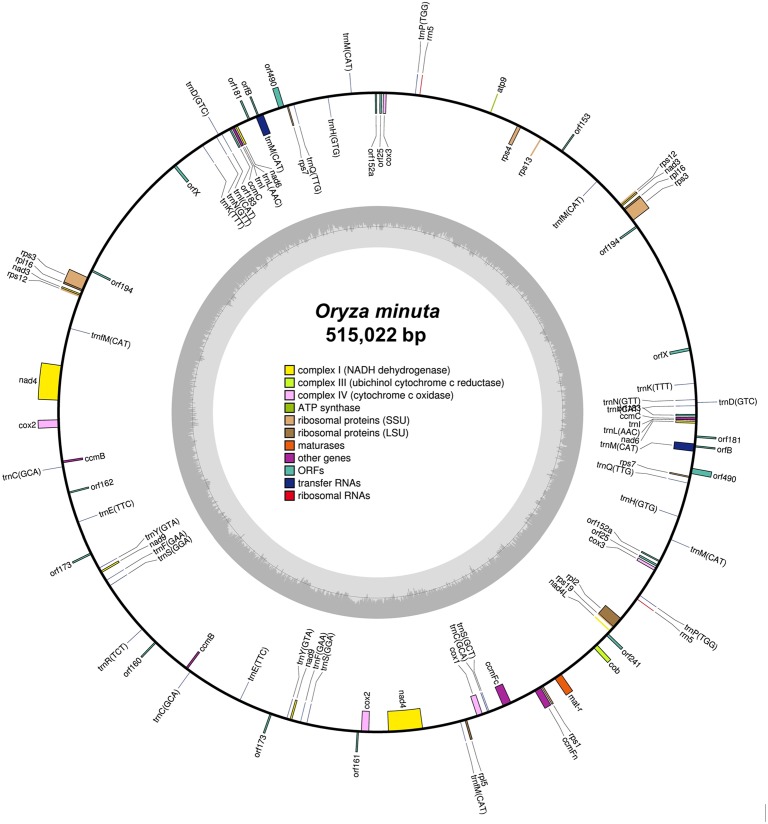
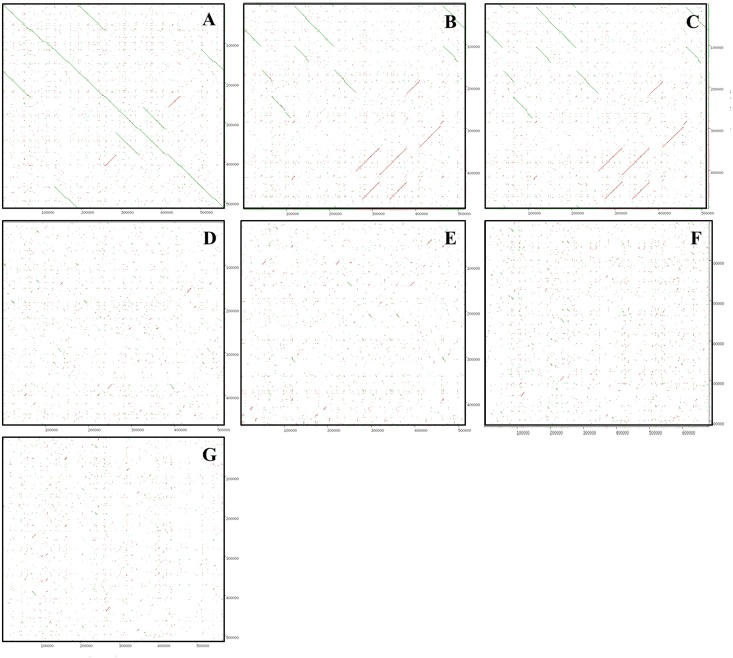
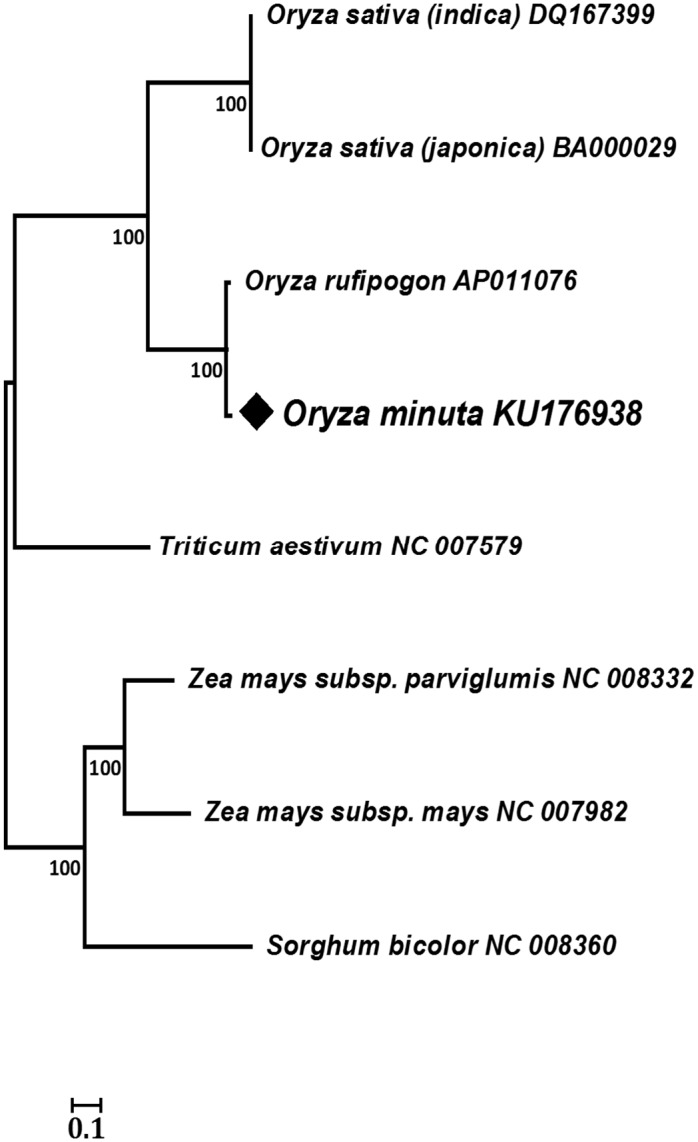
Oryza minuta (Poaceae family) is a tetraploid wild relative of cultivated rice with a BBCC genome. O. minuta has the potential to resist against various pathogenic diseases such as bacterial blight (BB), white backed planthopper (WBPH) and brown plant hopper (BPH). Here, we sequenced and annotated the complete mitochondrial genome of O. minuta. The mtDNA genome is 515,022 bp, containing 60 protein coding genes, 31 tRNA genes and two rRNA genes. The mitochondrial genome organization and the gene content at the nucleotide level are highly similar (89%) to that of O. rufipogon. Comparison with other related species revealed that most of the genes with known function are conserved among the Poaceae members. Similarly, O. minuta mt genome shared 24 protein-coding genes, 15 tRNA genes and 1 ribosomal RNA gene with other rice species (indica and japonica). The evolutionary relationship and phylogenetic analysis revealed that O. minuta is more closely related to O. rufipogon than to any other related species. Such studies are essential to understand the evolutionary divergence among species and analyze common gene pools to combat risks in the current scenario of a changing environment.
Conflict of interest statement
Figures
References
-
- Li L, Wang B, Liu Y, Qiu YL. The complete mitochondrial genome sequence of the hornwort Megaceros aenigmaticus shows a mixed mode of conservative yet dynamic evolution in early land plant mitochondrial genomes. J Mol Evol. 2009;68(6):665–78. Epub 2009/05/29. 10.1007/s00239-009-9240-7 . - DOI - PubMed
Publication types
MeSH terms
LinkOut - more resources
Full Text Sources
Other Literature Sources
Molecular Biology Databases
