. 2016 Apr 5:6:23732.
doi: 10.1038/srep23732.

Discovery of a small-molecule binder of the oncoprotein gankyrin that modulates gankyrin activity in the cell

Affiliations

Discovery of a small-molecule binder of the oncoprotein gankyrin that modulates gankyrin activity in the cell

Anasuya Chattopadhyay et al. Sci Rep. .

Abstract

Gankyrin is an ankyrin-repeat oncoprotein whose overexpression has been implicated in the development of many cancer types. Elevated gankyrin levels are linked to aberrant cellular events including enhanced degradation of tumour suppressor protein p53, and inhibition of gankyrin activity has therefore been identified as an attractive anticancer strategy. Gankyrin interacts with several partner proteins, and a number of these protein-protein interactions (PPIs) are of relevance to cancer. Thus, molecules that bind the PPI interface of gankyrin and interrupt these interactions are of considerable interest. Herein, we report the discovery of a small molecule termed cjoc42 that is capable of binding to gankyrin. Cell-based experiments demonstrate that cjoc42 can inhibit gankyrin activity in a dose-dependent manner: cjoc42 prevents the decrease in p53 protein levels normally associated with high amounts of gankyrin, and it restores p53-dependent transcription and sensitivity to DNA damage. The results represent the first evidence that gankyrin is a "druggable" target with small molecules.


Figures
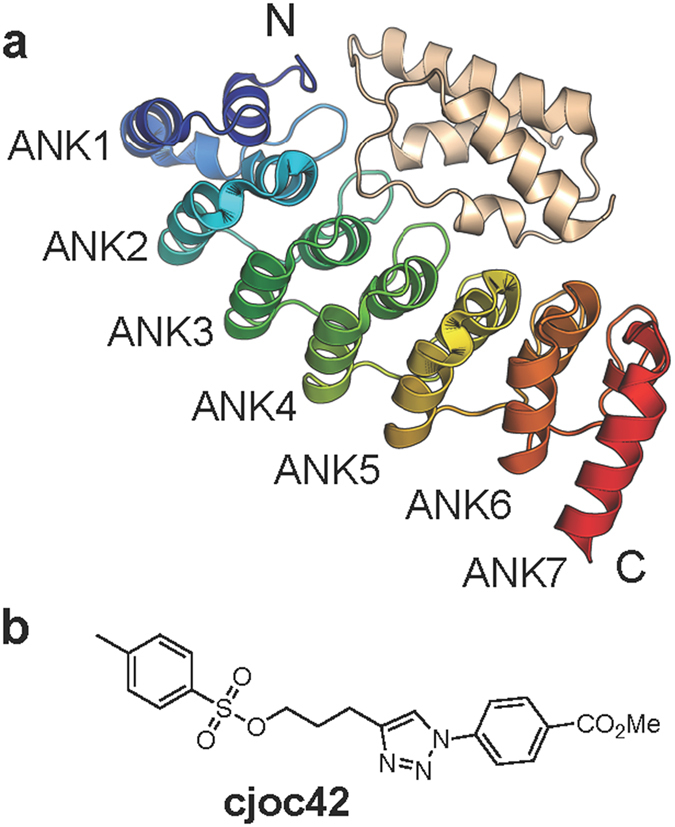
Figure 1
Figure 1. Relevant structures.
(a) Schematic of the structure of gankyrin (in colour) complex with S6C. (b) Chemical structure of cjoc42.
Figure 2
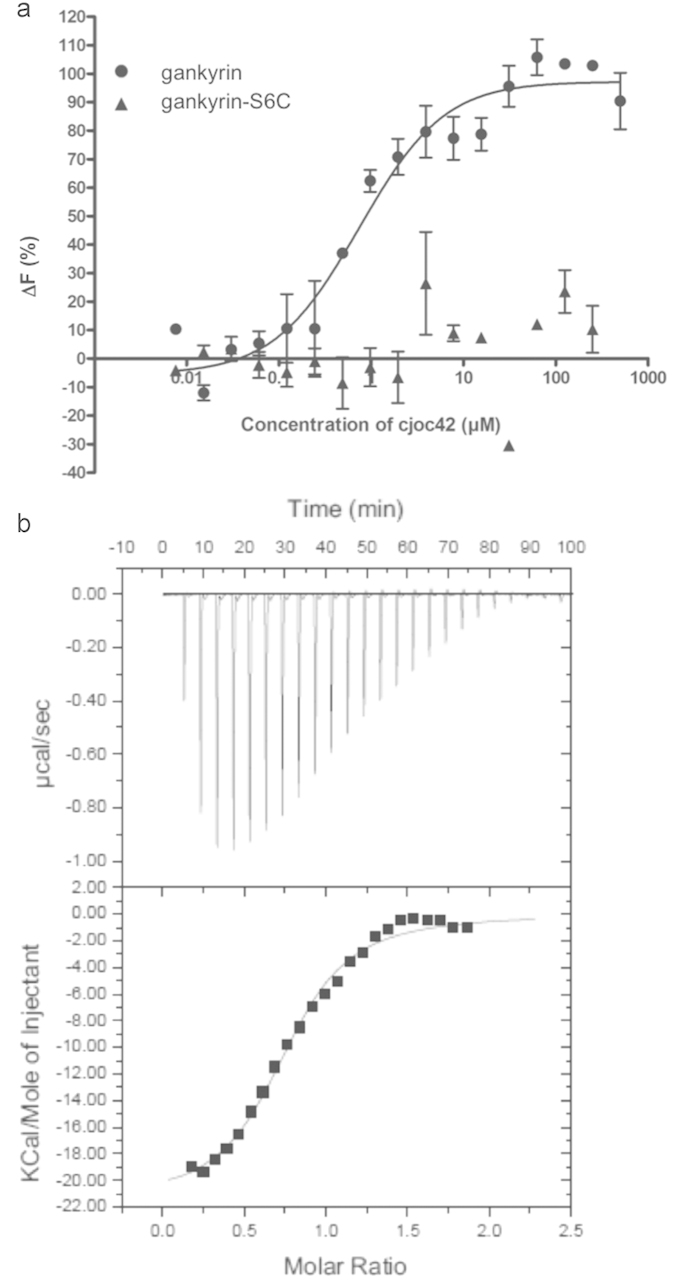
Figure 2. Thermodynamic characterization of the gankyrin-cjoc42 interaction.
(a) Titration of cjoc42 into gankyrin and the gankyrin-S6C preformed complex, measured by MST. The protein concentration was 5 μM. (b) ITC trace of cjoc42 (100 μM) titrated into gankyrin (10 μM).
Figure 3
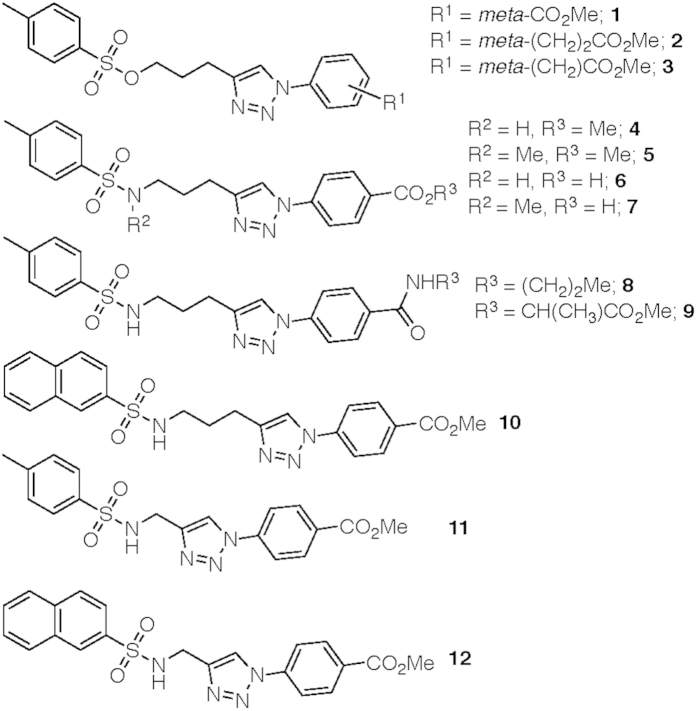
Figure 3. Analogues of cjoc42.
See Supplementary Information for full synthetic details.
Figure 4
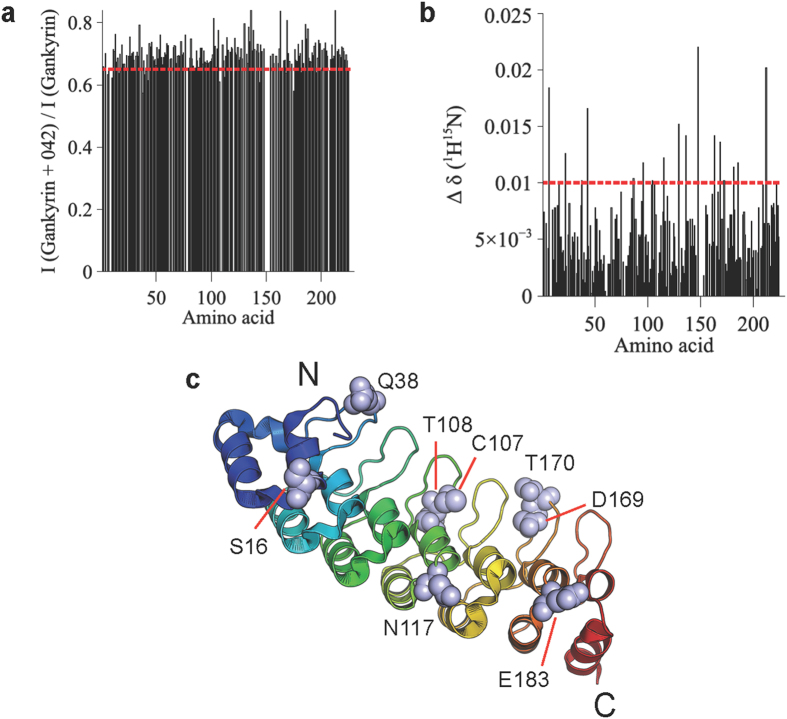
Figure 4. NMR analysis of the gankyrin-cjoc42 interaction.
(a) Changes in cross-peak intensity of the amide backbone of gankyrin in the presence of cjoc42. (b) Changes in chemical shifts of the amide backbone of gankyrin in the presence of cjoc42. (c) Residues 16, 38, 107, 108, 117, 169, 170, 183, with chemical shift changes (Δδ (15N-1H)) of >0.01 that also show significant intensity changes in the presence of cjoc42, are shown on the gankyrin structure.
Figure 5
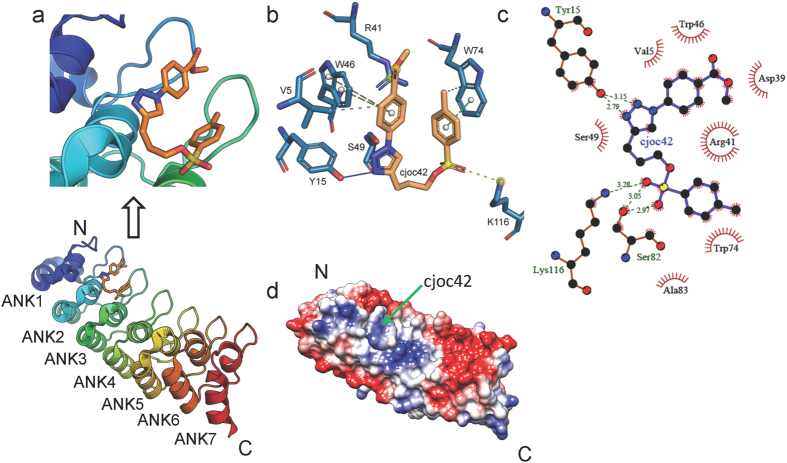
Figure 5. In silico analysis of the gankyrin-cjoc42 interaction.
(a) The docking site of cjoc42 on gankyrin (pdb 1QYM) with a close-up of the interacting interface shown above. The pose represents the top ranked (i.e. lowest energy, ∆G = −6.3 kcal/mol) pose obtained from blind docking using AutoDock Vina. Similar results were obtained using AutoDock 4.2 and EADock DSS. (b,c) Ligand interaction diagram of the docked pose of cjoc42 on gankyrin. The diagrams were generated using PLIP (b) and LigPlot+ (c). (d) The electrostatic surface potential representation of gankyrin with cjoc42 docked onto it. Red, blue, and white represent acidic, basic, and neutral (hydrophobic) regions, respectively, with the sliding colour scale (±5 kTe−1, where k is the Boltzmann constant, T is temperature and e is the elementary charge) below indicating the charge distribution across the gankyrin surface.
Figure 6
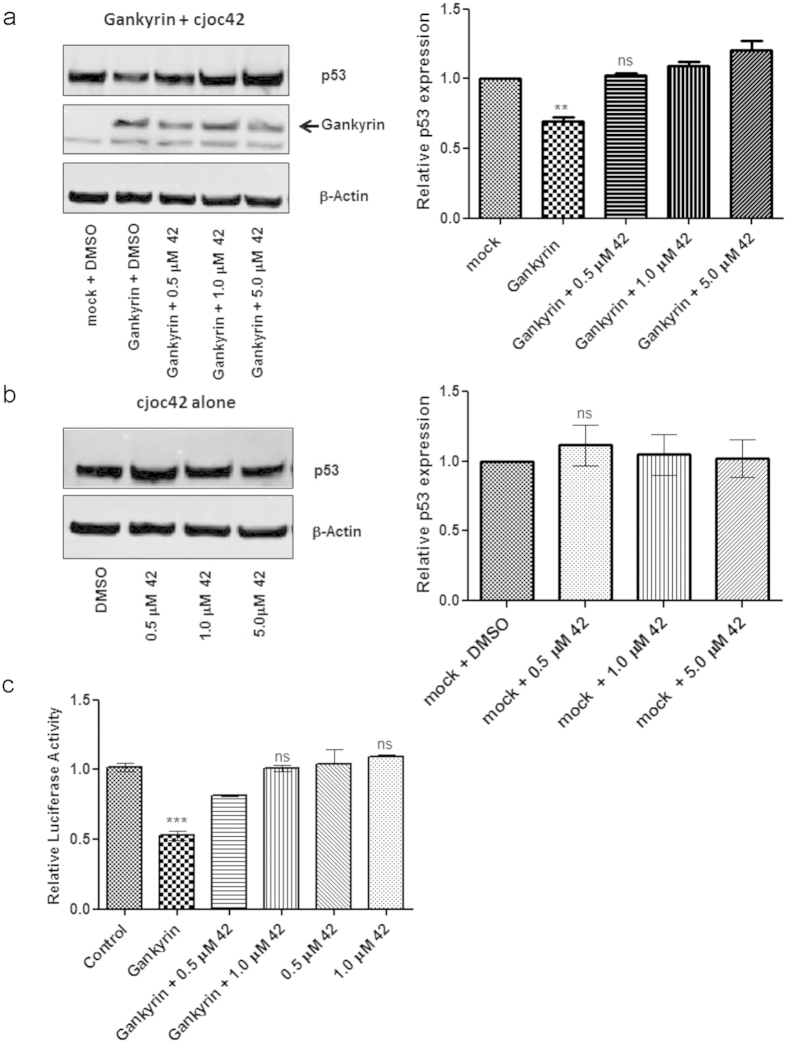
Figure 6. Cellular activity of cjoc42 (abbreviated to ‘42’).
In (a,b) the left-hand figures show representative images and the right-hand figures show densitometry analysis of band intensities (n = 3 and SEM). All data were normalized to untreated mock-transfected cells, and all statistical comparisons (t tests) were made to these. ns, non-significant; *p < 0.05; **p < 0.01; ***p < 0.001; (a) Effects of gankyrin over-expression on levels of p53 and β-actin in U2OS cells 48 hours post transfection with 2 μg gankyrin plasmid, p53 expression levels are reduced by ~40% compared with control cells. cjoc42 (abbreviated to ‘42’) addition at the time of transfection inhibits this decrease in p53 levels. (b) Cells treated with cjoc42 alone do not show any changes in p53 levels compared to mock transfections. (c) Reduction of p53 luciferase reporter activity in gankyrin-overexpressing U2OS cells can be inhibited by cjoc42 (abbreviated to ‘42’) in a dose-dependent manner. cjoc42 alone at equivalent doses does not alter the luciferase reporter activity.
Figure 7
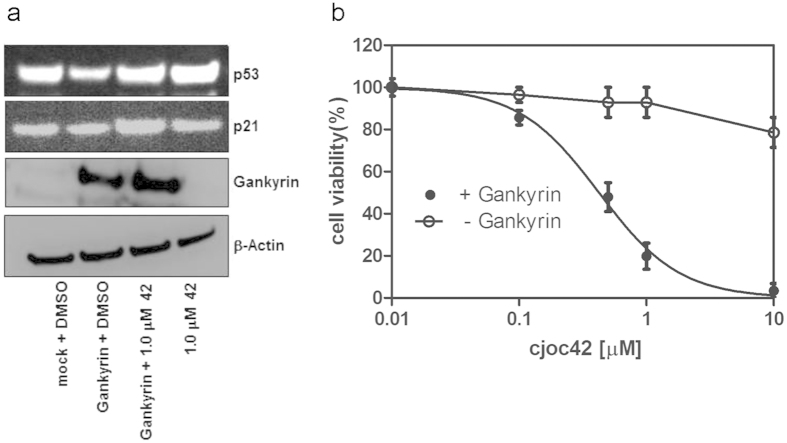
Figure 7. cjoc42 (abbreviated to ‘42’) inhibits gankyrin-induced decrease in p53 downstream target expression and resensitises cells to DNA damage.
(a) Four hours after DNA damage with Etoposide a reduction of p21 upregulation is seen in gankyrin-overexpressing U2OS cells (lane 2) compared to mock transected cells (lane 1). This can be prevented by cjoc42 addition (lane 3). cjoc42 alone shows upregulation of p21 (in the presence of DNA damage) to levels comparable with mock-transfected cells (lane 4). (b) Cell viability (expressed as a percentage of control) 24 hours after Etoposide treatment. Gankyrin-overexpressing U2OS cells incubated with cjoc42 show a dose-dependent loss of viability. Cells not expressing gankyrin (— Gankyrin) show no such dose-dependent change in cell viability.

References

    1. Krzywda S. et al. The crystal structure of gankyrin, an oncoprotein found in complexes with cyclin-dependent kinase 4, a 19 S proteasomal ATPase regulator, and the tumor suppressors Rb and p53. The J. Biol. Chem. 279, 1541–1545 (2004). - PubMed
    1. Yuan C. et al. Solution structure of the human oncogenic protein gankyrin containing seven ankyrin repeats and analysis of its structure–function relationship. Biochemistry 43, 12152–12161 (2004). - PubMed
    1. Dawson S., Higashitsuji H., Wilkinson A. J., Fujita J. & Mayer R. J. Gankyrin: a new oncoprotein and regulator of pRb and p53. Trends Cell Biol. 16, 229–233 (2006). - PubMed
    1. Li H. et al. Use of adenovirus-delivered siRNA to target oncoprotein p28GANK in hepatocellular carcinoma. Gastroenterology 128, 2029–2041 (2005). - PubMed
    1. Meng Y. et al. Gankyrin promotes the proliferation of human pancreatic cancer. Cancer Lett. 297, 9–17 (2010). - PubMed

Publication types

MeSH terms