. 2016:2016:8354745.
doi: 10.1155/2016/8354745. Epub 2016 Mar 7.

NADPH Oxidase Inhibitor Apocynin Attenuates PCB153-Induced Thyroid Injury in Rats

Affiliations

NADPH Oxidase Inhibitor Apocynin Attenuates PCB153-Induced Thyroid Injury in Rats

Ablikim Abliz et al. Int J Endocrinol. 2016.

Abstract

PCBs, widespread endocrine disruptors, cause the disturbance of thyroid hormone (TH) homeostasis in humans and animals. However, the exact mechanism of thyroid dysfunction caused by PCBs is still unknown. In order to clarify the hypotheses that NADPH oxidase (NOX) and subsequent NF-κB pathway may play roles in thyroid dysfunction, sixty Sprague-Dawley rats were randomly divided into four groups: control group, PCB153 treated (PCB) group, received apocynin with PCB153 treatment (APO + PCB) group, and drug control (APO) group. Serum thyroid hormone levels were evaluated. The morphological change of thyroid tissue was analyzed under the light and transmission electron microscopy. NOX2, 8-OHdG, and NF-κB expression in the thyroid tissue was evaluated by immune-histochemical staining. Oxidative stress and inflammatory cytokines were detected. The following results were reduced after apocynin treatment: (1) serum thyroid hormone, (2) thyroid pathological injuries, (3) thyroid MDA, (4) thyroid ultrastructural change, (5) serum inflammatory cytokines, and (6) thyroid expression of NOX2, 8-OHdG, and NF-κB. These results suggested that NOX inhibition attenuates thyroid dysfunction induced by PCB in rats, presumably because of its role in preventing ROS generation and inhibiting the activation of NF-κB pathway. Our findings may provide new therapeutic targets for PCBs induced thyroid dysfunction.


Figures
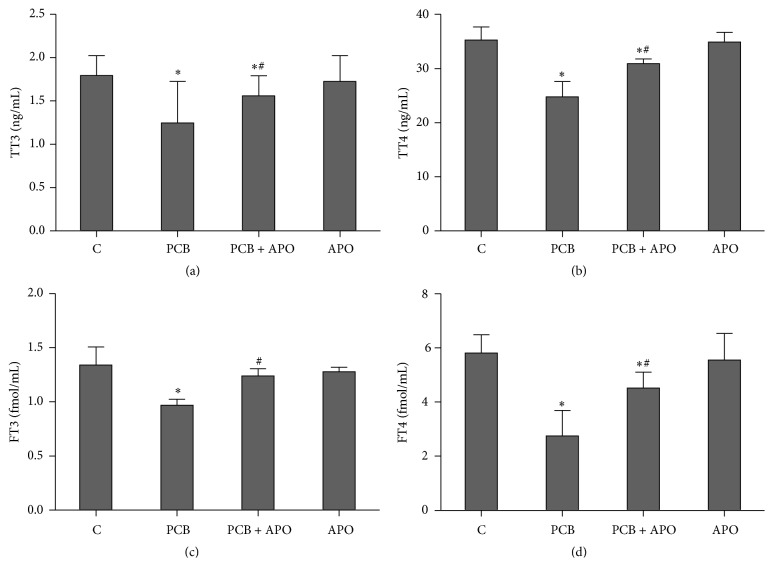
Figure 1
Figure 1
Effect of NOX inhibition on serum thyroid hormones: serum level of (a) T3; (b) T4; (c) FT3; (d) FT4. P < 0.05 versus control group. # P < 0.05 versus PCB group.
Figure 2
Figure 2
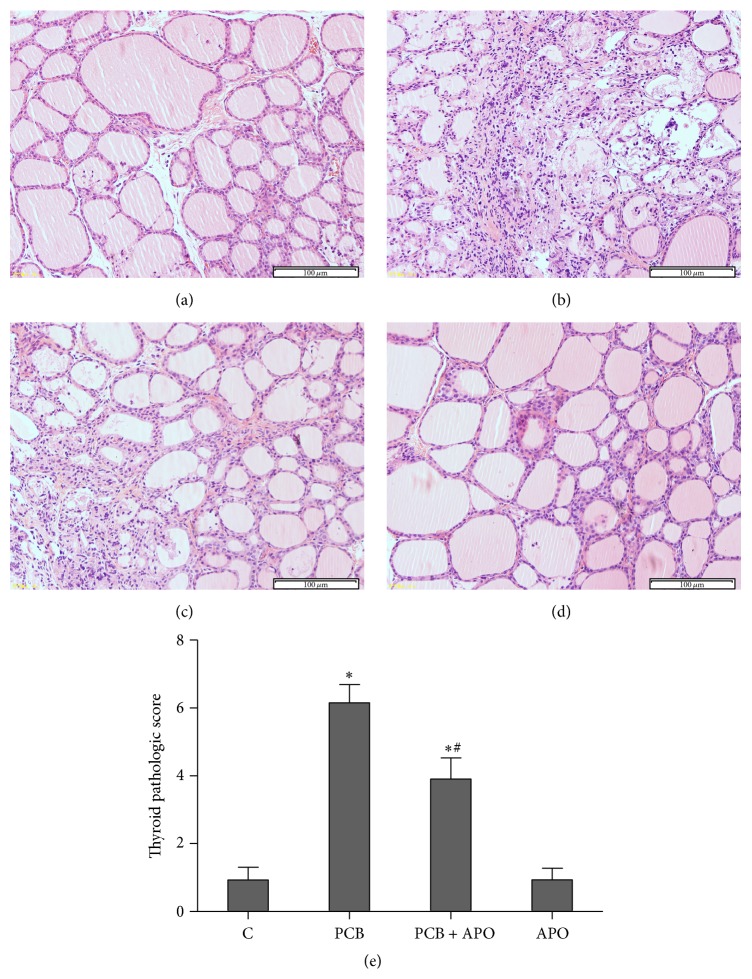
NOX inhibition attenuated thyroid morphologic changes of rats. (a) A representative figure from control group; (b) a representative figure from PCB group; (c) a representative figure from PCB + APO group; (d) a representative figure from APO group; (e) histological scores of thyroid tissue. P < 0.05 versus control group. # P < 0.05 versus PCB group (original magnification ×200).
Figure 3
Figure 3
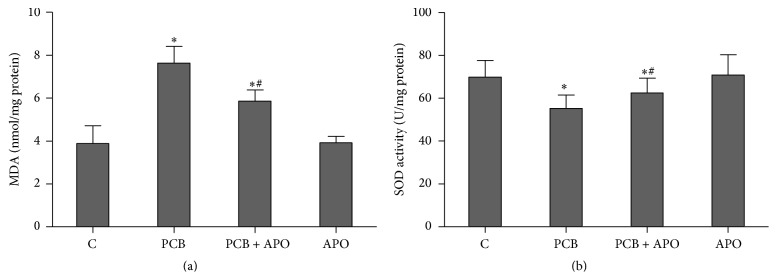
Effects of NOX inhibition on oxidative stress; (a) content of MDA; (b) SOD activity; P < 0.05 versus control group. # P < 0.05 versus PCB group.
Figure 4
Figure 4
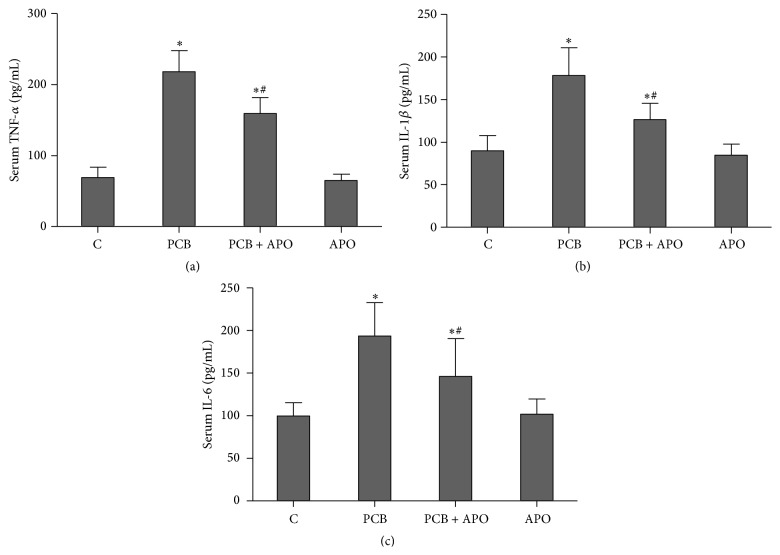
Effects of NOX inhibition on proinflammatory cytokines production; (a) TNF-α; (b) IL-1β; (c) IL-6; P < 0.05 versus control group. # P < 0.05 versus PCB group.
Figure 5
Figure 5
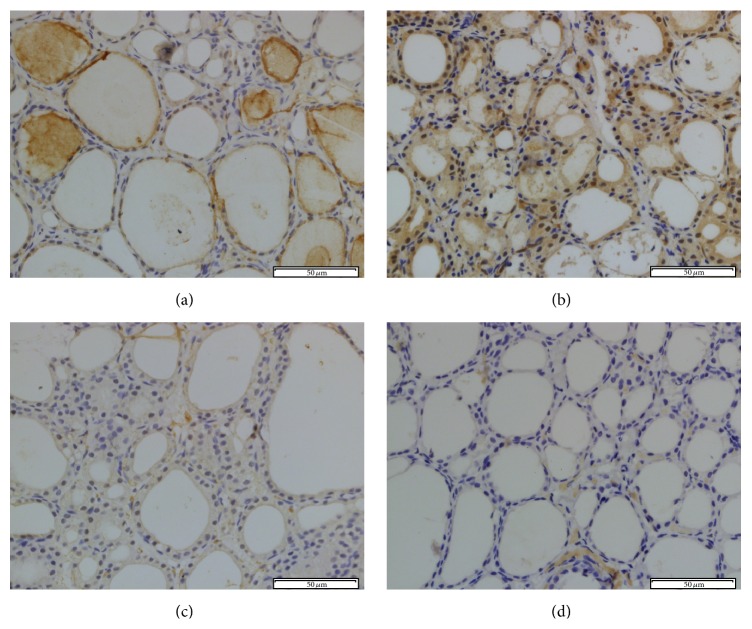
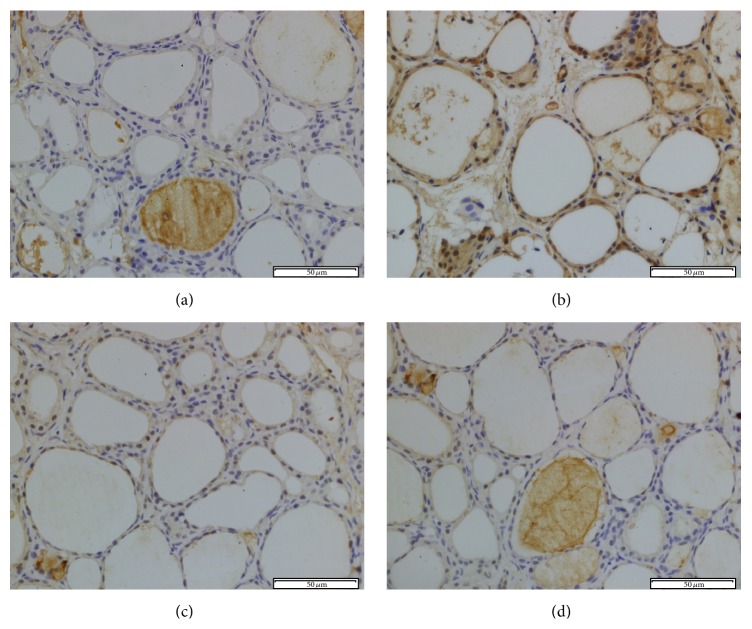
NOX2 immunohistochemical staining in rat thyroid tissue. The immunohistochemical localization of NOX2 appears as brown staining. (a) Control group; (b) PCB group; (c) PCB + APO group; (d) APO group (original magnification ×400).
Figure 6
Figure 6
8-OHdG immunohistochemical staining in rat thyroid tissue. The immunohistochemical localization of NOX2 appears as brown staining. (a) Control group; (b) PCB group; (c) PCB + APO group; (d) APO group (original magnification ×400).
Figure 7
Figure 7
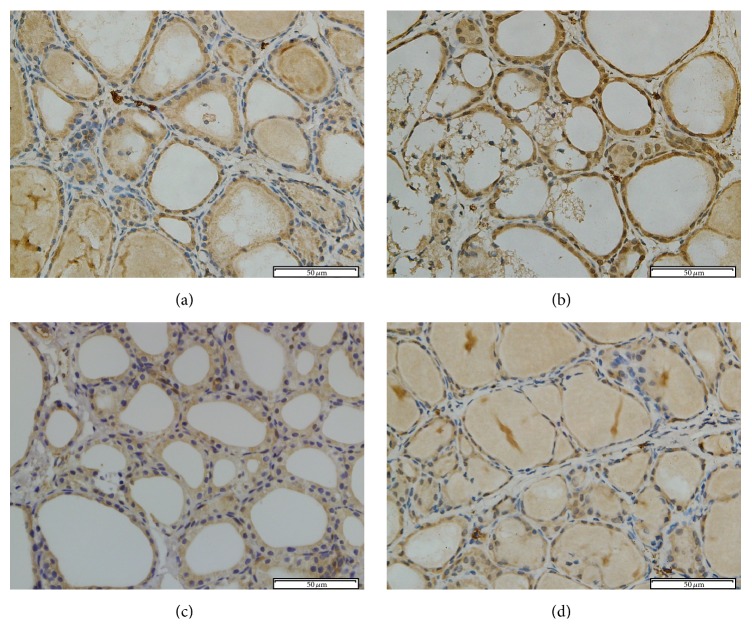
NF-κB immunohistochemical staining in rat thyroid tissue. The immunohistochemical localization of NF-κB appears as brown staining. (a) Control group; (b) PCB group; (c) PCB + APO group; (d) APO group (original magnification ×400).
Figure 8
Figure 8
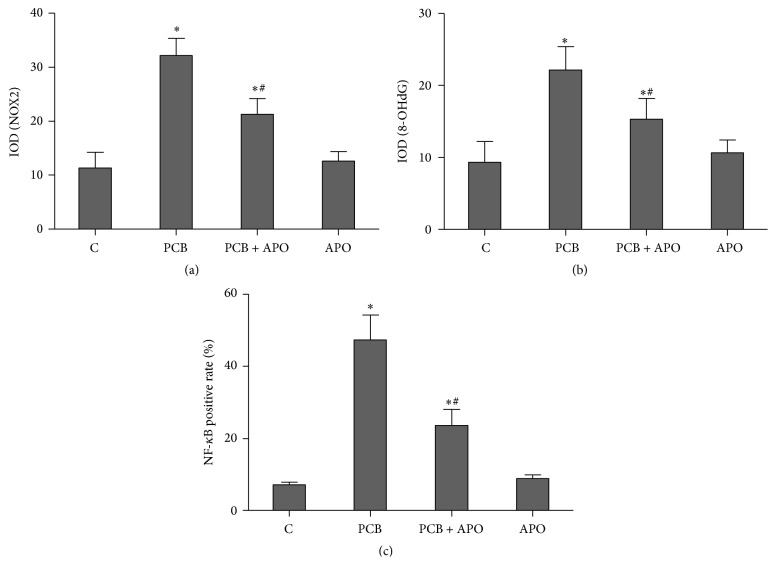
Immunohistochemical analysis. (a) NOX2; (b) 8-OHdG; (c) NF-κB; P < 0.05 versus control group. # P < 0.05 versus PCB group.
Figure 9
Figure 9
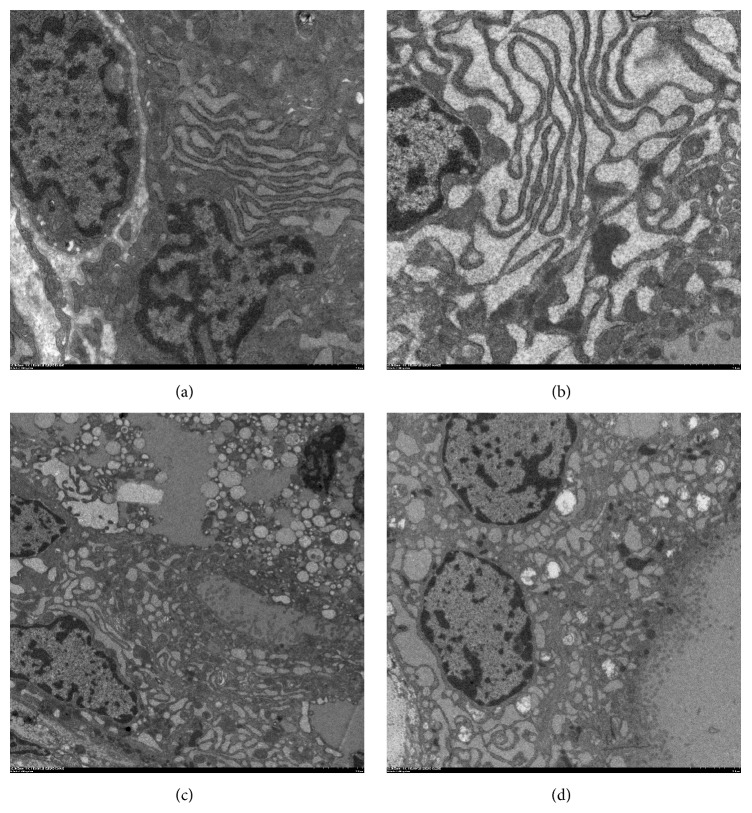
TEM comparison of thyroid follicular cells architecture. (a) A TEM analysis from the control group showing that the follicular cells contain well-developed parallel cisternae of ER, mitochondria, and large moderate electron dense cytoplasmic colloid droplets. Apical lateral surfaces of follicular cells show tight junctions (magnification, ×5,000); (b) TEM analysis from the PCB group showed that the follicular cells contained many vacuoles and few microvilli. Follicular cells have euchromatic nuclei with peripheral rim of heterochromatin and markedly dilated cisternae of ER (magnification, ×5,000); (c) in PCB group, corrugated heterochromatic follicular cells nuclei and desquamated follicular cells within follicular lumen are noticed. The general loss of subcellular organization and cellular contents is also found (magnification, ×2,000); (d) TEM analysis from the PCB + APO group showing that the follicular cells cytoplasm contains moderately dilated cisternae of ER, Golgi saccules, and apical electron dense granules (magnification, ×2,000).

References

    1. Golden R., Kimbrough R. Weight of evidence evaluation of potential human cancer risks from exposure to polychlorinated biphenyls: an update based on studies published since 2003. Critical Reviews in Toxicology. 2009;39(4):299–331. doi: 10.1080/10408440802291521. - DOI - PubMed
    1. Portigal C. L., Cowell S. P., Fedoruk M. N., Butler C. M., Rennie P. S., Nelson C. C. Polychlorinated biphenyls interfere with androgen-induced transcriptional activation and hormone binding. Toxicology and Applied Pharmacology. 2002;179(3):185–194. doi: 10.1006/taap.2002.9371. - DOI - PubMed
    1. Knerr S., Schrenk D. Carcinogenicity of ‘non-dioxinlike’ polychlorinated biphenyls. Critical Reviews in Toxicology. 2006;36(9):663–694. doi: 10.1080/10408440600845304. - DOI - PubMed
    1. Liu C., Wang C., Yan M., Quan C., Zhou J., Yang K. PCB153 disrupts thyroid hormone homeostasis by affecting its biosynthesis, biotransformation, feedback regulation, and metabolism. Hormone and Metabolic Research. 2012;44(9):662–669. doi: 10.1055/s-0032-1311569. - DOI - PubMed
    1. Fliers E., Bianco A. C., Langouche L., Boelen A. Thyroid function in critically ill patients. The Lancet Diabetes & Endocrinology. 2015;3(10):816–825. doi: 10.1016/s2213-8587(15)00225-9. - DOI - PMC - PubMed

LinkOut - more resources